Pumpkin Coffee Cake with Streusel
There is a reason pumpkin coffee cake belongs on the breakfast table, the brunch buffet, and the dessert table all at once. This version has a moist, fluffy pumpkin cake scented with cinnamon and pumpkin pie spice, but the real centerpiece is the generous amount of buttery streusel layered through the cake and piled over the top. A simple vanilla icing finishes every slice.

The method is a little different from a standard cake, and every unusual step has a job. The butter is worked into the dry ingredients before the liquid is added, the streusel is mixed only until it looks like wet sand with large chunks, and the topping is added in stages so the cake can rise before the final layer goes on. The result is a tall, orange pumpkin cake with crisp, crumbly topping in the middle and on top.
If you are building a list of pumpkin dessert recipes for fall, this one is especially useful because it makes a 9×13-inch cake and serves 16. It is substantial enough for a gathering, easy to portion into individual squares, and just as welcome with a cup of coffee at breakfast as it is after dinner.
Why You Will Love This Recipe
This pumpkin coffee cake brings together three different textures in one pan. The cake itself is soft and fluffy, with pumpkin puree providing moisture and a naturally orange color. The streusel is buttery and rich, with crisp edges and chunky pieces that stay distinct instead of melting into a smooth paste. The icing is soft and sweet, so it settles into the crags of the topping and adds a little vanilla flavor to each bite.
The quantity of streusel is intentional. Instead of treating it as a thin garnish, this recipe layers it through the cake and adds a final portion after the first stage of baking. That creates a cake with streusel in the center as well as on the surface. You will have some topping left after the planned layers; keep it chilled and use it for the quick finishing layer when the cake comes out for its mid-bake addition.
The cake also uses both butter and vegetable oil. Butter brings a rich flavor, while oil contributes fat without making the crumb heavy. Pumpkin puree adds its own moisture and fall flavor. Together, these ingredients give the cake a tender texture while the spices keep it tasting distinctly seasonal.
There is no coffee in the batter. “Coffee cake” describes the style of cake traditionally served alongside coffee or at breakfast and brunch. This one is equally at home at a fall festival, Halloween party, Thanksgiving table, or any afternoon when a warm square of pumpkin cake sounds right.
Ingredients
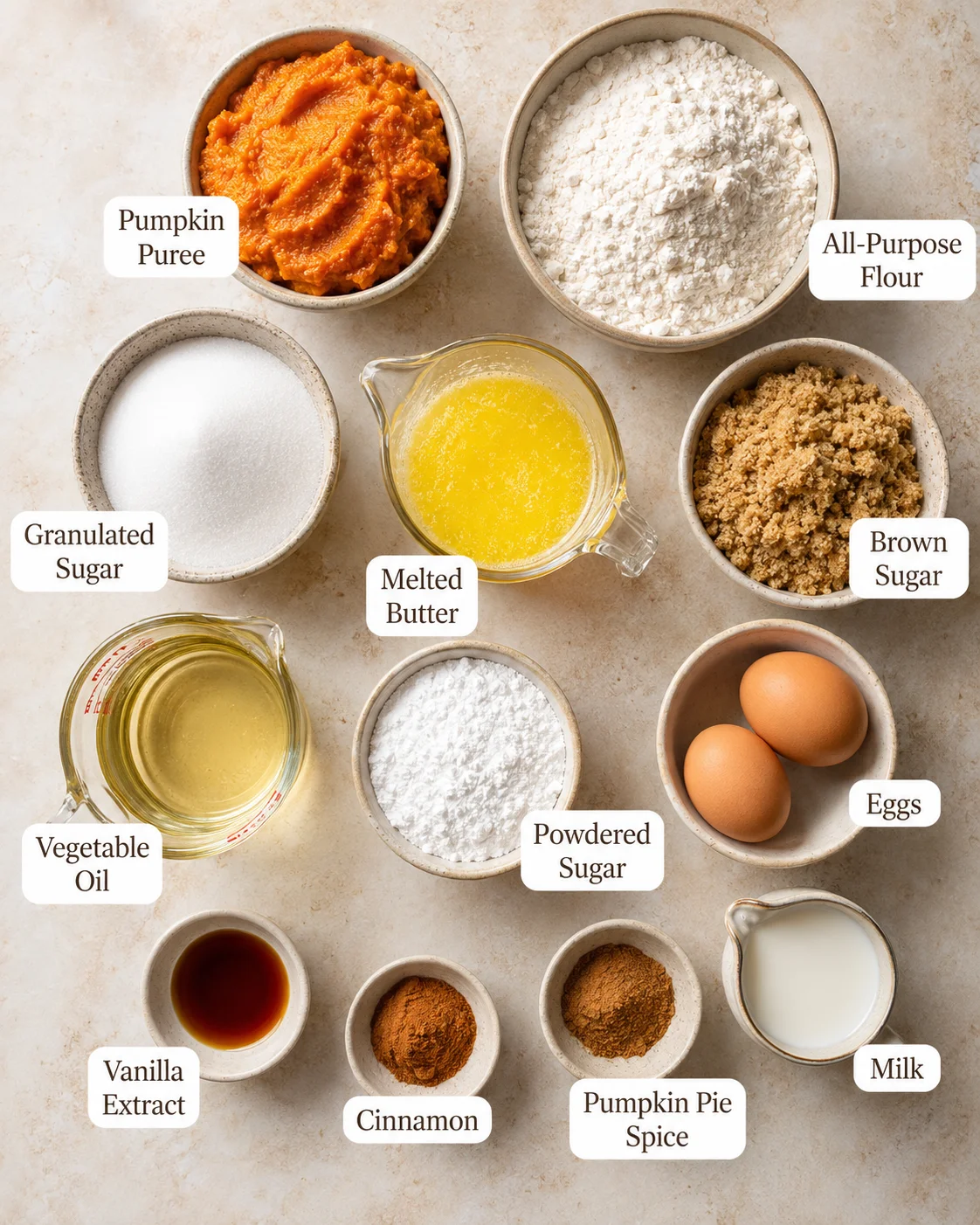
Organize the ingredients by component before you begin. Spoon and level the flour rather than scooping it directly with the measuring cup. The pumpkin is divided between the cake mixtures, and the butter has three different textures in the recipe: melted for the streusel, softened but still cool for the cake, and very soft for the icing.
For the streusel
- 3 cups all-purpose flour, spooned and leveled
- 1 cup packed brown sugar
- 1/2 cup granulated sugar
- 1 teaspoon kosher salt
- 1 tablespoon cinnamon
- 1 tablespoon pumpkin pie spice
- 1 cup butter, or 2 sticks, melted
For the cake
- 2 1/4 cups all-purpose flour
- 1 1/2 cups granulated sugar
- 1 tablespoon baking powder
- 3/4 teaspoon baking soda
- 3/4 teaspoon kosher salt
- 1 tablespoon pumpkin pie spice
- 1 teaspoon cinnamon
- 1/2 cup butter, or 1 stick, softened but still cool
- 1 (15-ounce) can pumpkin puree, not pumpkin pie filling, divided
- 4 large eggs
- 1/4 cup vegetable oil; light-flavor olive oil can also be used
- 1 tablespoon vanilla extract
For the icing
- 1/4 cup butter, or 1/2 stick, very soft
- 1 teaspoon vanilla extract
- 1/2 teaspoon kosher salt; use less if substituting table salt
- 3 tablespoons milk, plus more to taste
- 2 cups powdered sugar
You will also need a 9×13-inch cake pan, nonstick spray or butter for greasing, a large mixing bowl, a medium bowl, a whisk, and either a stand mixer with a paddle attachment or electric beaters for the cake batter. A wire rack is useful for cooling. The recipe can be made in a glass or metal pan, but the bake time may differ, so use the doneness cues in the instructions rather than relying only on the clock.
Instructions
Read the layering and mid-bake directions before you start. The cake is baked in stages, and the last streusel addition needs to happen quickly so the oven door is not open longer than necessary. Have the reserved streusel ready to use before the first bake begins.
- Prepare the pan and oven. Preheat the oven to 350 degrees F. Grease a 9×13-inch cake pan with nonstick spray or rub it with butter. If you are using a metal pan, plan to begin checking the cake a few minutes earlier than you would in glass.
- Mix the streusel base. In a large bowl, whisk together the 3 cups flour, brown sugar, granulated sugar, kosher salt, cinnamon, and pumpkin pie spice. Break up any packed brown sugar so the mixture is evenly combined before the butter goes in.
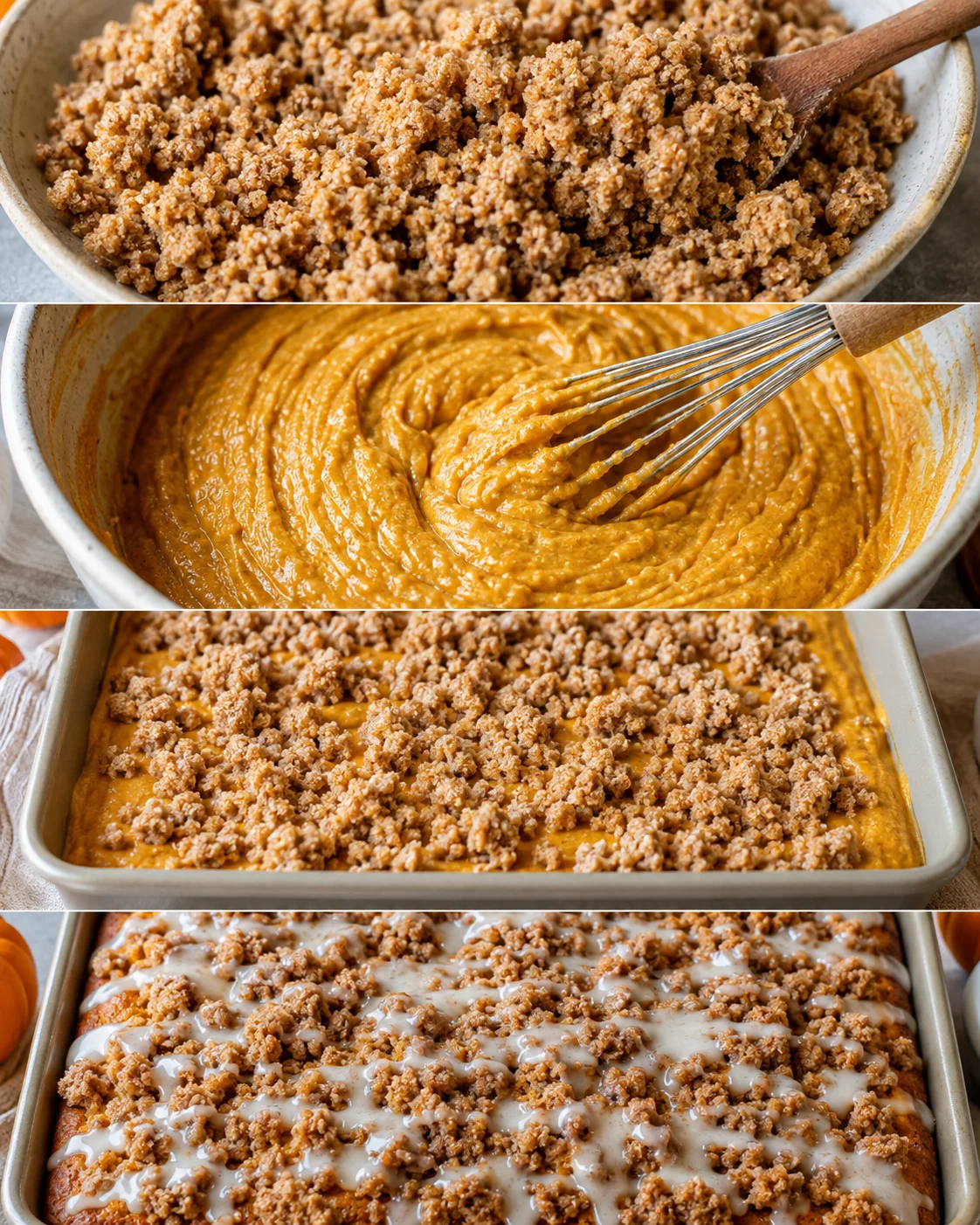
- Add the melted butter without overmixing. Melt the 1 cup butter in a medium bowl in the microwave. Pour it into the large bowl. Stir the butter into the flour mixture only halfway. Stop before the mixture comes together completely. The goal is a bowl that looks like wet sand, with many large chunks and possibly a little loose flour at the bottom. Do not smooth it out or keep stirring until every bit of flour is moistened. Set the streusel aside, preferably in the refrigerator if there is room.
- Mix the dry cake ingredients. In a large bowl or the bowl of a stand mixer, whisk together the 2 1/4 cups flour, 1 1/2 cups granulated sugar, baking powder, baking soda, kosher salt, pumpkin pie spice, and cinnamon. This distributes the leaveners and spices before the butter and pumpkin are added.
- Work in the butter and the first portion of pumpkin. Chop the 1/2 cup softened butter into chunks. It should have sat out long enough not to be rock-hard, but it should not be so warm that it is completely creamy. Add it to the dry mixture. Open the pumpkin puree and add a large scoop, about half of the can, to the bowl with the flour and butter. You do not need to measure this first scoop separately; the can is divided so the remaining pumpkin can go into the wet mixture.
- Make the thick cake base. Using the paddle attachment or electric beaters, blend the butter and pumpkin into the flour mixture. Scrape the bottom and sides of the bowl as needed. Beat only until the butter is incorporated and the mixture comes together into a thick dough or ball. Do not overmix. If it does not come together, add a few extra dollops of pumpkin puree until it does.
- Whisk the wet mixture. Use the same medium bowl in which you melted the butter for the streusel. Add all of the remaining pumpkin puree from the can, then whisk in the 4 eggs, vegetable oil, and vanilla extract. Beat until the eggs are well blended. The mixture will be orange and fluid, ready to loosen the thick butter-and-flour base.
- Build the batter gradually. Add the egg mixture to the flour mixture in 3 additions. Beat for about 20 seconds after each addition. Once all of the egg mixture is incorporated, beat for 1 more minute, until the batter is light and fluffy. Scrape down the bowl if any thick mixture is clinging to the sides. The batter should be spreadable rather than pourable.
- Start the layers. Spread 2 cups of batter over the bottom of the prepared pan. Sprinkle 1 cup of streusel evenly over the batter. Use your fingers to break apart any pieces that are too large for an even layer.
- Add the middle layers. Spread another 2 cups of batter over the first streusel layer, spreading it around as evenly as possible. Add another 1 cup of streusel. Then spread the rest of the batter over that layer.
- Add the first top layer of streusel. Evenly spread another 2 cups of streusel over the batter. Do not add all of the remaining streusel yet. Set the leftover portion aside in the refrigerator if you have room; it will be added later.
- Begin baking. Bake the cake at 350 degrees F for 35 minutes. While it bakes, keep the reserved streusel ready and make sure you know where your oven mitts and cooling rack are.
- Add the final streusel quickly. After 35 minutes, remove the cake from the oven and shut the oven door. Sprinkle all of the remaining streusel over the top, concentrating on places where the cake batter has puffed up in the center. Work quickly and return the pan to the oven as soon as possible. Keep the oven door shut as much as possible so the cake can continue baking steadily.
- Finish baking and check doneness. Bake for another 10 to 15 minutes. The total bake time will be about 45 to 50 minutes, depending on your oven and whether you use a glass or metal pan. Insert a toothpick into the center. The cake is ready when the toothpick comes out without wet batter on it and the cake does not wobble when you gently shake the pan. If you are using a metal pan, begin testing a few minutes earlier because it may bake faster.
- Cool before cutting. Set the cake on a wire rack and let it cool for at least 15 to 20 minutes before cutting. This gives the warm crumb time to settle and keeps the layered streusel from sliding as you portion the cake.
- Make the icing. In a medium bowl, beat the 1/4 cup very soft butter until smooth. If the butter is ultra-soft, this can be done by hand with a whisk. Add the vanilla, kosher salt, milk, and powdered sugar. Beat by hand or with a mixer until very smooth. If the icing is too thick, add milk 1 to 2 teaspoons at a time until it reaches a drizzleable consistency.
- Drizzle and serve. Drizzle the icing over the cake or over individual portions. One useful approach is to drizzle about half over the whole cake and save the rest for the individual servings. The cake is best served warm. If it has cooled, microwave an individual serving for 10 to 20 seconds before eating.
Tips for Success
Keep the streusel chunky
The streusel should not look like a smooth cookie dough. Melted butter makes this mixture quick to assemble, but stopping halfway through stirring is important. Look for a wet-sand texture with large clumps and some loose flour. If you continue mixing until every bit of flour is damp, the topping loses the uneven pieces that make the finished cake so appealing. Chilling the bowl while you make the cake also helps the chunks stay distinct.
Use the right pumpkin
Choose plain pumpkin puree, not pumpkin pie filling. Pumpkin pie filling already contains sweeteners and spices, while this cake depends on the measured sugar and spice mixture in the ingredient list. Divide the 15-ounce can between the thick cake base and the egg mixture. A large first scoop goes into the butter and flour; all the remaining pumpkin goes into the medium bowl with the eggs, oil, and vanilla.
Do not overmix the thick base
The recipe deliberately coats the butter in the dry ingredients before all the liquid is added. Once the first portion of pumpkin has helped the butter and flour form a ball, stop beating when the butter is incorporated. Scrape the bowl as needed, but do not keep mixing simply to make the base perfectly smooth. The later egg mixture will loosen it and create the final light batter.
Add the eggs in three additions
Adding the wet mixture gradually gives the thick base time to absorb it. Beat for about 20 seconds after each addition, then give the finished batter another minute once all three additions are in. The final mixture should look light and fluffy. This is also a good time to scrape the bowl so no dense pocket of butter-and-flour mixture remains underneath the batter.
Layer the streusel instead of dumping it all on top
The measured layers matter. Use 1 cup after the first 2 cups of batter, another 1 cup after the second 2 cups of batter, and 2 cups on top of the last layer of batter. Keep the remainder for the mid-bake addition. Adding all the topping at the beginning weighs down the cake and can keep it from rising properly. The staged method lets the cake puff first, then gives the top its final blanket of streusel.
Move quickly at the 35-minute mark
The pan needs to come out only long enough to add the reserved streusel. Shut the oven door while you sprinkle so heat stays inside, focus the extra topping on the raised center areas, and return the cake promptly. The final topping may look generous, but it is the portion that completes the four-layer streusel effect.
Use visual cues along with the timer
Start with the 35-minute bake, then continue for 10 to 15 minutes after adding the final streusel. Since glass and metal pans can bake differently, check the center with a toothpick and gently move the pan. A toothpick with no wet batter and a cake that does not wobble are the reliable cues. A few moist crumbs are different from wet batter; the center should be set enough to support the topping and slice cleanly after cooling.
Pay attention to salt in the icing
Kosher salt and table salt do not measure exactly the same by volume. The icing calls for 1/2 teaspoon kosher salt, with less recommended if table salt is the only option. Add the milk gradually if necessary, especially when the butter is very soft, because the icing can loosen quickly. A smooth icing should fall in a thin ribbon from a whisk or spoon without flooding the cake.
How the cake comes together
This recipe has three components, but the cake batter itself is built in two stages. First, the dry cake ingredients meet the cool softened butter and the first large scoop of pumpkin. That mixture becomes a thick, almost dough-like base. It will not look like the loose batter you might expect at this point, and that is fine. The remaining pumpkin is whisked with the eggs, oil, and vanilla in a separate bowl, then added gradually to transform the base into a light, fluffy batter.
Keeping those two pumpkin portions in the right places makes the method easier to follow. The first portion helps the butter and flour come together. The remaining portion carries the egg mixture and supplies the liquid needed to loosen the base. Because the pumpkin comes from one 15-ounce can, scrape the can carefully and use the remaining puree in the medium bowl rather than opening a second can or leaving a large amount behind.
The streusel follows a different rule: it should remain irregular. The large chunks are not a mistake and the loose flour at the bottom of the bowl does not mean you need to keep mixing. Once the melted butter has been stirred in halfway, the mixture is ready to rest. Some of the streusel will go between the batter layers, some will cover the top before the first bake, and the reserved portion will finish the surface after the cake has puffed.
Layering is easier if you divide the batter and streusel mentally before you begin. The first 2 cups of batter form the base. The first cup of streusel marks the first interior layer. Another 2 cups of batter and a second cup of streusel create the middle. The rest of the batter goes above that, followed by 2 cups of streusel. The final reserved portion is not added until after 35 minutes in the oven. Breaking up any oversized pieces with your fingers helps each layer spread without pressing down on the batter.
There is also a useful timing distinction between the cake and the icing. The cake needs at least 15 to 20 minutes on a wire rack before it is cut, while the icing can be made during that cooling time. If the icing is ready before the cake, keep it separate and drizzle it after the cake has cooled. For a make-ahead cake, keeping the icing separate is part of the storage plan as well. For a warm individual serving, the icing may be added before or after the brief microwave reheat, depending on whether you want it to melt into the streusel or remain visible on top.
Use the recipe’s cues, not just its appearance in the bowl
Several stages look intentionally unfinished. The streusel resembles wet sand rather than a smooth crumble mixture. The first cake mixture forms a thick ball before the eggs and remaining pumpkin are added. The final batter becomes light and fluffy only after the three additions are beaten in. At the end of baking, the cake should no longer wobble and the toothpick should show no wet batter. These changes in texture are the most useful guideposts for moving from one step to the next.
Give yourself enough space to work through those transitions. A large bowl is needed for the streusel and for the cake mixture, and the medium bowl used for the melted streusel butter can be reused for the wet ingredients and later for the icing. The recipe does not require a new bowl for every component. Keeping the medium bowl nearby also makes it easier to add the remaining pumpkin, eggs, oil, and vanilla without interrupting the batter sequence.
Variations and Substitutions
The main recipe is designed around the pumpkin, spice, butter, oil, and large amount of streusel, so keep those proportions intact for the intended texture. The following choices stay close to the way the recipe is written.
- Glass or metal pan: Either pan can be used, but a metal pan may finish sooner. Begin checking a few minutes earlier if you use metal, and rely on the toothpick and no-wobble cues.
- Light-flavor olive oil: The vegetable oil can be a light-flavor olive oil. Avoid using a strongly flavored oil if you want the pumpkin, cinnamon, and vanilla to remain the main flavors.
- Whisked icing: The very soft butter can be beaten by hand with a whisk. This is especially convenient when the butter is soft enough to smooth easily. A mixer also works.
- Table salt: Use less table salt than the listed kosher salt, particularly in the icing. The recipe specifically calls for reducing the amount when table salt is used.
- Icing by the slice: Drizzle the icing over the entire cake, or keep some separate and finish individual servings as they are served. This is a serving option rather than a change to the icing ingredients.
- Cold-butter streusel method: The streusel can be approached with cold butter cut into the dry ingredients, but the recipe favors melted butter because it produces the preferred chunky, wet-sand mixture. If you make the listed version, melt the butter and stop stirring before the mixture becomes uniform.
Do not replace the pumpkin puree with pumpkin pie filling. That would change both the sweetness and the spice balance. Likewise, do not treat the leftover streusel as optional: it is reserved for the top after the first 35 minutes of baking.
Storage, Make-Ahead, and Freezing
Room-temperature storage
The covered cake keeps well on the counter for 2 to 3 days. If you are preparing it ahead, bake the cake as directed and make the icing, but do not drizzle the icing yet. Once the cake has cooled, cover the cake and store the icing separately. Both can be kept at room temperature during that period, which keeps the icing ready for a fresh drizzle instead of leaving it absorbed into the streusel.
Reheating a whole cake
For a whole make-ahead cake, warm it in an oven set to the warm setting, 170 degrees F, until it feels warm throughout. This should take about 15 to 20 minutes. Drizzle the room-temperature icing over the warmed cake. Keep an eye on the texture as it warms; the goal is to bring the cake back to a pleasant serving temperature, not to continue baking it.
Reheating individual servings
Individual portions can be microwaved for 10 to 20 seconds when the cake has cooled. This is the quickest way to bring back the warm, soft texture for breakfast or a snack. Add the icing before warming if you want it to melt into the top, or drizzle it after warming for a more distinct finish.
When to refrigerate
After the first 2 to 3 days at room temperature, move the covered cake to the refrigerator. Keep it well covered so the cake does not dry out or take on other refrigerator aromas. Warm portions gently before serving if you prefer the cake soft and warm.
Freezing
This coffee cake freezes well when it is sealed thoroughly. A cake pan lid may not create a true seal, so do not rely on the lid alone. Wrap the whole pan in plastic wrap, or cut the cake into large slices and place them in a zip-top freezer bag. Thaw the cake completely on the countertop. Individual portions can be reheated in the microwave, or the cake can be warmed in the oven at a low temperature. If you are planning to freeze it, keeping the icing separate until serving makes it easier to refresh the top after thawing.
Serving Suggestions
Cut the cooled cake into 16 portions, or serve larger squares when it is the main dessert. A warm piece with vanilla icing works for breakfast or brunch, especially alongside coffee even though there is no coffee in the cake itself. For an afternoon spread, leave the icing on the whole cake and let guests choose between the crisp topping and the soft pumpkin crumb in each square.
This is a practical fall bake for a Halloween party, a fall festival, or Thanksgiving when you want an option other than pie. The orange pumpkin crumb and cinnamon-spiced streusel make it seasonal without requiring a special decoration. Serve it warm from the oven after the required cooling time, or prepare it ahead and warm the cake before adding the icing.
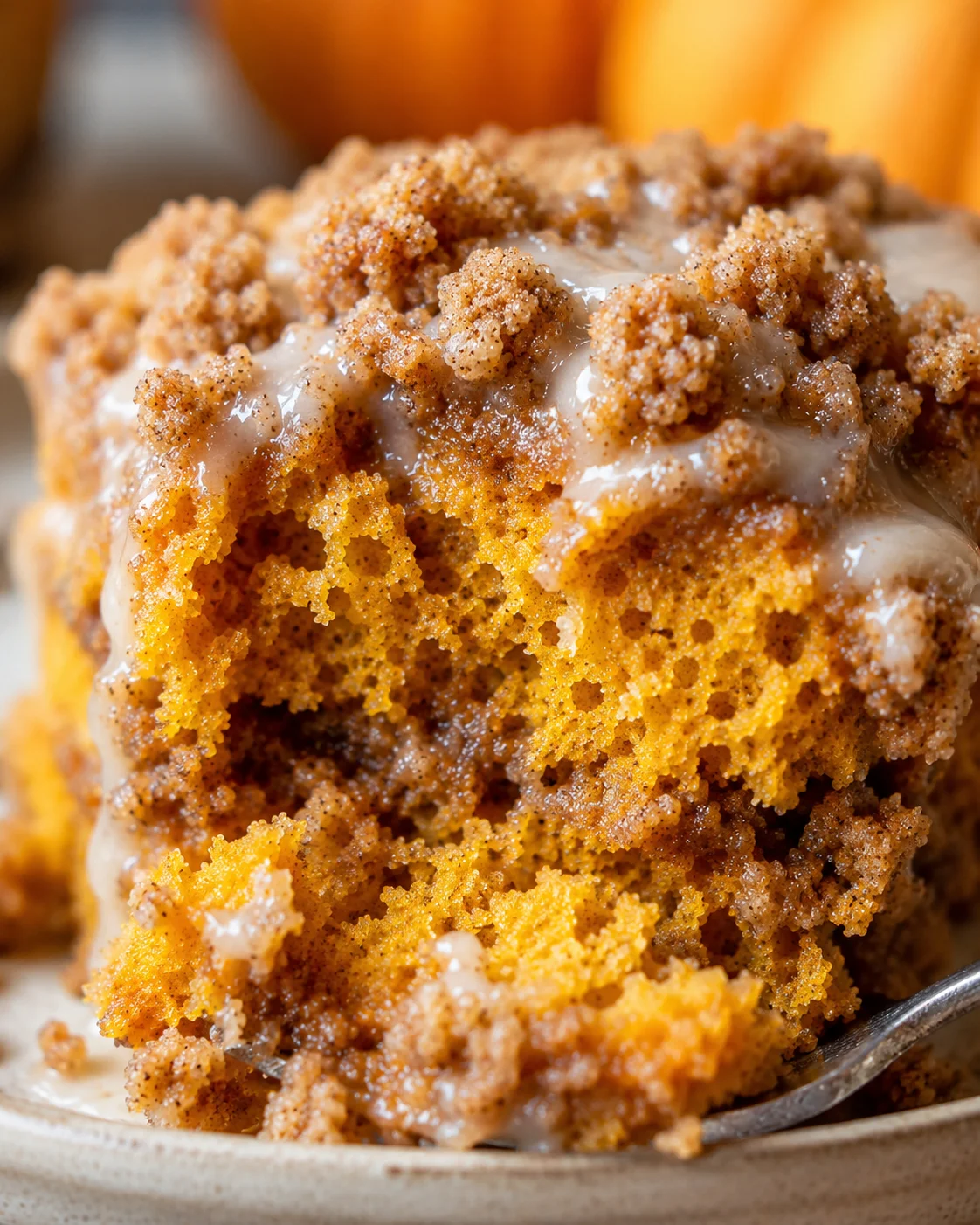
For the best textural contrast, let the top stay visibly craggy rather than smoothing the streusel before baking. The large pieces should crisp at the edges while the layers inside stay buttery and tender. The glaze fills in the rough surface with a smooth vanilla finish. If you are serving individual portions, a second drizzle just before eating keeps the icing bright and makes each square feel freshly finished.
FAQ
What is the difference between pumpkin coffee cake and regular cake?
Regular cake is often finished with frosting on top. Pumpkin coffee cake includes pumpkin puree in the batter and has streusel layered through the center and across the top, followed by a simple icing. It is structured for serving with breakfast or brunch, but the pumpkin, spice, topping, and glaze also make it a full dessert.
Does pumpkin coffee cake contain coffee?
No. Coffee cake is named for the way it is traditionally served alongside coffee, particularly at breakfast or brunch. The batter in this recipe contains pumpkin puree, eggs, oil, butter, vanilla, and warm spices, but no brewed coffee or coffee grounds.
Why is it called streusel?
Streusel is a sandy, crumbly mixture scattered over cakes, muffins, pies, and other baked goods. The word comes from a German term meaning “something scattered.” This version combines flour, brown sugar, granulated sugar, salt, cinnamon, pumpkin pie spice, and butter, then keeps the mixture chunky so it forms crisp, buttery pieces as it bakes.
How can I keep pumpkin coffee cake from becoming dry?
Follow the ingredient quantities and avoid baking past the doneness cues. This cake uses butter for flavor and vegetable oil for additional fat, while pumpkin puree supplies moisture and pumpkin flavor. Begin checking at the right time for your pan, especially if you use metal, and remove the cake when a toothpick inserted in the center has no wet batter and the cake no longer wobbles.
Why does the recipe add streusel during baking?
Adding all the streusel at once can weigh down the batter and keep the cake from rising properly. The cake first bakes for 35 minutes with the planned interior and top layers. The reserved streusel is then sprinkled over the areas that have puffed up, and the cake returns to the oven for another 10 to 15 minutes. This staged approach keeps the cake light while still giving it a generous topping.
Can I make the icing without a mixer?
Yes. The butter should be very soft, and it can be beaten smooth by hand with a whisk. Add the vanilla, salt, milk, and powdered sugar, then whisk until the icing is smooth. Add milk 1 to 2 teaspoons at a time if the mixture is too thick to drizzle.
Once the cake has cooled for at least 15 to 20 minutes, cut a square, add the vanilla icing, and serve it warm. The combination of pumpkin cake, crisp-edged streusel, and a final drizzle is what makes this a memorable fall coffee cake.
PrintA moist, fluffy pumpkin coffee cake with cinnamon and pumpkin pie spice, layered and topped with buttery streusel and finished with a simple vanilla icing. Serves 16 in a 9×13-inch pan, perfect for breakfast, brunch, or dessert.
- Prep Time: 25 minutes
- Cook Time: 45 to 50 minutes
- Total Time: 1 hour 10 to 15 minutes
- Yield: 16 servings 1x
- Category: Dessert
Ingredients
- Streusel: 3 cups all-purpose flour (spooned and leveled)
- 1 cup packed brown sugar
- 1/2 cup granulated sugar
- 1 teaspoon kosher salt
- 1 tablespoon cinnamon
- 1 tablespoon pumpkin pie spice
- 1 cup (2 sticks) butter, melted
- Cake: 2 1/4 cups all-purpose flour
- 1 1/2 cups granulated sugar
- 1 tablespoon baking powder
- 3/4 teaspoon baking soda
- 3/4 teaspoon kosher salt
- 1 tablespoon pumpkin pie spice
- 1 teaspoon cinnamon
- 1/2 cup (1 stick) butter, softened but still cool
- 1 (15-ounce) can pumpkin puree, divided
- 4 large eggs
- 1/4 cup vegetable oil (or light-flavor olive oil)
- 1 tablespoon vanilla extract
- Icing: 1/4 cup (1/2 stick) butter, very soft
- 1 teaspoon vanilla extract
- 1/2 teaspoon kosher salt (reduce if using table salt)
- 3 tablespoons milk, plus more as needed
- 2 cups powdered sugar
Instructions
- Preheat the oven to 350°F and grease a 9×13-inch cake pan with nonstick spray or butter.
- To make the streusel: In a large bowl, whisk 3 cups flour, brown sugar, granulated sugar, kosher salt, cinnamon, and pumpkin pie spice.
- Melt 1 cup butter and stir it into the flour mixture only halfway, aiming for a wet sand texture with large chunks. Do not overmix. Set aside, preferably refrigerate.
- In a large bowl or mixer bowl, whisk together 2 1/4 cups flour, granulated sugar, baking powder, baking soda, kosher salt, pumpkin pie spice, and cinnamon.
- Chop softened 1/2 cup butter into chunks and add to the dry flour mixture.
- Add a large scoop (about half) of the 15-ounce pumpkin puree to the flour and butter mixture.
- Using paddle attachment or beaters, blend butter and pumpkin into flour until it forms a thick dough ball. Add small amounts of pumpkin if needed to bring it together. Do not overmix.
- In the medium bowl, add the remaining pumpkin puree, whisk in the eggs, vegetable oil, and vanilla extract until well blended.
- Add the egg mixture to the thick batter in three additions, beating about 20 seconds after each addition.
- After all egg mixture is incorporated, beat for 1 minute until batter is light and fluffy, scraping the bowl as needed. Batter should be spreadable.
- Layer in greased pan: Spread 2 cups batter, sprinkle 1 cup streusel evenly, then 2 cups batter, 1 cup streusel, remaining batter, and then 2 cups streusel on top. Reserve leftover streusel in refrigerator.
- Bake for 35 minutes at 350°F.
- Remove cake from oven briefly, quickly sprinkle reserved streusel over the puffed areas, and return to the oven promptly.
- Bake another 10–15 minutes until toothpick inserted in center comes out without wet batter and cake does not wobble.
- Cool the cake on a wire rack for 15–20 minutes before cutting.
- Make icing: Beat 1/4 cup very soft butter until smooth. Add vanilla, salt, milk, and powdered sugar. Beat until smooth and drizzle-able, adding milk 1–2 teaspoons at a time if too thick.
- Drizzle icing over the cooled cake or individual slices. Serve warm; reheat individual servings 10–20 seconds in microwave if desired.
Notes
Use plain pumpkin puree, not pumpkin pie filling., Streusel mixture should have wet sand texture with large chunks; do not overmix., Add eggs and wet ingredients gradually to the thick batter to achieve light, fluffy texture., Layer streusel in stages to allow cake to rise properly and maintain texture., Use visual and texture cues for doneness: toothpick test and no wobbling of cake., Icing can be whisked by hand without a mixer if butter is very soft., Store cake covered at room temperature for 2-3 days; refrigerate thereafter for longer storage., Keep icing separate if storing to refresh after reheating or thawing., Cake can be frozen; thaw completely before reheating and adding icing., Metal pans bake faster than glass; check earlier and rely on doneness cues.
Nutrition
- Serving Size: 1 slice (1/16th of cake)
- Calories: Approximately 350 calories per serving
- Fat: Approximately 12 grams per serving
- Carbohydrates: Approximately 55 grams per serving
- Protein: Approximately 5 grams per serving