The Best Homemade Garlic Bread (Easy Semi-Homemade Recipe)

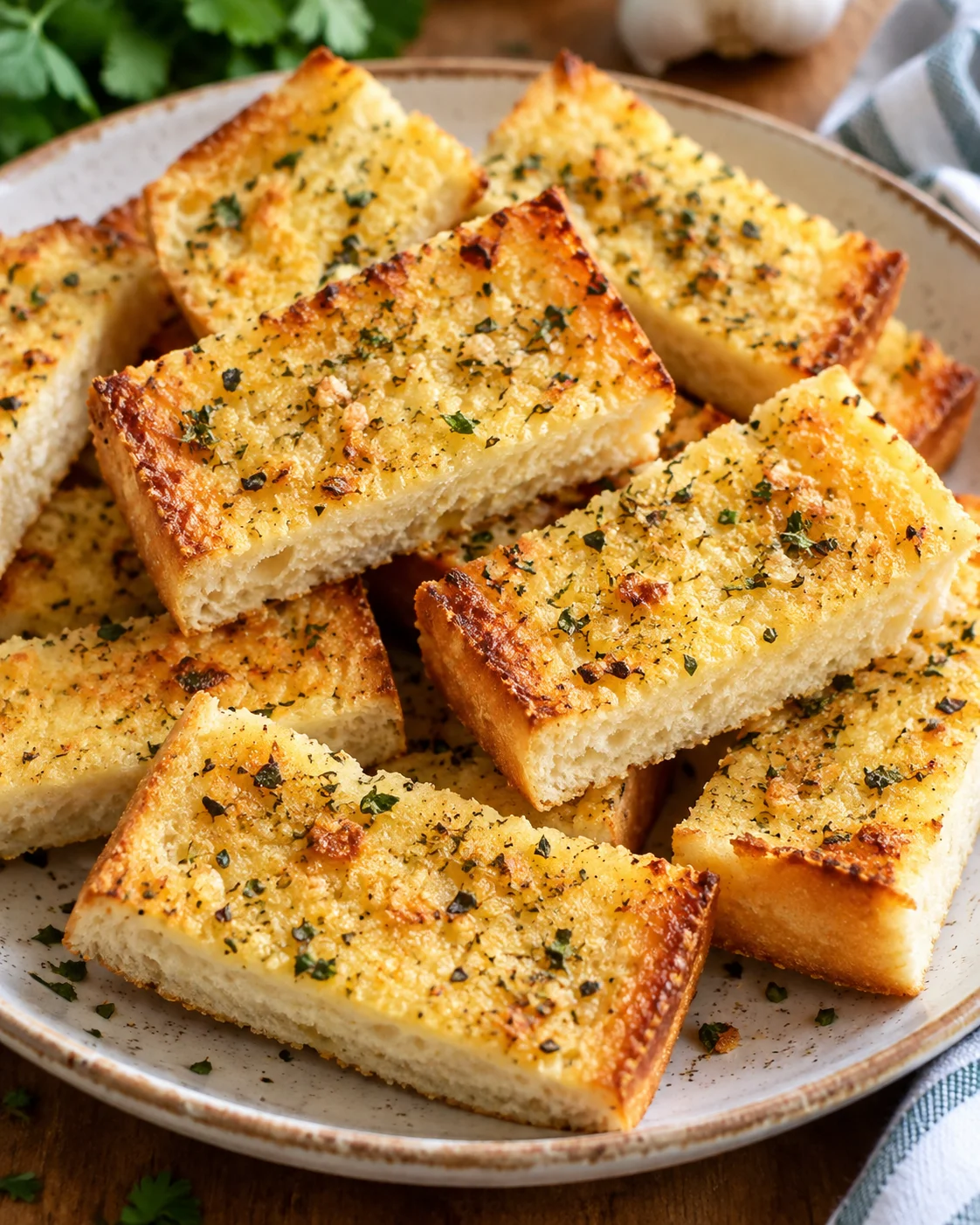
This homemade garlic bread is the kind of easy side dish that earns its place at the table. It starts with a soft, bakery-style French loaf, a generous three-fourths cup of butter, fresh garlic, salt, and dried parsley. After a short bake, the edges turn crisp and golden while the middle stays soft, buttery, and pleasantly gooey.
There is no need to make the bread from scratch. This is a deliberately semi-homemade recipe: the loaf comes from the bakery, and you turn it into something special at home with a fresh garlic butter. It takes about 15 minutes to prepare, 15 minutes to bake, and serves 8 people. The result is rich and decadent, but that is part of the point. When you want great garlic bread, a little over-the-top butter is welcome.
Why You Will Love This Garlic Bread
The formula stays short at just five ingredients, but each one has a clear job. The bread provides a soft, fluffy interior and a thin, crisp exterior. Butter carries the garlic flavor across the cut surface and helps the edges brown in the oven. Fresh garlic brings the bold flavor that makes this garlic bread taste like garlic bread instead of merely buttery toast. Salt sharpens the flavors, while dried parsley adds a mild herbal note and a little color.
The texture comes from the contrast between the loaf and the heat. Starting with a soft French bread gives the center enough cushion to absorb the garlic butter without becoming dry. Baking at 400°F crisps the exposed edges while the middle stays tender. A brief broil at the end is optional, but it pushes the outside toward extra crunch. Watch that step closely because the difference between golden and burned can happen quickly under a broiler.
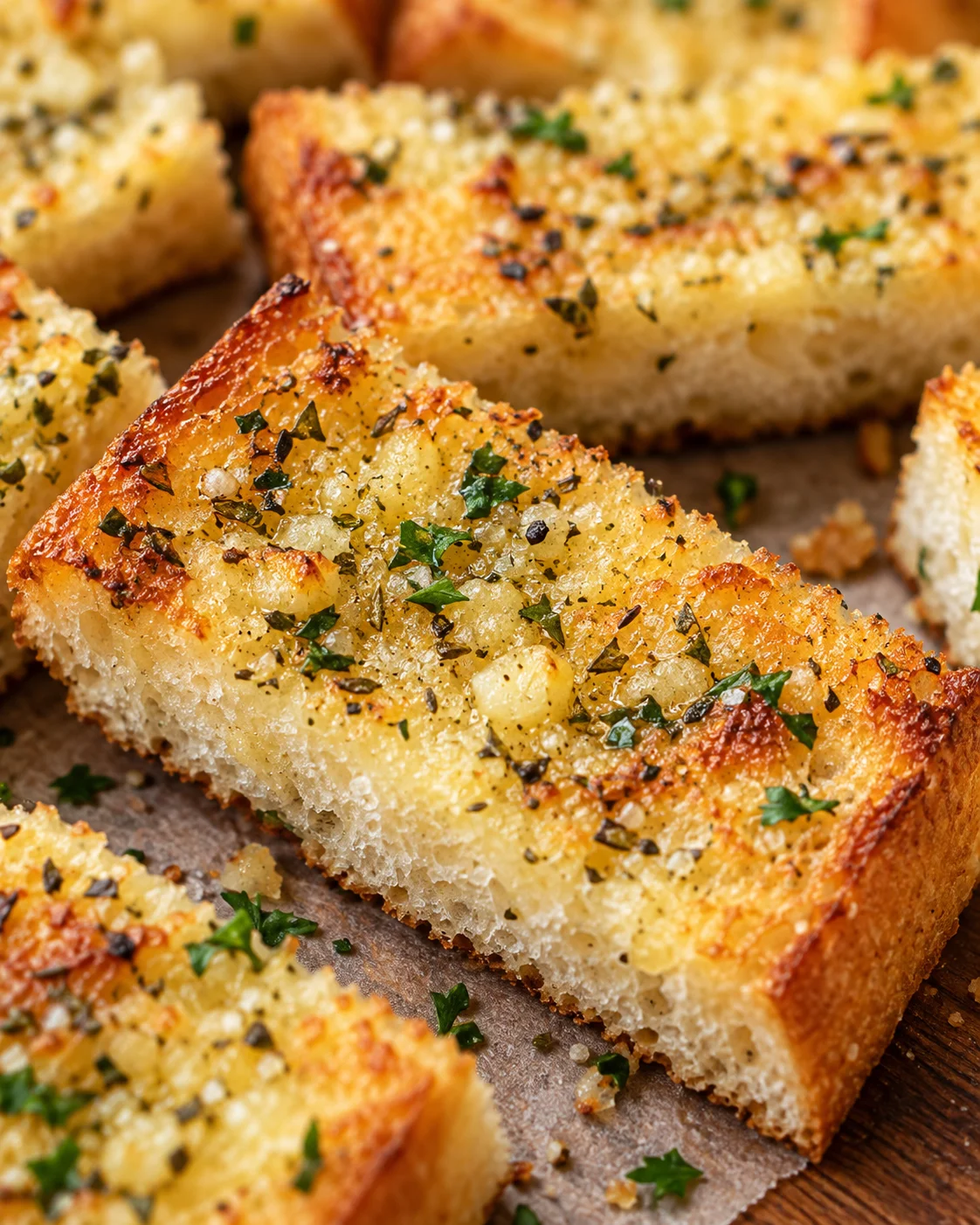
Fresh garlic is the detail that makes the biggest difference. The garlic is finely minced with a knife and steeped in melted butter for about 3 minutes. That short rest lets the garlic flavor spread through the butter before the bread goes into the oven, while the small pieces remain on the surface and develop toasty edges as they bake. The combination gives you bold garlic flavor in every bite.
Ingredients
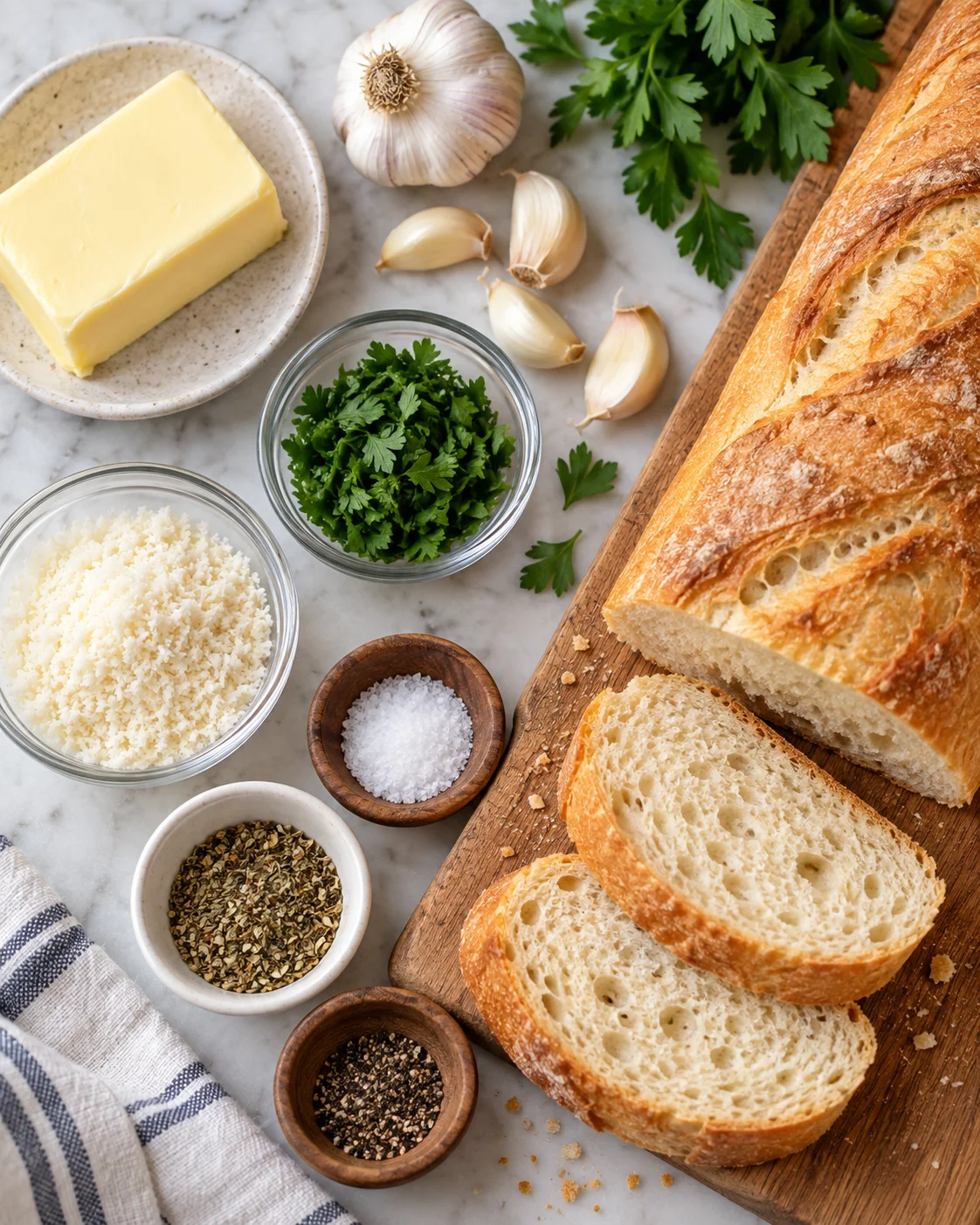
Gather the five ingredients below before you begin. The loaf matters most because the proportions are designed for a wide, soft bakery loaf rather than a narrow baguette.
- 1 (14 to 16-ounce) loaf soft French bread, not baguette: Look for a long, wide, fluffy loaf with a thin, crisp exterior. It may also be labeled Italian bread, as long as it is not an especially dense or narrow Italian loaf.
- 3/4 cup unsalted butter: This is the generous amount that makes the finished bread rich and helps carry the garlic over the cut surface.
- 4 large cloves fresh garlic, finely minced: This is about 2 tablespoons of minced garlic. Use a knife to mince it into small pieces.
- 1/2 teaspoon salt: Salt balances the butter and brings the garlic forward.
- 1 tablespoon dried parsley flakes: Parsley contributes a gentle herbal note and flecks of green throughout the butter.
For the easiest shopping trip, check the bakery section for the type of loaf described above. A 14-ounce French loaf in a clear cellophane bag is a good visual example, and Walmart sells a loaf like this under the French bread label. The label may not be technically exact, so rely on the shape and texture rather than the name alone. The larger accessibility idea is to use ingredients that are affordable, straightforward, and easy to find; Walmart is a practical benchmark because 90% of Americans live within 15 miles of one. Availability still varies by region. White Lily flour, for example, is common in the South but harder to find in the North, although flour is not needed for this recipe.
How to Make This Garlic Bread
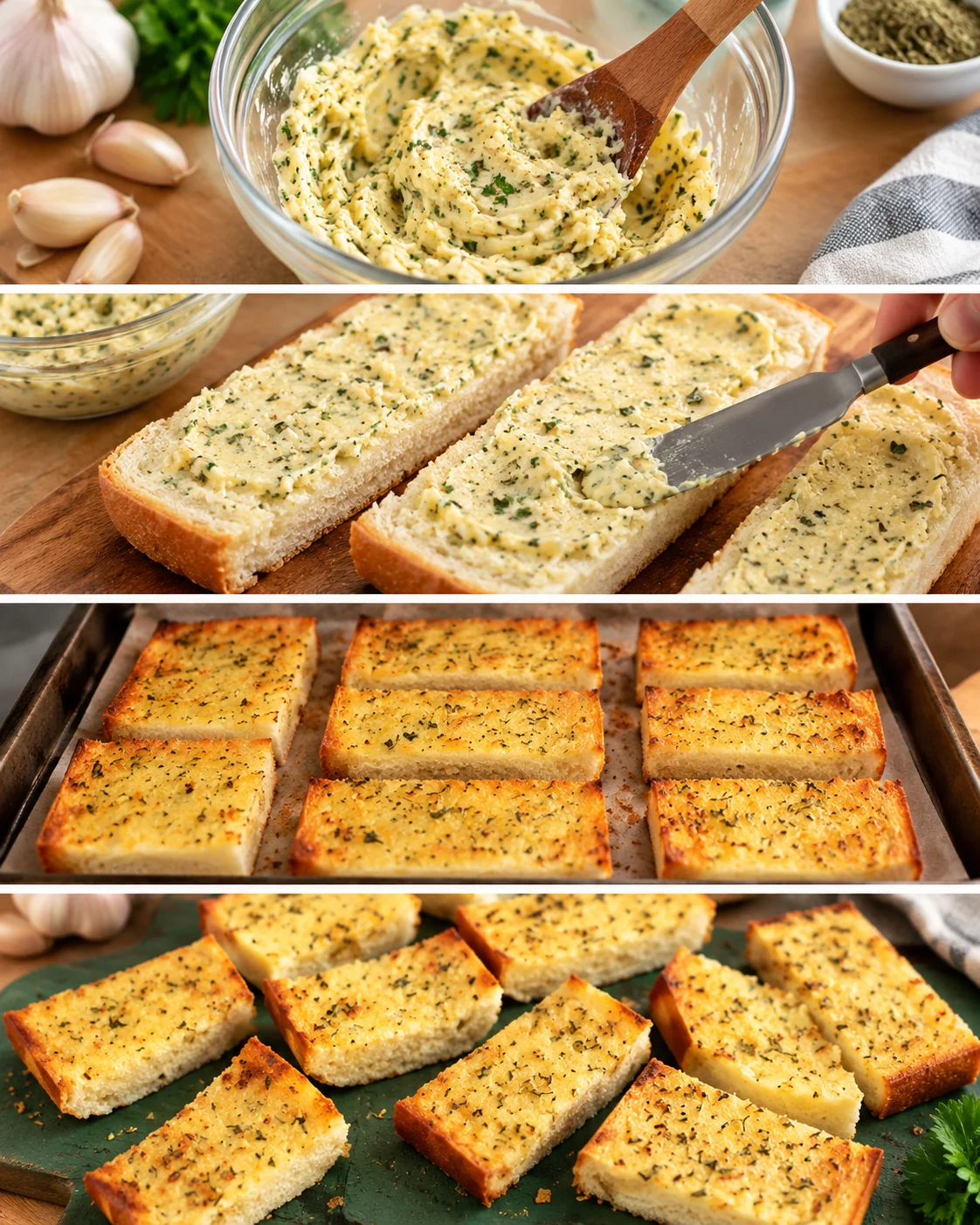
- Prepare the oven and pan. Preheat the oven to 400°F. Line a rimmed baking sheet with aluminum foil. The rim helps keep butter from running off the pan, and the foil makes cleanup easier.
- Cut the loaf. Slice the loaf in half lengthwise. Set both pieces on the prepared baking sheet with the cut sides facing up. Keeping the halves open makes it easy to coat the entire cut surface.
- Build the garlic butter. Add the butter to a small saucepan and melt it over low heat. Once it has melted, add the finely minced garlic and remove the pan from the heat. Let the garlic steep in the warm butter for about 3 minutes. This is a short steep, not a long simmer; the goal is to infuse the butter without aggressively frying the garlic on the stovetop.
- Season and coat. Stir the salt and dried parsley into the garlic butter. Use a spoon or pastry brush to coat the cut sides of both bread halves. Work from end to end so the butter reaches the corners and the garlic pieces are distributed over the loaf.
- Bake until golden. Bake for 15 minutes, or until the edges are golden brown. The center should still look soft and buttery while the exposed crust has taken on color.
- Broil for extra crispiness, if desired. If you want a crunchier top and edges, put the pan under the broiler for 2 to 3 minutes. Watch the bread very carefully the whole time. Broilers vary, so remove it as soon as the surface has the color and crispness you want.
- Slice and serve warm. Let the bread stay on the pan just long enough to handle safely, then slice it into portions and serve while the butter is warm and the edges are crisp.
Tips and Troubleshooting
- Choose the loaf by feel and shape. The ideal bread is long, wide, and fluffy with a thin, crisp exterior. A baguette is too narrow for the stated proportions, and a very dense loaf will not give the same soft center.
- Use fresh garlic when you can. Jarred, frozen, or tube garlic will work in the sense that it can flavor the butter, but the flavor will not be the same as fresh garlic. Fresh cloves give this bread its most distinct garlic character.
- Mince with a knife. A garlic press is useful for many recipes, but knife-minced garlic leaves small pieces that can become lightly toasty in the oven. Mince finely so the pieces spread easily and are not unpleasantly large.
- Keep the saucepan on low heat. Melt the butter gently, then take it off the heat as soon as the garlic goes in. If the garlic starts browning in the saucepan, the heat is too high for the steeping step.
- Coat the whole cut side. Pay attention to the ends and corners, where dry patches are easy to miss. If a spoon leaves garlic pieces behind, use it to scatter those pieces evenly before brushing on the remaining butter.
- Use the color cue, not only the clock. Fifteen minutes is the listed bake time, but the bread is ready when the edges are golden brown. If your loaf is unusually shaped or your oven runs hot, begin checking the appearance near the end of the bake.
- Broil with the oven door and pan in mind. The optional 2-to-3-minute broil is for extra crispiness, not a second full bake. Stay beside the oven and remove the bread promptly when it reaches the desired color.
Ways to Spice Up Your Garlic Bread
The base recipe keeps the ingredient list to five items, but garlic bread is easy to customize. You can add other spices or herbs to the butter, or sprinkle a little cheese over the top before baking. These additions change the flavor and texture of the finished bread, so treat them as optional extras rather than part of the five-ingredient base.
- Lean into the garlic: The most important flavor choice is fresh garlic, and using all four large cloves gives the bread a pronounced garlic taste. This is meant to be garlic bread, not bread with a barely noticeable garlic note.
- Add herbs or spices: Dried parsley is the recipe’s built-in herb, but other herbs and spices can be used to make the flavor pop. Add them in a way that suits the meal and remember that no extra measurements are part of the base recipe.
- Finish with cheese: A light sprinkle of cheese on top adds a savory, melty finish. Watch it carefully during the final bake or broil because cheese can brown quickly.
- Keep the bread style consistent: If you change the loaf, expect the butter coverage and texture to change too. The soft, wide French-style loaf remains the best match for the stated quantities.
Storage, Make-Ahead, and Freezing
This garlic bread is at its best sliced and served warm, when the edges are crisp and the center is soft. If you have leftovers, cool them, cover them, and refrigerate them. Rewarm the slices until heated through, but expect the crust to be softer than it was straight from the oven.
For a make-ahead approach, prepare the loaf and garlic butter separately. Slice the bread and keep it covered, then make the butter mixture and refrigerate it in a covered container. Bring the butter to a spreadable consistency before coating the bread, then bake using the same temperature and timing. Assemble close to baking time so the loaf does not sit saturated and lose its contrast of crisp edges and tender middle.
Freezing is not needed for this quick recipe, and fresh-baked texture is the reason to make it close to serving time. If you freeze leftovers, wrap them well and reheat until warm; the texture may be less crisp after thawing. Whether you refrigerate or freeze, serve the bread warm after reheating rather than expecting it to have the exact texture of the first bake.
Serving Suggestions
Serve this garlic bread warm as a side for dishes that have sauce or broth to scoop up. It fits naturally beside pasta, baked pasta, soup, salad, or a simple roast-style dinner. The buttery slices also make a useful addition to a casual bread basket, where the crisp edges and soft center can stand on their own.
For a meal with strong flavors, keep the base garlic-and-parsley version as written. If the main dish is simple, use one of the optional herb, spice, or cheese additions to give the bread a different finish. Slice it just before serving so the portions stay easy to pick up and the warm center remains the star.
Frequently Asked Questions
Do I need to make homemade bread for this recipe?
No. The recipe is semi-homemade and starts with a purchased soft French-style loaf. The homemade part is the fresh garlic butter and the baking step, so you can make a flavorful side without preparing dough.
Can I use a baguette?
A baguette is not the recommended bread. Choose a long, wide, fluffy loaf with a thin, crisp exterior instead. The stated butter and garlic quantities are sized for that broader soft French-style loaf, so a narrow baguette will not have the same coverage or center texture.
Can I use jarred, frozen, or tube garlic?
Those forms can flavor the butter, but fresh garlic gives the best flavor for this recipe. Finely mince four large fresh cloves with a knife; the small pieces can become lightly toasty as the bread bakes.
Why does the garlic steep in the butter?
Steeping the garlic in warm melted butter for about 3 minutes spreads its flavor through the butter before it goes on the bread. Removing the saucepan from the heat keeps the garlic from cooking too aggressively while still giving it time to infuse the butter.
How do I make the edges extra crisp?
Bake the bread at 400°F until the edges are golden brown, then use the optional broiler for 2 to 3 minutes. Watch continuously during broiling and take the pan out as soon as the bread reaches the crispness and color you want.
Nutrition Information
Per serving, this garlic bread has an estimated 300 calories, 28g carbohydrates, 6g protein, 19g fat, 11g saturated fat, 1g polyunsaturated fat, 5g monounsaturated fat, 1g trans fat, 46mg cholesterol, 469mg sodium, 80mg potassium, 1g fiber, 3g sugar, 537IU vitamin A, 1mg vitamin C, 38mg calcium, and 2mg iron.
Nutrition values are estimates and vary depending on the brands used. They do not include optional ingredients or ingredients added to taste. If calorie count or other nutritional values are important to you, plug the specific brands you use into an online nutrition calculator.
An easy semi-homemade garlic bread made with a soft French loaf, fresh garlic, unsalted butter, salt, and dried parsley. It has crisp edges and a soft, gooey center.
- Prep Time: 15 minutes
- Cook Time: 15 minutes
- Total Time: 30 minutes
- Yield: 8 people 1x
- Category: Bread
- Cuisine: American, Italian, southern
Ingredients
- 1 (14 to 16-ounce) loaf soft French bread (not baguette)
- 3/4 cup unsalted butter
- 4 large cloves garlic, finely minced (about 2 tablespoons minced)
- 1/2 teaspoon salt
- 1 tablespoon dried parsley flakes
Instructions
- Preheat the oven to 400°F and line a rimmed baking sheet with aluminum foil.
- Slice the loaf of bread in half and place the pieces, cut side up, on the prepared pan.
- In a small saucepan over low heat, melt the butter. Once melted, add the garlic and remove the saucepan from the heat. Allow the garlic to steep in the butter for about 3 minutes. Add the salt and parsley and stir to combine. Use a spoon or pastry brush to coat the cut sides of the bread with the garlic butter.
- Bake for 15 minutes or until the edges are golden brown. For extra crispiness, place the bread under the broiler for 2 to 3 minutes, watching very carefully. Slice and serve warm.
Notes
Nutritional values are estimates and vary depending on the brands used; optional ingredients and ingredients added to taste are not included.
Nutrition
- Serving Size: 1 serving
- Calories: 300 calories
- Fat: 19 g
- Carbohydrates: 28 g
- Protein: 6 g