Easy 30 Minute Dinner Rolls
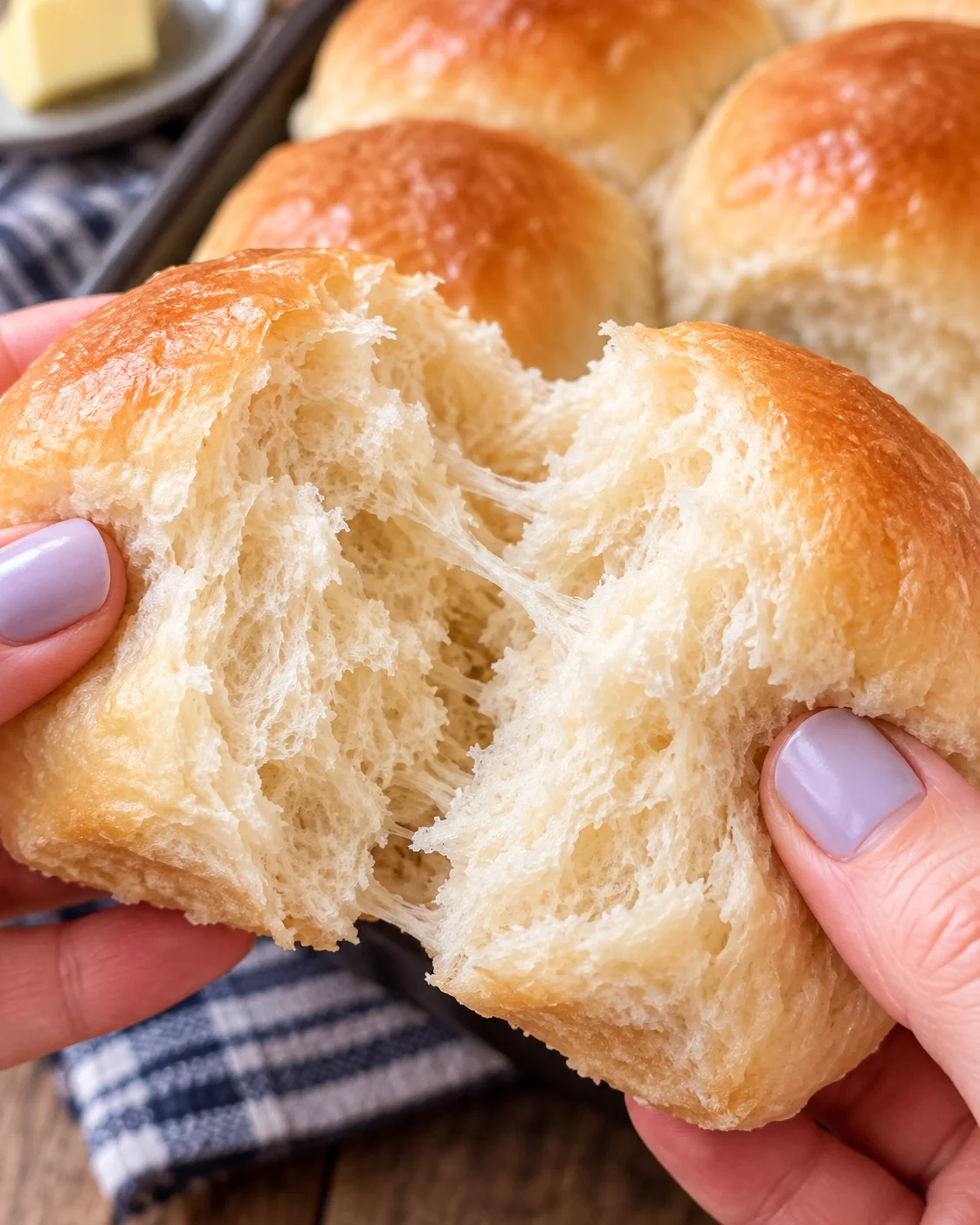
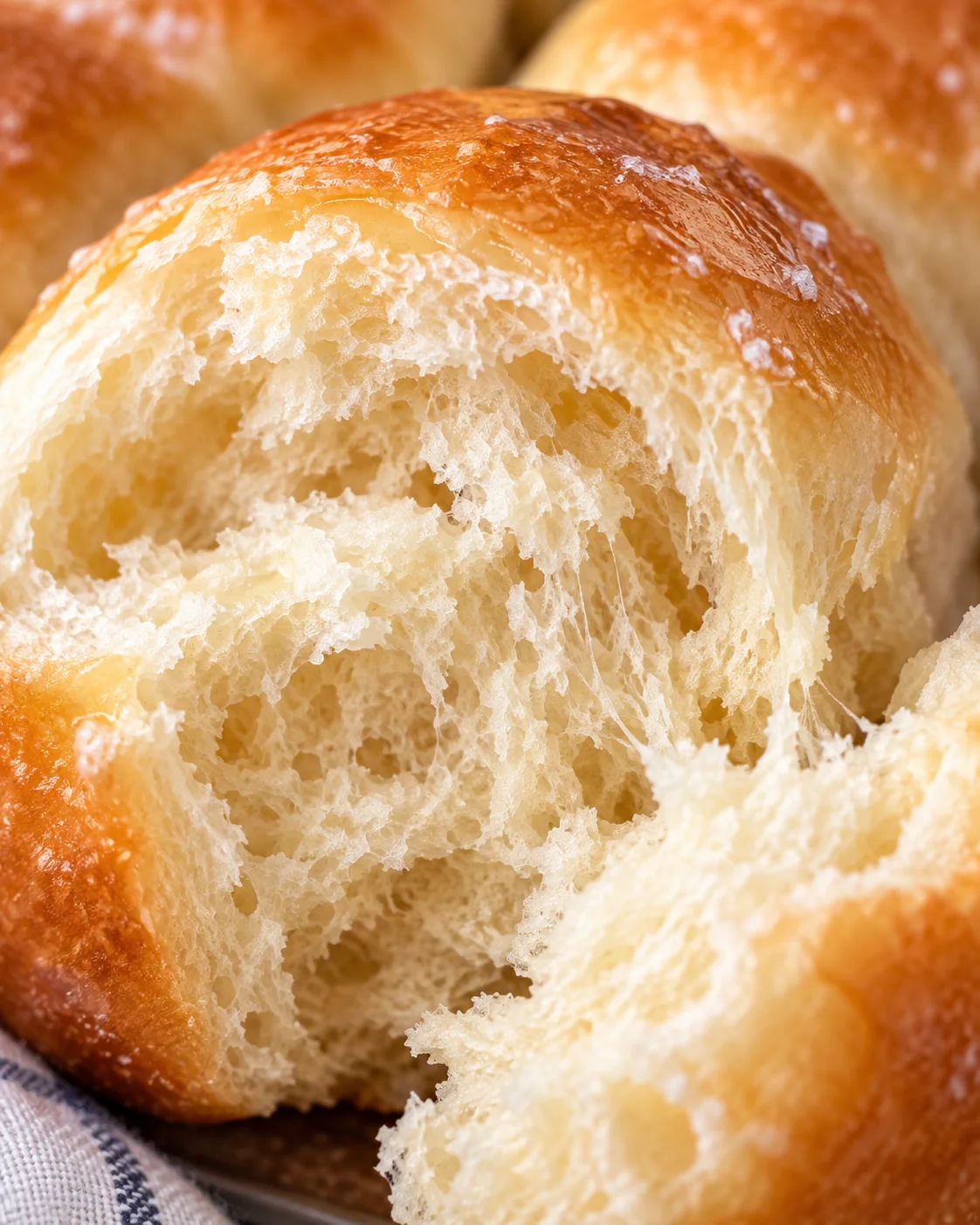
These 30 minute dinner rolls are the kind of homemade bread that fits into a real weeknight. They are soft, fluffy, and simple enough to make when you want fresh rolls on the table without taking on an all-day baking project. The same pan of rolls also belongs on a holiday table or alongside a family dinner.
The recipe is organized around a short proof, a brief stand-mixer knead, and a rise while the oven preheats. That is how the rolls reach the table in about 30 minutes: the preparation takes 10 minutes, the baking takes 20 minutes, and the total time is 30 minutes. You get a fairly soft dough, 15 individual rolls, and a golden-brown top finished with melted butter.
Serve them with a hot bowl of soup, use them as the base for slider recipes, or save any leftovers for the next morning. A warm roll with your favorite jam or jelly is a very good reason to hope there are a few left.
Why You Will Love These 30 Minute Dinner Rolls
These rolls solve the biggest problem with homemade dinner bread: the time it can take to get from ingredients to a finished side. There is no separate, extended kneading routine to manage. The stand mixer combines the dough and kneads it for about 4 minutes, while the dough rises as the oven comes up to temperature.
The result is a soft, fluffy roll with a straightforward ingredient list. You do not need an elaborate shaping technique; spray your hands with baking spray, form the dough into 15 balls, and arrange them in a 9×13 baking dish. The rolls are useful for ordinary dinners, busy weeknights, holidays, or any meal that needs a fresh bread side.
There is also room to serve them in different ways without changing the dough. Brush them with melted butter as written, finish them with honey butter, turn them into garlic rolls, or add Parmesan cheese over the warm buttered tops.
Ingredients for 30 Minute Dinner Rolls
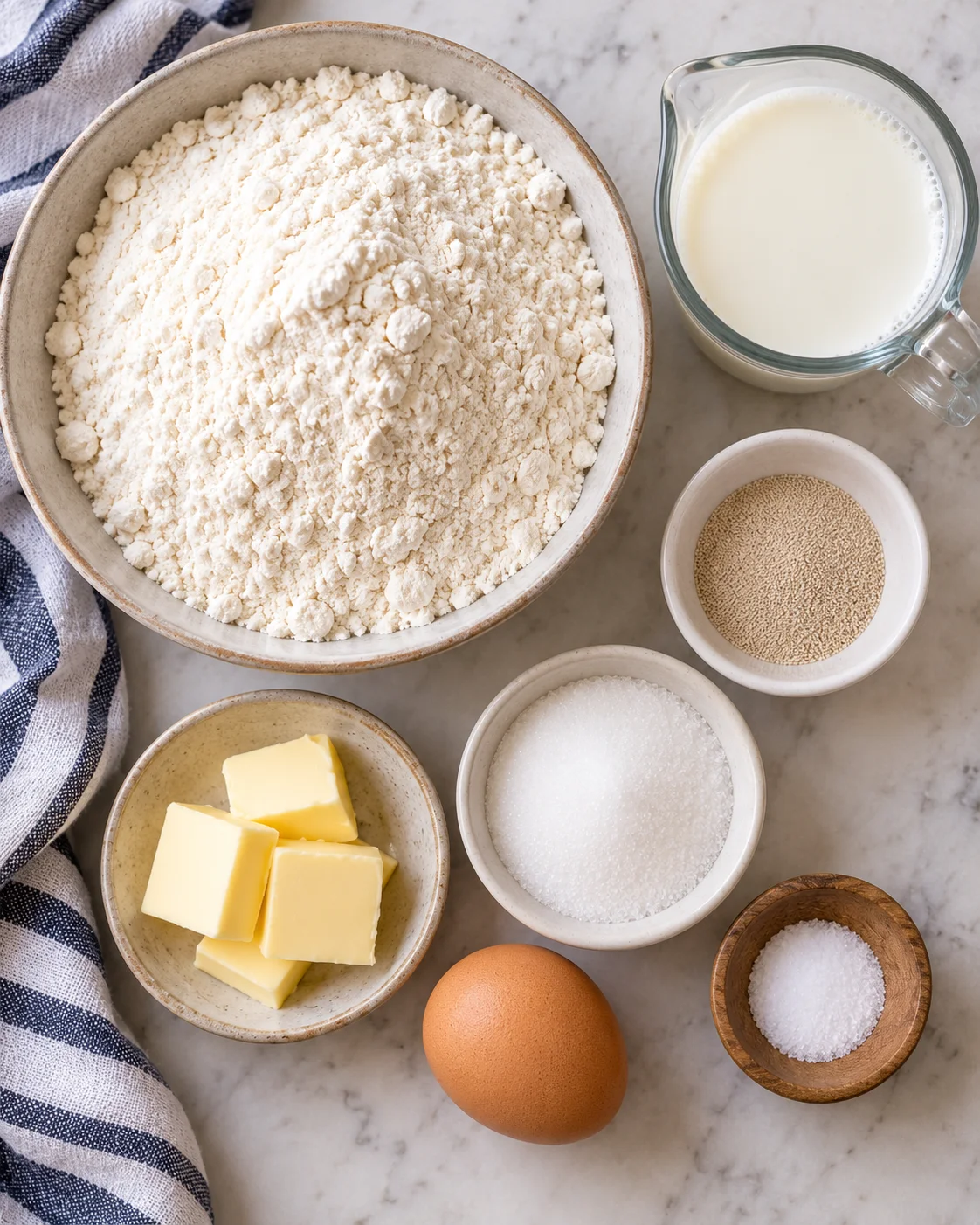
Gather the ingredients before you start, and pay particular attention to the water temperature and yeast. The dough is meant to stay fairly soft, so the flour should be added gradually rather than used to make the dough dry.
For the dough
- 1 1/4 cups warm water: Keep the water in the 115-125 degree range. Cooler water can make the yeast take longer to proof, while hotter water can kill the yeast.
- 1/4 cup white granulated sugar: This is the sugar used in the dough.
- 2 tablespoons active dry yeast: Check the expiration date before mixing. Expired yeast can keep the rolls from rising, so discard it and buy fresh yeast if it is expired.
- 1/3 cup vegetable oil: Olive oil can be used in place of the vegetable oil.
- 1 teaspoon salt: Salt helps slow the rise of yeast in baked goods, which supports an even, stable texture.
- 1 egg: The egg helps bind the ingredients and helps increase the volume.
- 3 3/4 cups all-purpose flour: Add it 1 cup at a time as you mix. Use just enough flour to form the dough into balls with oily hands; adding too much flour can make the rolls dense.
For preparing and finishing
Line the 9×13 pan with parchment paper or lightly grease it. Spray your hands with baking spray before shaping the soft dough, then brush the baked rolls with melted butter before serving.
How to Make 30 Minute Dinner Rolls
- Prepare the pan. Line a 9×13 baking pan with parchment paper, or lightly grease the pan. Set it aside so it is ready as soon as the dough is shaped.
- Proof the yeast. In the bowl of a stand mixer, combine the warm water, sugar, and active dry yeast. Allow the mixture to proof for approximately 2-5 minutes. Start with water in the 115-125 degree range: water that is too cool can slow the proof, and water that is too hot can kill the yeast.
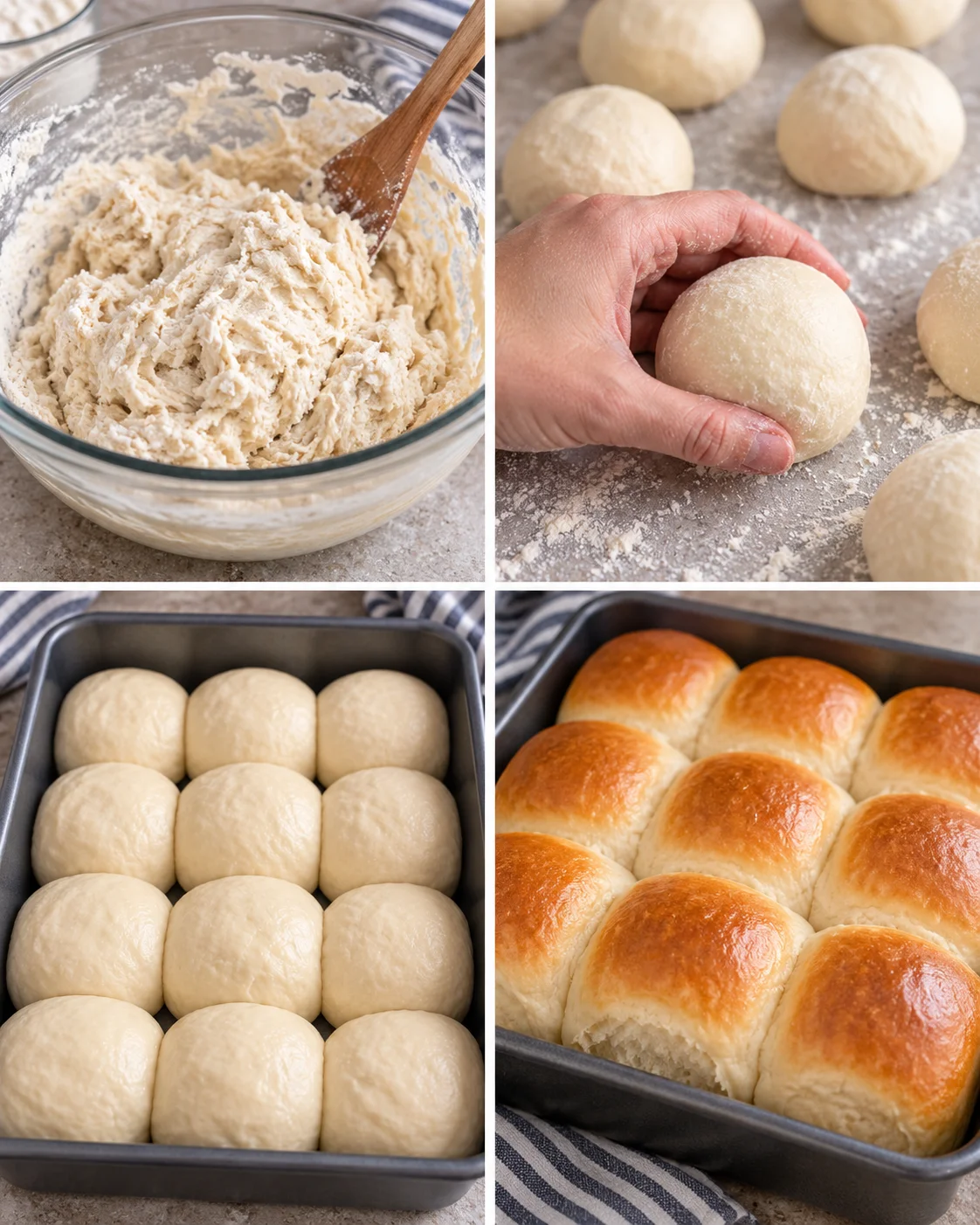
- Mix the dough. Add the vegetable oil, salt, egg, and flour, adding the flour 1 cup at a time. Mix with the stand mixer until everything is combined. The dough will be fairly soft.
- Knead with the mixer. Let the stand mixer do the work and knead the dough for about 4 minutes. Do not keep adding flour simply because the dough is sticky. Mix in just enough flour for you to form the dough into balls with oily hands; too much flour is one of the main reasons these rolls can turn out dense.
- Shape the rolls. Spray your hands with baking spray, then shape the dough into 15 individual balls. The spray makes it easier to handle the soft dough without trying to stiffen it with extra flour.
- Arrange and cover. Place the dough balls in the prepared 9×13 baking dish and cover the pan with a dish towel.
- Let the dough rise while the oven heats. Preheat the oven to 375 F. Place the covered pan on top of the oven and let the dough rise while the oven is preheating. This rise is part of the recipe’s 30-minute rhythm.
- Bake. When the oven is preheated, bake the rolls for 20 minutes, or until the tops are golden brown.
- Finish with butter. Remove the pan from the oven and brush the tops of the rolls with melted butter before serving. Enjoy them warm.
Tips for Light, Fluffy Rolls
The dough for these dinner rolls is intentionally soft. A sticky dough can make you want to keep sprinkling in flour, but that response works against the texture you want. The goal is not a dry dough that releases completely from your hands. Add the flour gradually and stop once the dough is workable enough to shape into balls with oily hands.
Pay attention to the water temperature
Use water in the 115-125 degree range. If the water is cooler, the yeast may take longer to proof. If it is too hot, the yeast can die and the rolls may not rise. This small temperature range matters because the recipe depends on a quick proof and a rise during oven preheating.
Give the dough enough kneading
Although kneading is not listed as a separate hand-work step, the dough still needs kneading to form gluten, which helps bread become light and fluffy. Let the stand mixer knead for about 4 minutes as directed. If the baked rolls are dense, the dough can be kneaded by hand before you form the individual balls, or the stand mixer can knead it for a couple extra minutes.
Check the yeast before blaming the dough
If the yeast does not proof, check its expiration date and think back to the water temperature. Expired yeast may not make the rolls rise. Water that is too cold can slow the proof, while water that is too hot can prevent the yeast from growing at all. Fresh active dry yeast and correctly warmed water give the dough its best chance to rise.
Use the visual cue at the end
The rolls are ready after 20 minutes in a preheated 375 F oven or when the tops are golden brown. The color is the recipe’s doneness cue, so look at the tops before you remove the pan.
Variations and Substitutions
Keep the dough formula the same and change the way you finish or serve the rolls. The supported substitution is olive oil in place of vegetable oil. The other ideas are toppings and add-ins for the baked rolls, so they let you shift the flavor without changing the mixing, rising, or baking instructions.
- Honey butter: Spread honey butter over warm rolls, or drizzle them with a little honey.
- Garlic rolls: Brush the tops with garlic butter while the rolls are warm from the oven. They are a natural partner for an Italian dish such as homemade spaghetti sauce.
- Parmesan cheese: Sprinkle Parmesan cheese over the warm, buttered rolls. This is a simple way to add a savory finish.
- Olive oil: Use olive oil in place of the vegetable oil in the dough. No other replacement is needed for the recipe as written.
Storage, Refrigeration, and Rewarming
These dinner rolls do not contain preservatives, so leftover rolls keep best in an airtight container in the refrigerator. Once they are stored, you have two simple ways to bring them back to the table.
For a room-temperature serving, take the rolls out of the refrigerator 15 minutes before serving and allow them to come to room temperature. For a warm serving, place them in the microwave for 30 seconds.
Serving Suggestions
Serve these rolls as a side with any family dinner. They are especially handy on busy weeknights and make a fitting bread option for holidays. A hot bowl of soup is another natural match, with the soft rolls ready to soak up the meal.
You can also use the rolls as the base for slider recipes. If some remain after dinner, serve them the next morning with your favorite jam or jelly. Garlic-butter rolls work well with an Italian dish such as homemade spaghetti sauce, while honey butter and Parmesan let you tailor the finish to the rest of the meal.
Recipe at a Glance
- Prep time
- 10 minutes
- Cook time
- 20 minutes
- Total time
- 30 minutes
- Course
- Side Dish
- Cuisine
- American
- Yield
- 15 rolls
Frequently Asked Questions
What type of yeast works best for these rolls?
Active dry yeast is recommended for these dinner rolls. Check the expiration date before using it. If the yeast is expired, throw it out and buy fresh yeast because expired yeast can cause the rolls not to rise. Yeast sold in a jar can be stored in the refrigerator or freezer for a longer shelf life, and a jar can be more convenient than individual yeast packets.
Do I have to use a stand mixer?
No. The stand mixer is convenient for combining the ingredients and kneading the soft dough, but it is not the only option. The dough can also be kneaded by hand before shaping the balls. The recipe also gives a bread-machine option.
How do I use a bread machine for this recipe?
If you have a bread machine, follow the instructions as if you were using a stand mixer. Depending on the machine, select the dough setting and let the bread machine knead the dough. Remove the dough when that is complete, then shape it into individual balls and continue with the prepared pan, covered rise, 375 F oven, and baking instructions.
Why did my dinner rolls turn out dense?
Dense rolls can come from too much flour, not enough kneading, or yeast that did not proof. The dough should remain fairly soft. Add just enough flour to make it possible to form balls with oily hands instead of adding flour until the dough is no longer sticky. Let the stand mixer knead for about 4 minutes, add a couple extra minutes if needed, or knead by hand before shaping. Also check the yeast expiration date and keep the water in the 115-125 degree range.
Can I use olive oil instead of vegetable oil?
Yes. Olive oil can be used in place of the vegetable oil in the dough. Keep the rest of the ingredient list and method the same.
How many rolls does the recipe make?
Shape the dough into 15 individual balls. The recipe makes 15 rolls.
Nutrition Information
The nutrition information is an estimate and is not guaranteed to be accurate. The serving size is 1 roll.
- Calories
- 169 kcal
- Carbohydrates
- 25.4 g
- Protein
- 3.3 g
- Fat
- 5.7 g
- Cholesterol
- 10.5 mg
- Sodium
- 158.5 mg
- Potassium
- 3.4 mg
- Fiber
- 1 g
- Sugar
- 3.3 g
- Calcium
- 0.3 mg
- Iron
- 0.3 mg