The Best Lasagna Soup Recipe

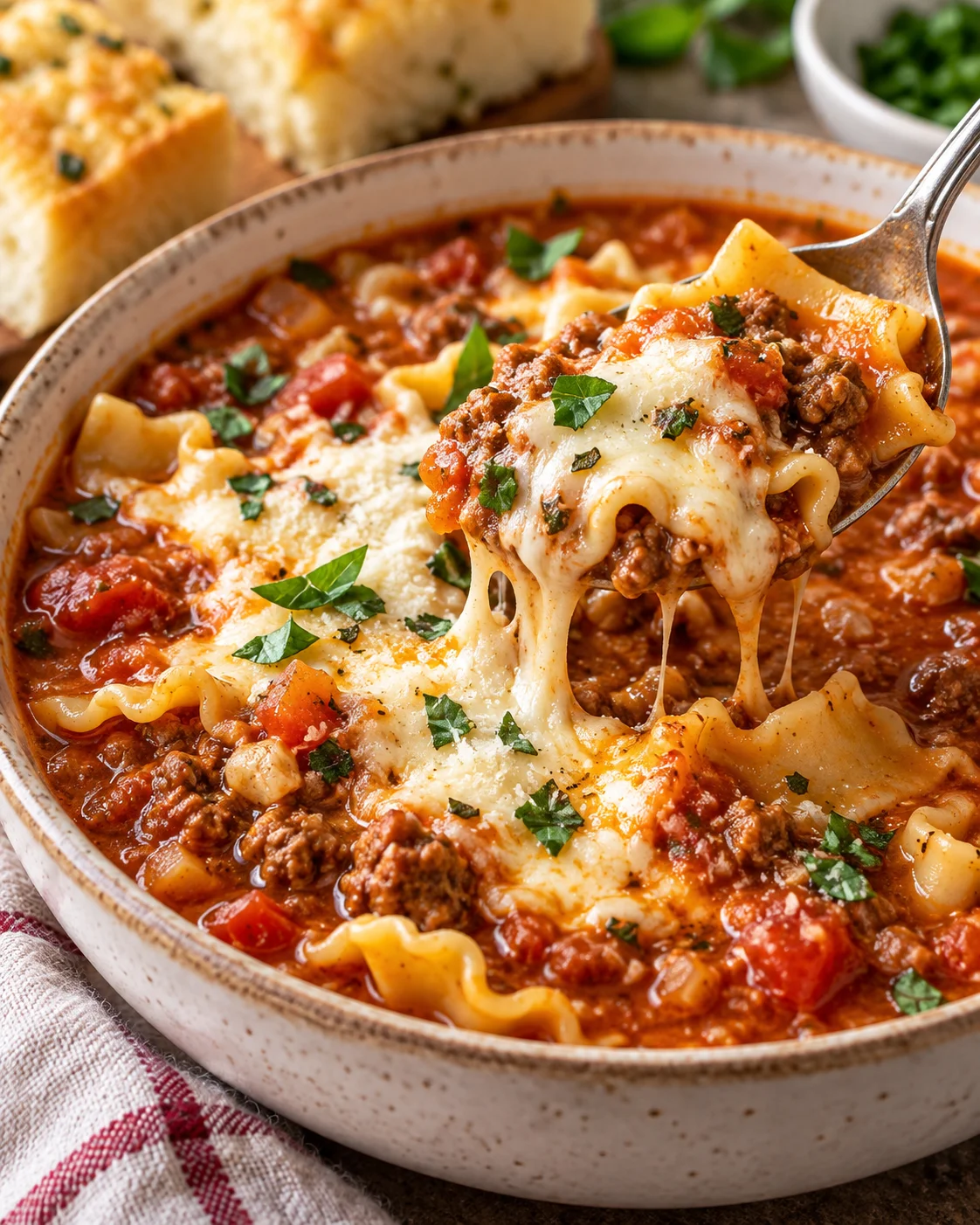
This easy lasagna soup recipe brings the familiar comfort of classic lasagna to the table without layering noodles, sauce, and cheese in a baking dish. Everything cooks together in one pot, creating a rich tomato broth with tender pasta and browned ground beef, then the soup is finished with ricotta, mozzarella, Parmesan, and fresh parsley.
It is a practical dinner for a weeknight, but it also has the cozy, hearty feel people look for in a longer-simmered meal. The 45-minute recipe makes 12 cups, and the sturdy pasta options help it travel and reheat well for leftovers and lunches. You can serve the cheeses in the pot for a shared finish or let everyone add their own to individual bowls.
When you use bowtie pasta, the soup is especially easy to serve because the pasta holds up well in the tomato broth. It is a relaxed way to enjoy the familiar parts of lasagna in a spoonable format.
Why You Will Love This Recipe
- Classic lasagna flavor, less work: You get the tomato, Italian seasoning, beef, pasta, and three-cheese combination associated with lasagna without assembling layers or turning on the oven.
- One-pot cooking: The beef, vegetables, tomato broth, and pasta all come together in the same soup pot, so cleanup stays simple.
- Beginner-friendly steps: Brown the meat and vegetables, stir in the tomato base and seasonings, add the pasta, and simmer until tender. The instructions are straightforward and include clear ways to adjust the soup as it cooks.
- Flexible pasta and broth: Several sturdy pasta shapes work well, and chicken, vegetable, or beef broth can be used. Water or more broth can be added in small amounts when the pasta thickens the soup.
- Useful leftovers: The soup travels and reheats well. With the right pasta choice and a little extra liquid at reheating, it works especially well for lunches and planned leftovers.
The finished soup is tomato-rich and hearty, with pasta that holds its shape and a creamy, familiar lasagna finish. The toppings can melt into the whole pot or remain separate, which makes the recipe easy to serve to people who prefer different amounts of cheese.
Ingredients for Lasagna Soup
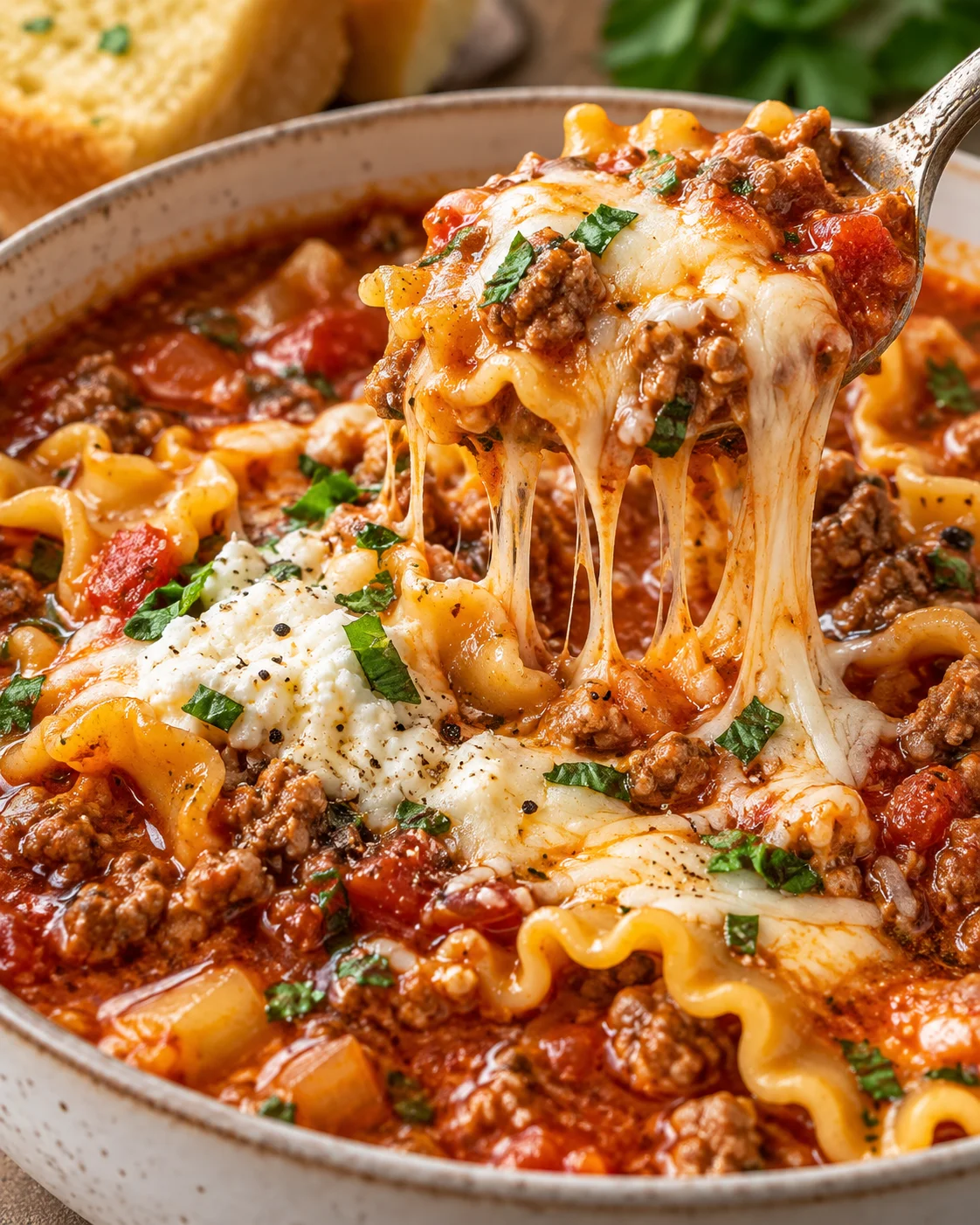
The ingredient list builds a simple tomato broth around browned ground beef, onion, garlic, and sturdy pasta. Canned tomatoes form the base, tomato sauce smooths the broth, and tomato paste adds richness and thickness. Italian seasoning brings familiar lasagna flavor without extra steps. The notes after the commas explain which ingredients can be adjusted or exchanged without changing the basic method.
Main Soup Ingredients
- 1-2 tablespoons olive oil, or preferred oil
- 1 pound ground beef. Any fat content works, so use what you usually buy.
- 1 large onion, diced
- 4 cloves garlic, minced
- 1 (15-ounce can) diced tomatoes, don’t drain. Whole, diced, or crushed canned tomatoes can work in this soup.
- 1 (15-ounce can) tomato sauce, or tomato puree
- 1/3 cup tomato paste, about half of a 6-ounce can
- 4 cups chicken broth. Vegetable or beef broth also works.
- 1-2 cups water, to adjust consistency
- 1 tablespoon Italian seasoning
- 1 teaspoon salt, or more as needed to adjust flavor
- Black pepper, to taste
- 8 ounces uncooked bowtie pasta, or a similar sturdy pasta
Suggested Toppings
- 1/2 cup ricotta cheese
- 2 ounces mozzarella cheese, shredded, about 1/2 cup
- 1/4 cup Parmesan cheese, shaved, shredded, or fresh grated
- 1/4 cup fresh parsley, chopped
The topping amounts are suggested rather than a limit; measure them with your heart, then use the serving method that fits your table. Ricotta, mozzarella, and Parmesan supply the classic lasagna finish, while parsley adds color and a little freshness.
Scaling note: When scaling the recipe, the light-gray ingredient notes after the commas do not change. Adjust the measured amounts as needed.
Equipment
- Chef’s knife
- Cutting board
- Measuring cups and spoons
- 4.5-quart Dutch oven or stockpot, or a 6-quart pressure cooker
- Stirring utensil
How to Make Lasagna Soup
For the stovetop method, use a 4.5-quart soup pot with enough room for the broth and pasta. Have the onion diced and garlic minced before you start, and keep your stirring utensil nearby because the pasta needs frequent attention as it cooks.
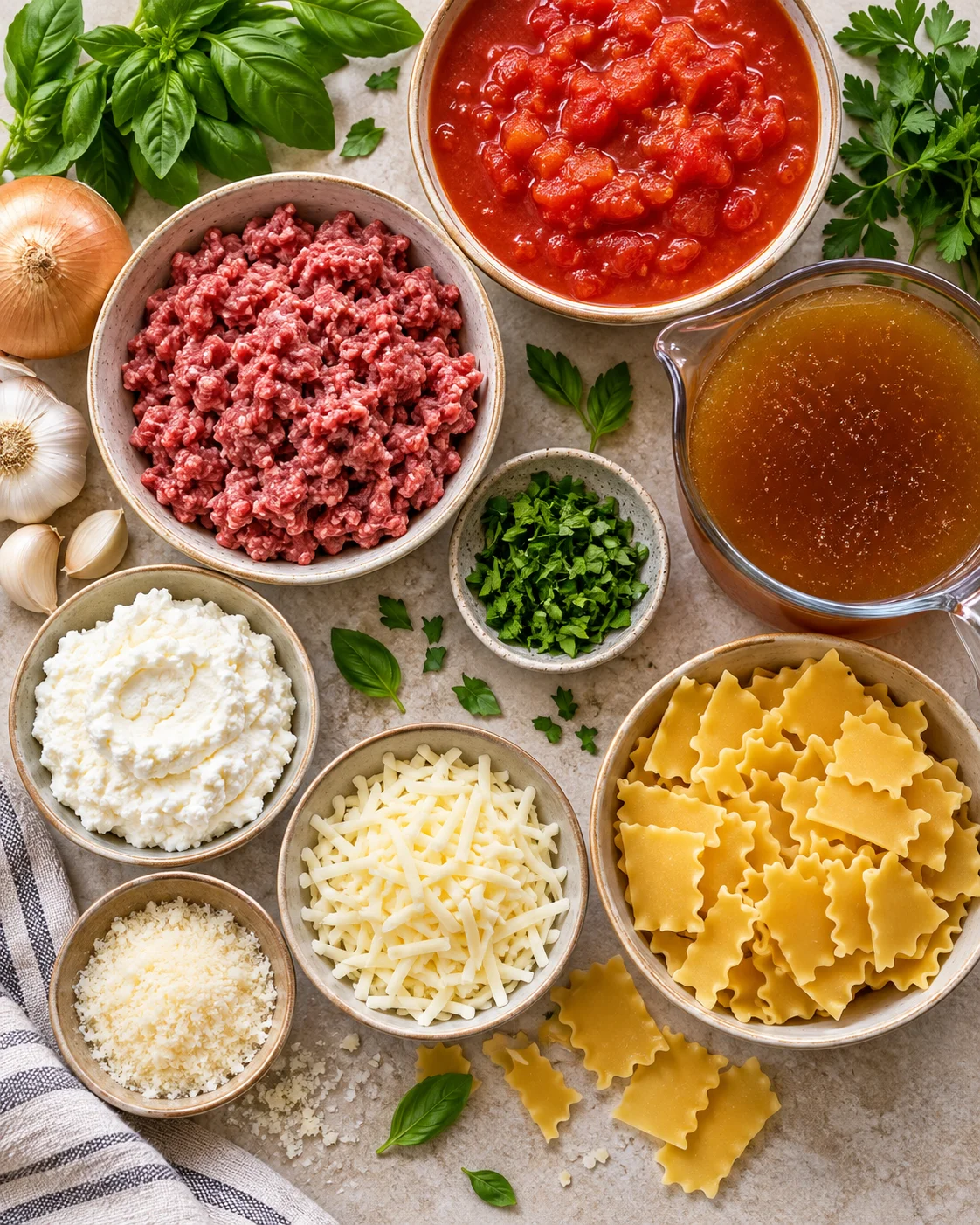
- Heat the oil. Heat a 4.5-quart soup pot over medium-high heat. Add the olive oil and heat until it is shimmering.
- Brown the beef and soften the vegetables. Add the ground beef, onion, and garlic. Sauté, stirring as needed, until the beef is cooked through and the vegetables are softened. If there is excess fat in the pot, drain it before continuing.
- Build the tomato broth. Stir in the diced tomatoes with their juice, tomato sauce, tomato paste, broth, Italian seasoning, salt, black pepper, and pasta noodles. Stir well so the tomato paste dissolves into the liquid and the ingredients are evenly combined.
- Bring the soup to a boil. Increase the heat to high and bring the soup to a boil.
- Simmer until the pasta is tender. Loosely cover the pot, reduce to a steady simmer, and cook for 10 to 15 minutes, until the pasta is cooked to your liking. Stir frequently to prevent the pasta from sticking together. As it absorbs liquid and thickens the soup, add water or more broth in small amounts to adjust the consistency.
- Add the cheeses and parsley. Let the soup cool slightly. Either add the ricotta, mozzarella, and Parmesan to the whole pot or serve the cheeses on the side so each person can add them to an individual bowl. Garnish with fresh parsley.
- Cool leftovers before storing. If you are not serving the entire pot, cool the soup completely and transfer it to an airtight container. Refrigerate it for up to 5 days or freeze it for up to 90 days. The longer storage guidance and reheating details are below.
Pressure Cooker Instructions
You can also make the soup in a pressure cooker. Select Sauté and heat the olive oil in the cooker. Add the ground beef, onion, and garlic, and cook until the beef is browned. Drain excess fat, then deglaze the pot with a small splash of broth and press Cancel.
Stir in the tomatoes, tomato sauce, tomato paste, broth, seasonings, and pasta. Secure the lid, set the valve to Sealing, and pressure cook on High for 1 minute. For al dente pasta, use a quick release. For softer pasta, allow a natural release for about 10 minutes.
Open the lid, stir the soup, and adjust the consistency with water if needed. Serve with the cheese and parsley options described above. If doubling the recipe, use an 8- or 10-quart pressure cooker to safely accommodate the volume.
Tips for Success
- Use the pasta shape strategically. Bowtie, penne, rigatoni, and macaroni are sturdy choices that hold their shape and reheat well. This matters when the soup is headed for leftovers or lunch.
- Stir during the pasta simmer. The noodles can stick together as they cook, so stir frequently during the 10- to 15-minute simmer.
- Adjust the broth gradually. Pasta absorbs liquid while cooking and continues to absorb it after the soup cools. Add water or broth in small amounts rather than changing the consistency all at once.
- Drain only when needed. After browning the beef, drain excess fat if there is enough in the pot to affect the soup. Any ground-beef fat content works for the recipe.
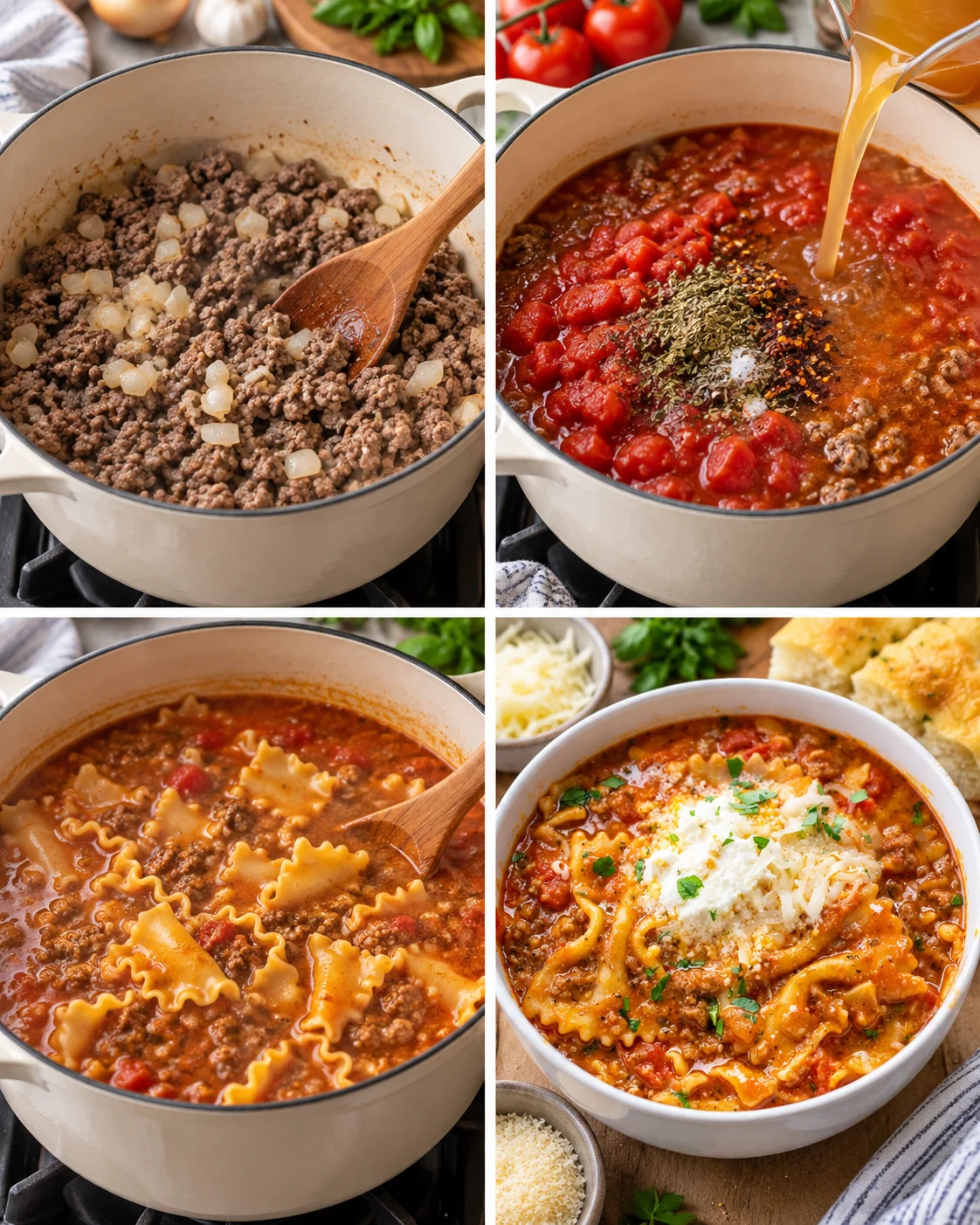
- Choose your cheese finish. Mixing the three cheeses into the whole pot makes a shared, melty topping. Serving them alongside the soup lets each person customize an individual bowl.
- Keep the parsley for the end. Fresh parsley is used as a garnish for color and a little brightness after the soup and cheese are ready.
- Plan for a thicker soup after resting. If the soup sits or is reheated, expect the pasta to take up more of the broth. Loosen it with small amounts of water or broth as needed.
Variations and Substitutions
These options keep the same overall lasagna-soup approach while giving you flexibility with what is in the kitchen. Use them as choices for this recipe, not as reasons to change several ingredients at once.
- Swap the oil. Olive oil is used to sauté the beef, onion, and garlic, but any preferred neutral oil works.
- Change the protein. Any ground meat can be substituted for the ground beef using the same cooking method.
- Choose another tomato texture. Whole, diced, or crushed canned tomatoes can form the tomato base. For a thicker, tomato-soup-style broth, use canned crushed tomatoes instead of diced tomatoes.
- Use tomato puree. The tomato sauce can be replaced with tomato puree.
- Use another broth. Chicken broth is the go-to in the ingredient list, but vegetable or beef broth works too.
- Pick a sturdy pasta. Bowtie, penne, rigatoni, and macaroni all hold up well. If you want the visual appeal of lasagna noodles, break them into pieces before adding them. They soften more as the soup sits, so enjoy that version the same day or within a day or two.
- Take the marinara shortcut. If you do not have the individual canned tomato products, use a 24-ounce jar of marinara sauce plus about 1 cup of water as a simple substitute.
Storage, Make-Ahead, and Freezing
Lasagna soup is useful for make-ahead meals because it travels and reheats well, but the pasta will continue absorbing broth as it stands. Let the soup cool completely before storing it, then choose the container and storage method that fits your plan.
- Refrigerate: Store completely cooled soup in an airtight container in the refrigerator for up to 5 days.
- Freeze: Transfer cooled soup to airtight freezer containers and freeze for up to 3 months, or up to 90 days. For the best texture, freeze the soup without the cheese toppings. More than 90 days is allowed when the soup is vacuum sealed.
- Thaw: Move frozen soup to the refrigerator and let it thaw overnight. Avoid thawing it at room temperature.
- Reheat: Warm the soup gently on the stovetop or in the microwave. Add broth or water as needed to loosen it because the noodles will have absorbed much of the broth.
If you are preparing portions for lunches, keep the cheese separate when practical and add it when serving. That follows the freezer guidance and keeps the topping customizable. The soup can also be served from one pot for a group, with the toppings stirred in after the soup cools slightly.
Serving Suggestions
Lasagna soup does not need as much cheese as traditional layered lasagna to deliver the same familiar direction of flavor. Stir the ricotta, mozzarella, and Parmesan directly into the pot after it cools slightly, or put the cheeses on the side and let everyone add them to individual servings. Finish with chopped fresh parsley for color and a little freshness.
Serve the soup with homemade French bread or homemade focaccia for dipping into the tomato broth. A kale salad also makes a fresh companion. For more cozy soup ideas, see the suggestions below.
More Cozy Soup Recipes to Try
- Italian Sausage Soup
- Zuppa Toscana
- Lemon Chicken Soup with Orzo
- Split Pea Soup with Ham
- Cabbage Roll Soup
- Stuffed Pepper Soup
Frequently Asked Questions
What is lasagna soup?
It is a deconstructed version of traditional lasagna made in one pot. Instead of layering noodles, sauce, and cheese in a baking dish, the ingredients simmer together in a tomato-based soup and are finished with classic lasagna cheeses.
What pasta is best for lasagna soup?
Sturdy shapes such as bowtie, penne, rigatoni, and macaroni hold their shape and reheat well. Broken lasagna noodles also work, but they soften more quickly. Enjoy that version the same day or within a day or two.
Why does the soup get thicker after cooking?
The pasta absorbs liquid as it cooks and continues absorbing it while the soup cools. Add small amounts of water or broth during cooking, storage, or reheating to adjust the consistency to your liking.
Can I make this in a pressure cooker?
Yes. Use the Sauté setting to brown the beef, onion, and garlic, drain excess fat, deglaze with a small splash of broth, and press Cancel. Add the remaining soup ingredients and pasta, then pressure cook on High for 1 minute with the valve set to Sealing. Use a quick release for al dente pasta or a natural release of about 10 minutes for softer pasta. If doubling, use an 8- or 10-quart pressure cooker.
Can I use another ground meat?
Yes. Any ground meat can be substituted for ground beef using the same cooking method. The recipe also allows any ground-beef fat content, so use the type you usually buy.
How long does lasagna soup keep?
Cool it completely, then refrigerate it in an airtight container for up to 5 days. You can freeze it in airtight freezer containers for up to 3 months, or up to 90 days; freeze without cheese toppings for the best texture. Thaw overnight in the refrigerator and avoid thawing at room temperature.
Nutrition
The nutrition estimate is based on a serving size of 1 cup:
- Calories: 169 kcal
- Carbohydrates: 5 g
- Protein: 12 g
- Fat: 12 g
- Saturated fat: 5 g
- Polyunsaturated fat: 1 g
- Monounsaturated fat: 5 g
- Trans fat: 0.5 g
- Cholesterol: 35 mg
- Sodium: 378 mg
- Potassium: 295 mg
- Fiber: 1 g
- Sugar: 2 g
- Vitamin A: 309 IU
- Vitamin C: 4 mg
- Calcium: 103 mg
- Iron: 1 mg
Nutrition facts are estimates and may vary based on brands, ingredients, and portions.
Recipe details: Prep time: 15 minutes. Cook time: 30 minutes. Total time: 45 minutes. Yield: 12 cups. Recipe author: Traci. Course: Dinner Recipes, Main Course. Cuisine: American, Italian.


