Best Carbonara in Rome (+ Easy Carbonara Recipe)

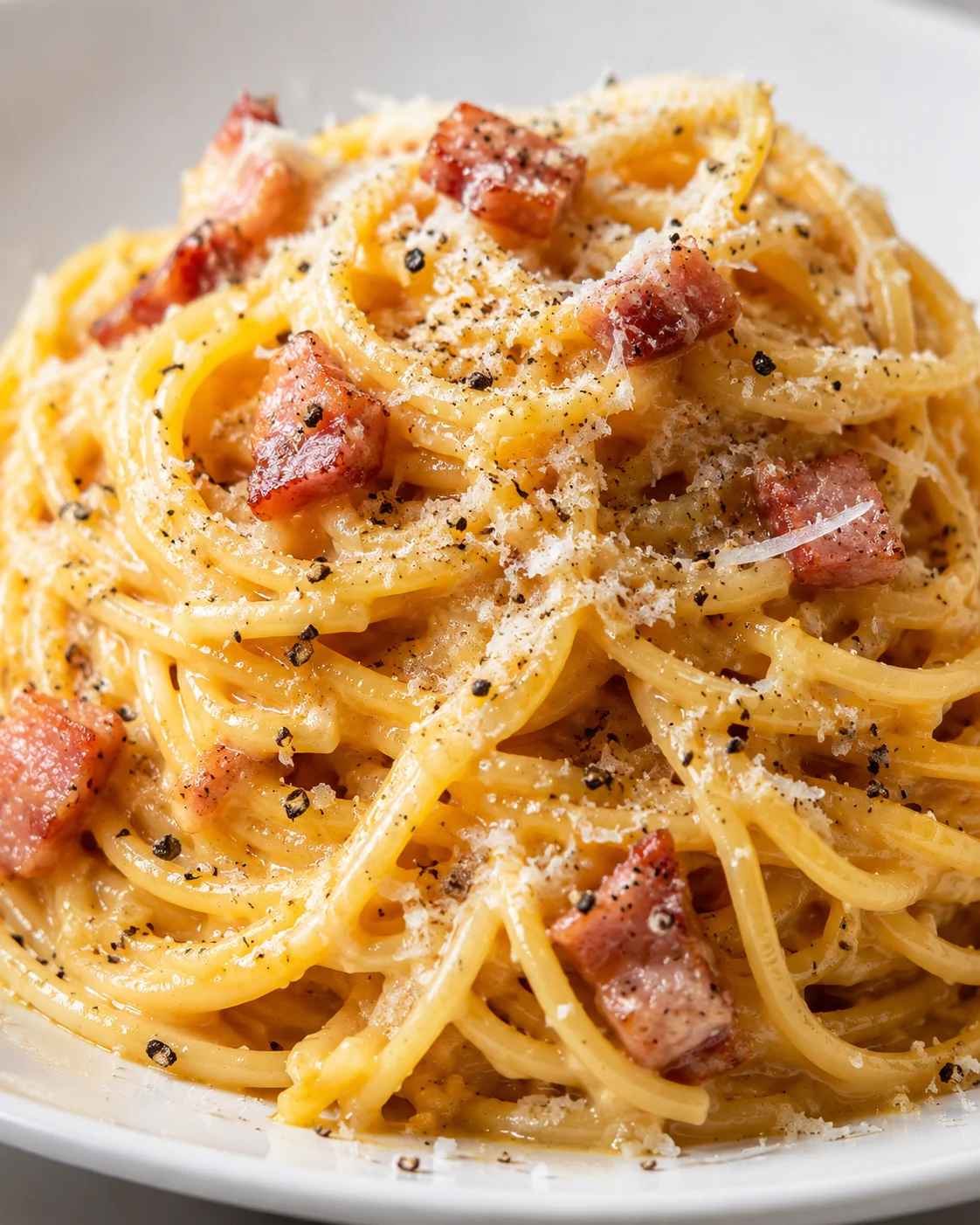
If you’ve ever wondered what makes Spaghetti alla Carbonara so legendary in Rome, you’re in the right spot. This dish has traveled far and wide, inspiring countless versions, but the authentic carbonara recipe sticks to just a handful of quality ingredients paired with the right technique to make it truly shine.
Some say the name carbonara comes from the Roman dialect phrase cacio e ova, meaning cheese and egg. While we might not have the full picture on that, it’s an interesting possibility that carbonara grew from this simple combo.
Other stories debate exactly where in Rome or nearby Lazio region carbonara began. Fascinatingly, some say the dish actually hails from just outside Rome in Campania, near Naples!
Most sources agree carbonara was created by happy accident. It first appeared around 1944, during WWII, when American troops stationed in Italy often ate simple meals like white pizza and pasta with just pepper and cheese (think Spaghetti Cacio e Pepe—a wartime favorite).
Tomatoes didn’t show up much back then because either they were hard to find or avoided since they could stain aprons and clothes—and soap wasn’t easy to come by during the war.
Whatever the reason, soldiers wanted something tastier than plain pasta. According to legend, one hungry American combined his ration of powdered eggs, bacon, and cream with his pasta, unknowingly inventing carbonara.
After the war, the word spread to Rome. The first real carbonara restaurant popped up on Vicolo della Scrofa, a tiny road in the heart of the city, and from there it captured Italy—and the world.
You might have heard the word carbonara comes from cacio e ova, meaning cheese and egg in Roman dialect. We’re not 100% sure, but it fits the storyline of how this simple, soul-warming dish evolved.
This story could fill pages because carbonara is so treasured in Rome. If you find yourself in the city, treat yourself to a genuine plate at a local trattoria. No worries if you can’t get there—recreate this authentic carbonara recipe at home for a true taste of Italy’s capital.
Spaghetti alla Carbonara is one of Rome’s culinary icons—often copied, but rarely matched. At first glance, the dish looks straightforward: long pasta tossed with a silky sauce and a dusting of cheese. But behind that simple charm is a rich story, a handful of key ingredients, and a technique that makes all the difference between creamy carbonara and scrambled eggs masquerading as sauce.
This article gives you everything for mastering an authentic carbonara recipe: the tale behind the dish, the must-have ingredients (and what to avoid—like cream!), a simple step-by-step you can whip up in minutes, plus insider tips, smart swaps, and advice on storing any leftovers. Whether you’re dreaming of a Roman dinner or cooking the classic in your own kitchen, this guide is your go-to.
I’ll share all the practical advice you need: where to find the best ingredients, how to cook guanciale just right, the magic of pasta water in your sauce, and how to avoid the two biggest slip-ups (scrambled eggs and over-salting). Here’s the takeaway: great ingredients plus the right technique equal carbonara that’s fast, authentic, and downright unforgettable.
- The fascinating origin story—where it all likely began.
- The essential ingredients and honest substitutions.
- A trusted, step-by-step recipe with helpful timing tips.
- Pro tips, tasty variations, and how to manage leftovers.
Why This Carbonara Works
Spaghetti alla Carbonara is proof that big flavor doesn’t need a long list of ingredients. Just guanciale, egg yolks, and Pecorino Romano come together for a luxurious sauce without a drop of cream, making this dish both classic and surprisingly light. Plus, it’s quick to make—perfect for busy weeknights or an easy dinner that feels special; serve it with garlicky Parmesan broccoli.
The creamy, clingy sauce grabs onto every strand of spaghetti—or short, tube-shaped pasta like rigatoni—so each bite is a hit of savory goodness.
- Only a few high-quality ingredients for bold, authentic flavor.
- Fast to prepare—ready in the time it takes pasta to cook.
- The traditional technique gives creamy sauce without any cream.
- Versatile with pasta types and easy to scale for a crowd.
Ingredients for Authentic Carbonara
- 1 lb (about 500g) spaghetti
- 5 oz (150g) guanciale (or substitute good-quality bacon if you can’t find guanciale)
- 7 oz (200g) grated Pecorino Romano cheese (Parmesan or Grana Padano also works but adjust salt accordingly)
- 4 egg yolks (one per person, add an extra yolk for an even silkier sauce)
- Salt and freshly ground black pepper to taste
How to Make Classic Carbonara
- Trim any rind from the guanciale or bacon and cut into ~1 cm (⅓–½ in) cubes or slices.
- Grate Pecorino Romano finely.
- Separate egg yolks into a bowl (one yolk per person; add extra yolks if desired).
- Heat a pan and cook the guanciale until the fat renders and the pieces are golden and crisp, about 5 minutes, stirring to avoid burning.
- Season the cooked guanciale with a little salt and plenty of freshly cracked black pepper, then set aside (or keep in the pan).
- Bring a large pot of water to a boil, add salt, and cook the spaghetti until al dente.
- In a separate bowl, combine the grated Pecorino with the egg yolks, adding yolks one at a time while stirring; finish with generous freshly ground black pepper.
- Reserve at least one cup of the pasta cooking water, then drain the pasta.
- Toss the hot pasta into the pan with the guanciale and briefly warm together while stirring.
- Remove the pan from any heat source, then stir in the egg-and-cheese mixture off the heat so the residual heat gently cooks the yolks without scrambling.
-
Add reserved pasta water a little at a time as needed to loosen and emulsify the sauce to a silky consistency.
- Stir in extra Pecorino Romano and crack more black pepper over the top before serving.
- Optional: if using a whole egg, gently temper the egg with hot pasta water first and then add it off the heat to the egg-cheese mixture to avoid scrambling.
Expert Tips for Flawless Carbonara
- Always use guanciale if you can find it—the fat and flavor it renders are unmatched. If not, pancetta or quality bacon can work, but keep in mind the flavor varies slightly.
- Grate your Pecorino Romano fresh—pre-grated cheese is often too dry and won’t melt into your sauce properly.
- Only use egg yolks for a smooth, silky sauce; whole eggs increase the risk of scrambling, which you don’t want here.
- Save at least one cup of pasta cooking water before draining; its starchiness helps create that luscious, velvety sauce.
- Remove your pan from any heat source before adding the egg mixture. The heat from the pasta alone is enough to cook the yolks gently.
- Be cautious with salt. The guanciale and Pecorino are salty enough, so taste after combining everything before adding more.
- Cook the guanciale until the fat melts and the pieces turn golden and crisp without burning—this is key for texture and flavor.
- Freshly cracked black pepper is essential. Add it into the egg-cheese mix and sprinkle over the finished dish for that authentic punch.
Swaps and Customizations
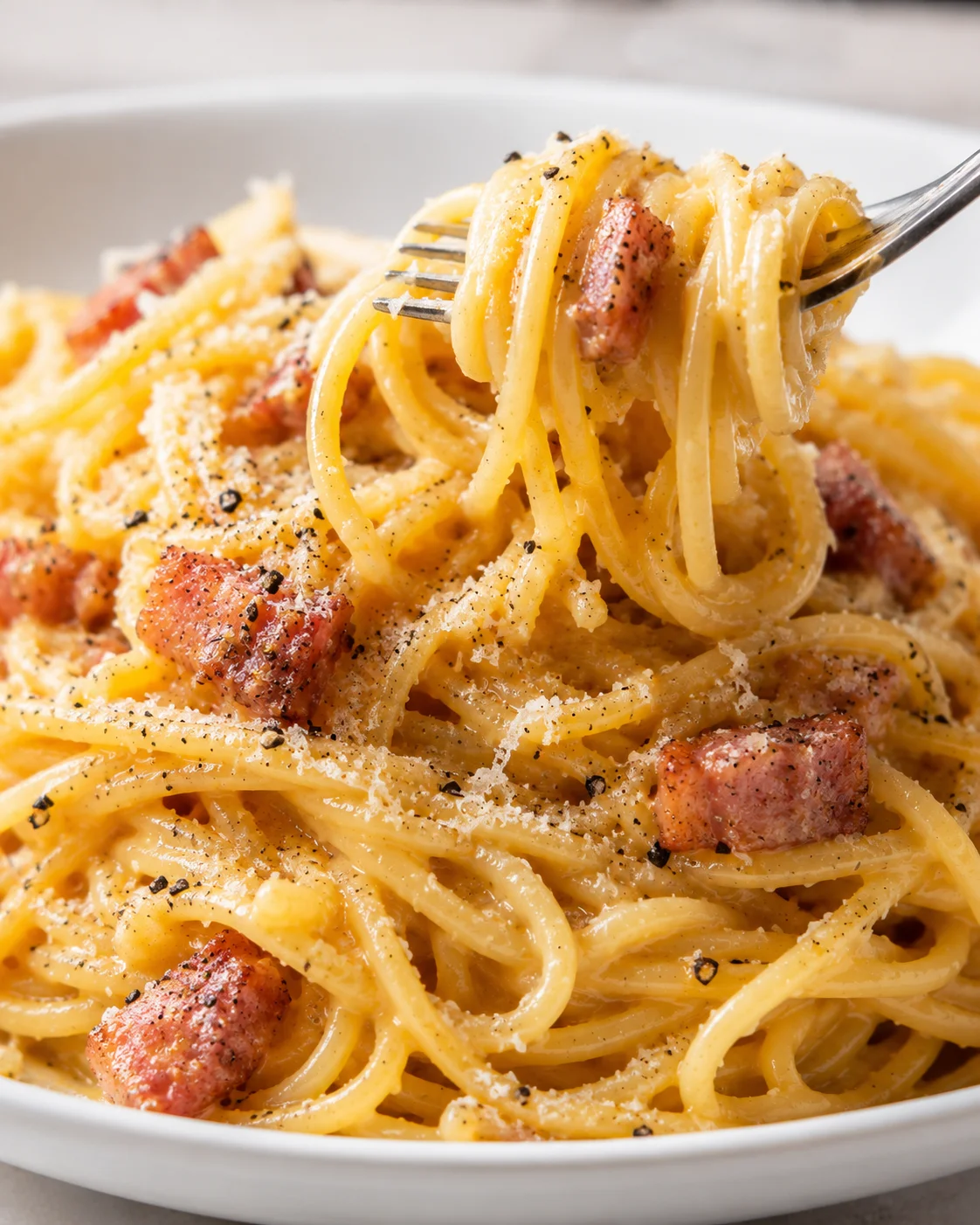
If you want to personalize your carbonara without losing what makes it special, here are some friendly tweaks and substitutions. These stick to the spirit of the authentic carbonara recipe—eggs, cheese, guanciale, and plenty of black pepper—while keeping things flexible.
- Meat swaps: Pancetta or thick unsmoked bacon work well if guanciale isn’t around. Use about 150g for four servings and cook until crisp. If you must use smoked bacon, expect a smokier flavor—reduce the black pepper slightly and taste before salting.
- Cheese alternatives: Pecorino Romano is king, but Parmigiano-Reggiano or Grana Padano make good stand-ins. They’re milder, so you may want a bit more cheese and should watch your salt carefully.
- Egg adjustments: Classic is all yolks, but for an ultra-silky sauce add an extra yolk. If you want more volume, gently temper one whole egg with hot pasta water first and add off the heat to avoid scrambling.
- Pasta shapes: Spaghetti is traditional, but bucatini, rigatoni, penne, ziti, or other ridged or hollow shapes catch sauce beautifully. Adjust the amount of reserved pasta water accordingly for a perfect emulsion.
- Lower-salt or lighter: Reduce cheese by 10–20%, blot excess fat from cooked meat, add extra cracked pepper, and use some reserve pasta water to keep creaminess without overdoing salt.
- Vegetarian option: Thin zucchini ribbons or sautéed mushrooms can replace guanciale for a tasty meat-free version—try an oyster mushroom pasta for deep, savory flavor. Sauté until golden and add a pinch of salt and extra cheese to balance.
- Gluten-free or alternative pastas: Legume or rice-based pastas work fine, just follow package directions and add a touch more reserved pasta water to help sauce cling since textures differ.
- Richer finish: For a seriously indulgent plate, stir in an extra yolk or two off heat, then top with extra black pepper and Pecorino at the table.
Little swaps can be delicious, but if you want the real deal, use guanciale, Pecorino Romano, and egg yolks. Keep the technique—off-heat mixing and pasta water magic—intact for the best, authentic carbonara recipe results.
- If Pecorino Romano is hard to find, use sharp Parmesan or Grana Padano—the flavor will be softer but still tasty.
- Pancetta or bacon can stand in for guanciale where needed, although the traditional flavor changes a bit.
- Shaped pastas like rigatoni, penne, or bucatini are great because their ridges and holes trap the creamy sauce beautifully.
- For a silkier sauce, add one or two extra egg yolks for richness.
- Vegetarians can try replacing guanciale with sautéed zucchini ribbons or caramelized mushrooms—delicious, though non-traditional.
- Some like to add peas or sautéed mushrooms for variety—but remember, these alter the classic character.
Storing and Reheating Leftovers
Carbonara tastes best right away, when creamy and fresh. If you’re lucky enough to have leftovers, here’s how to keep them tasting good:
- Cool leftovers quickly and store in an airtight container in the fridge within two hours. Eat within 1–2 days because quality drops fast.
- Avoid freezing—it changes the sauce texture and can make it grainy when reheated.
- To reheat on the stove (best method), warm gently over low heat with a splash of water or reserved starchy pasta water. Stir constantly until sauce loosens and coats pasta. You can temper a fresh egg yolk (as you would when making custard) with hot pasta water, then stir it in off heat to bring back creaminess without scrambling.
- For a quick microwave fix, heat in short 20–30 second bursts at medium power, stirring in between and adding a little water to loosen sauce. Be careful not to overheat or the eggs might clump.
- Make ahead by prepping and refrigerating cooked guanciale and grated cheese. Keep yolks chilled separately, then combine eggs, cheese, and hot pasta just before serving for best results.
Carbonara FAQs and Troubleshooting
The tasty, creamy pasta won the hearts of soldiers and locals alike, who perfected it by dropping heavy cream and using the richness of fresh egg yolks instead. This is probably why some recipes add cream, but here’s a crucial tip to remember—especially in Italy:
Carbonara is never made with cream. Never. It’s basically a kitchen crime in Rome! If you’re craving a truly creamy, cream-based pasta, try our Easy Creamy Tuscan Mushroom Pasta Skillet instead.
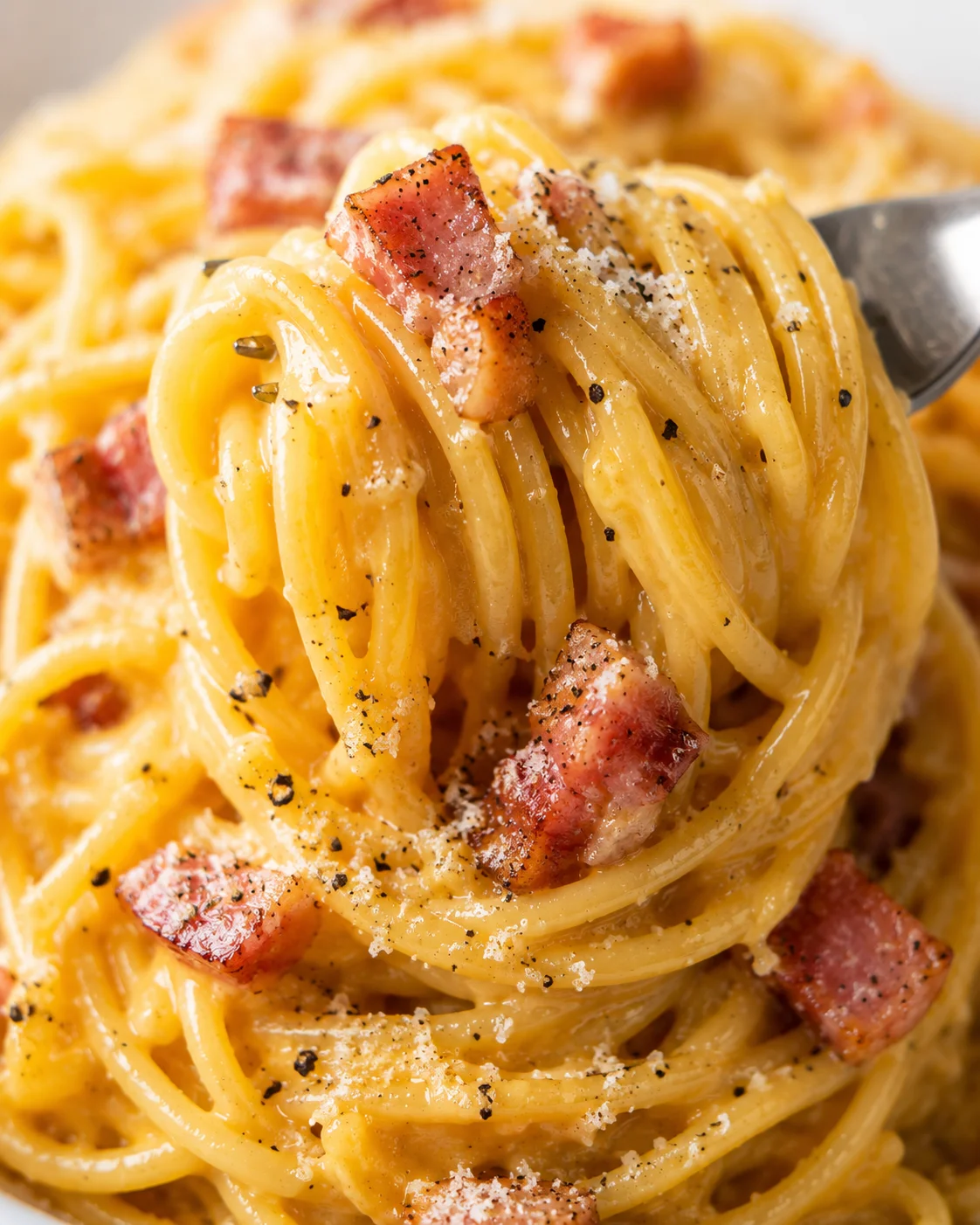
An authentic Roman pasta dish featuring spaghetti tossed with a creamy sauce made from guanciale, egg yolks, and Pecorino Romano cheese, without any cream.
- Prep Time: 10 minutes
- Cook Time: 15 minutes
- Total Time: 25 minutes
- Yield: 4 servings 1x
- Category: Main Course
- Cuisine: Italian
Ingredients
- 1 lb (about 500g) spaghetti
- 5 oz (150g) guanciale (or substitute good-quality bacon if unavailable)
- 7 oz (200g) grated Pecorino Romano cheese (Parmesan or Grana Padano as a substitute with salt adjustment)
- 4 egg yolks (one per person; add extra yolks for silkier sauce)
- Salt, to taste
- Freshly ground black pepper, to taste
Instructions
- Trim rind from guanciale or bacon and cut into approximately 1 cm (⅓–½ in) cubes or slices.
- Grate Pecorino Romano cheese finely.
- Separate egg yolks into a bowl (one yolk per person; add extra yolks if desired).
- Heat a pan and cook guanciale until fat renders and pieces are golden and crisp, about 5 minutes, stirring to avoid burning.
- Season cooked guanciale with a little salt and plenty of freshly cracked black pepper; set aside or keep in the pan.
- Bring a large pot of salted water to a boil and cook spaghetti until al dente.
- In a separate bowl, combine grated Pecorino with egg yolks, adding yolks one at a time while stirring; finish with generous freshly ground black pepper.
- Reserve at least one cup of pasta cooking water, then drain the pasta.
- Toss hot pasta into the pan with guanciale and briefly warm together while stirring.
- Remove pan from heat source, then stir in the egg-and-cheese mixture off the heat to gently cook the yolks without scrambling.
- Add reserved pasta water gradually as needed to loosen and emulsify the sauce to a silky consistency.
- Stir in extra Pecorino Romano and more black pepper before serving.
- Optional: If using a whole egg, gently temper it with hot pasta water first and add off the heat to avoid scrambling.
Notes
Use guanciale if possible for authentic flavor; pancetta or quality bacon are acceptable substitutes with slight flavor variation., Freshly grate Pecorino Romano cheese for best melting and texture., Only use egg yolks for a smooth sauce; whole eggs risk scrambling., Reserve pasta water to help create a velvety sauce., Be cautious with additional salt due to the saltiness of guanciale and cheese., Freshly cracked black pepper is essential in and on the dish., Suggested pasta shapes besides spaghetti include bucatini, rigatoni, penne, and ziti for better sauce adherence., Vegetarian alternative: sautéed zucchini ribbons or mushrooms can replace guanciale., Avoid cream; it is not traditional and considered a culinary faux pas in Rome., Leftovers should be stored in airtight container, refrigerated within two hours, and eaten within 1-2 days; avoid freezing., Reheat gently on stove with water or reserved pasta water, stirring constantly., Microwave reheating requires short bursts and stirring to prevent scrambled eggs.
Nutrition
- Serving Size: about 1 serving
- Calories: approx. 500-600 kcal per serving
- Fat: approx. 20g per serving
- Carbohydrates: approx. 75g per serving
- Protein: approx. 25g per serving
More in Recipes

Healthy Pumpkin Truffles
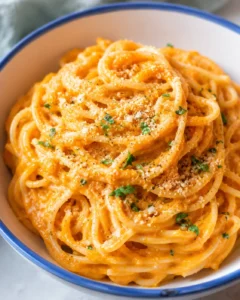
10-Minute Vegan Pumpkin Pasta

Gluten Free Pumpkin Muffins