Cranberry Scones Recipe
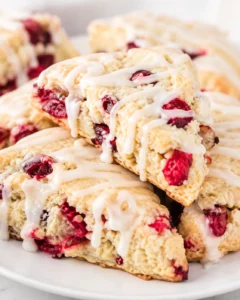
A cranberry scones recipe is a lovely way to bring a sweet-tart holiday bake to the table without making the process complicated. These scones are shaped into wedges rather than rounds, dotted with frozen cranberries, and baked until the edges begin to turn golden brown. The finished batch is light and flaky when the dough is handled gently, with a little extra sweetness available from an optional glaze.
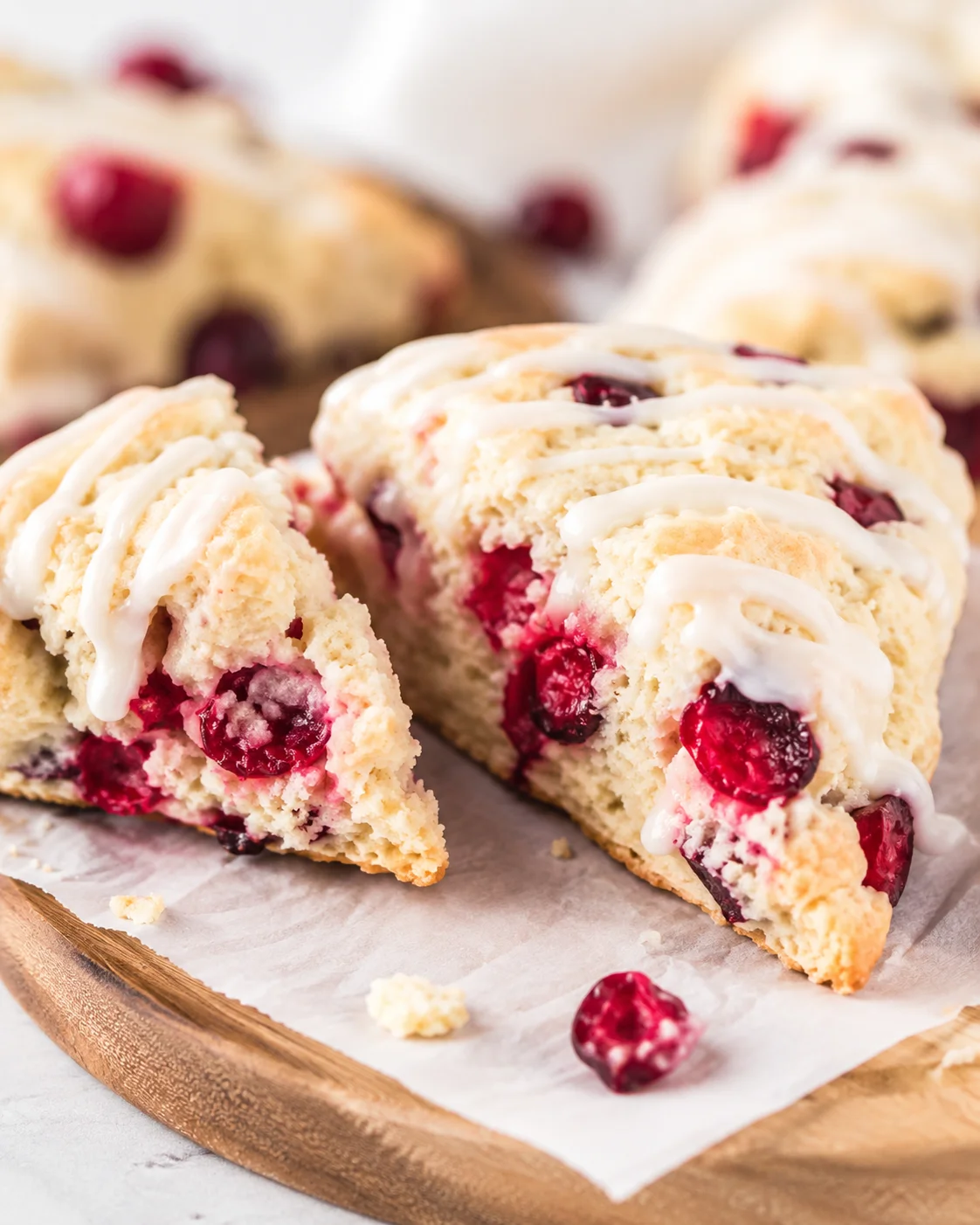
This recipe makes 16 small scones: two circles of dough, each cut into eight triangular wedges. The scones are good with coffee or tea, and they are also easy to serve on their own. They have the familiar shape and richer sweetness often associated with American scones, while New Zealand-style scones are closer to what many people in the United States call a biscuit.
Plan on 15 minutes of prep time and 15 minutes of baking time, for a total of about 30 minutes. The recipe uses ordinary baking ingredients, a large bowl, a pastry cutter or fork, and a sheet pan lined with parchment. You can finish the cooled scones with a thick, pourable powdered-sugar glaze, or leave them plain and sprinkle the tops with coarse sugar before baking.
Why You Will Love This
These cranberry scones are approachable enough for a first scone project and festive enough for a holiday breakfast or afternoon treat. The ingredient list is made up of familiar grocery-store staples, so there is no special shopping trip required for the basic dough. Frozen cranberries add bright color and a sweet-tart flavor, and keeping them frozen also helps avoid adding unnecessary moisture while the dough comes together.
- They are simple to assemble. The dry ingredients are mixed in one large bowl, cold butter is cut in, and the egg-and-buttermilk mixture is added separately.
- The shape is easy to portion. Divide the dough into two circles, then cut each circle into eight wedges just as you would cut a pizza.
- The texture depends on a light touch. Pea-sized pieces of cold butter and minimal handling help keep the baked scones tender and flaky instead of dense.
- The finish is flexible. The scones do not need glaze, but the glaze is a useful option when you want a sweeter result. Coarse sugar gives you another way to finish the tops.
- They are seasonal without being limited to one occasion. Cranberry scones fit a holiday spread, but they also work alongside a cup of coffee or tea any time of year.
Ingredients
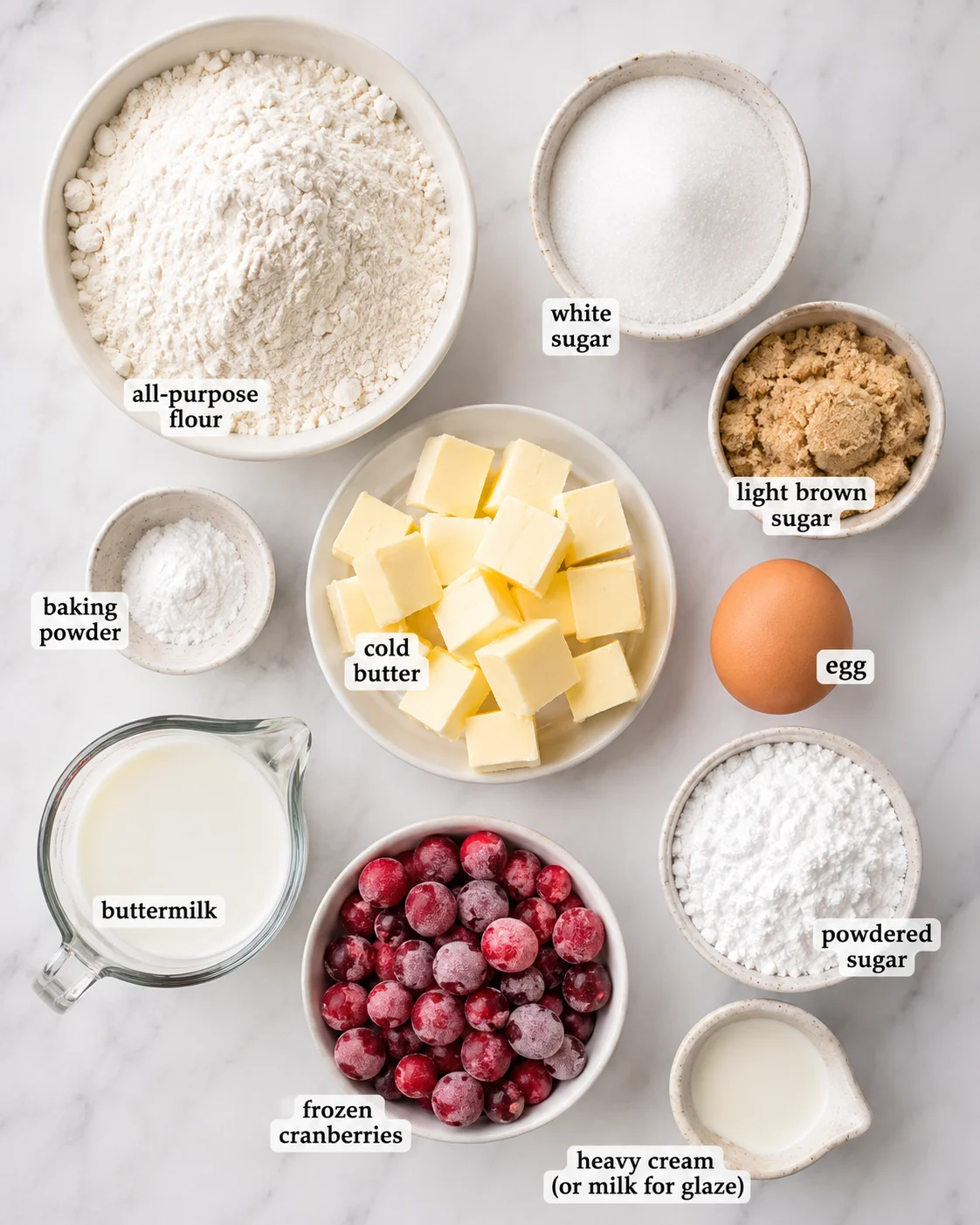
Measure the ingredients before you begin so the cold butter can stay cold and the dough can be mixed with a minimum of fuss. The flour listed below includes extra for flouring the work surface and your hands.
- 2 ¼ cups all-purpose flour, plus more for flouring the surface and hands: Plain all-purpose flour forms the base of the dough.
- ½ cup white sugar: Granulated sugar sweetens the scones.
- ⅓ cup light brown sugar, packed: Use all granulated white sugar instead if needed, or use dark brown sugar for a slightly different flavor.
- 1 ¾ teaspoon baking powder: This helps the scones rise as they bake.
- ¼ cup butter, or ½ stick, cold: Salted butter is used in the recipe. If you choose unsalted butter, add an extra pinch of salt.
- 1 large egg: Whisk it with the buttermilk before it goes into the dry mixture.
- ⅓ cup buttermilk: This brings the wet ingredients together. A homemade alternative is included below.
- ¾ cup frozen cranberries: Use the cranberries while they are frozen. Fresh cranberries should be frozen before using so they do not pop and add too much moisture to the dough.
Optional glaze
- 1 cup powdered sugar
- 2–3 tablespoons heavy cream or whole milk
The glaze is optional because the scones are enjoyable without it. If you add a little orange zest to the dough, use orange juice instead of cream in the glaze to make an orange glaze.
Equipment
You will need measuring cups, measuring spoons, a large bowl, a pastry cutter or fork, a sheet pan, parchment paper, and a knife or pizza cutter. A food processor can be used to cut the butter into the dry ingredients, but it should not be over-processed.
Instructions
Keep the butter cold and work gently from the first mix through shaping. The dough does not need to be rolled, and a rolling pin can make the scones tougher. Your hands are enough to form the two thick circles.
- Prepare the oven and pan. Preheat the oven to 350°F. Line a sheet pan with parchment paper.
- Combine the dry ingredients. In a large bowl, mix 2 ¼ cups all-purpose flour, ½ cup white sugar, ⅓ cup packed light brown sugar, and 1 ¾ teaspoon baking powder.
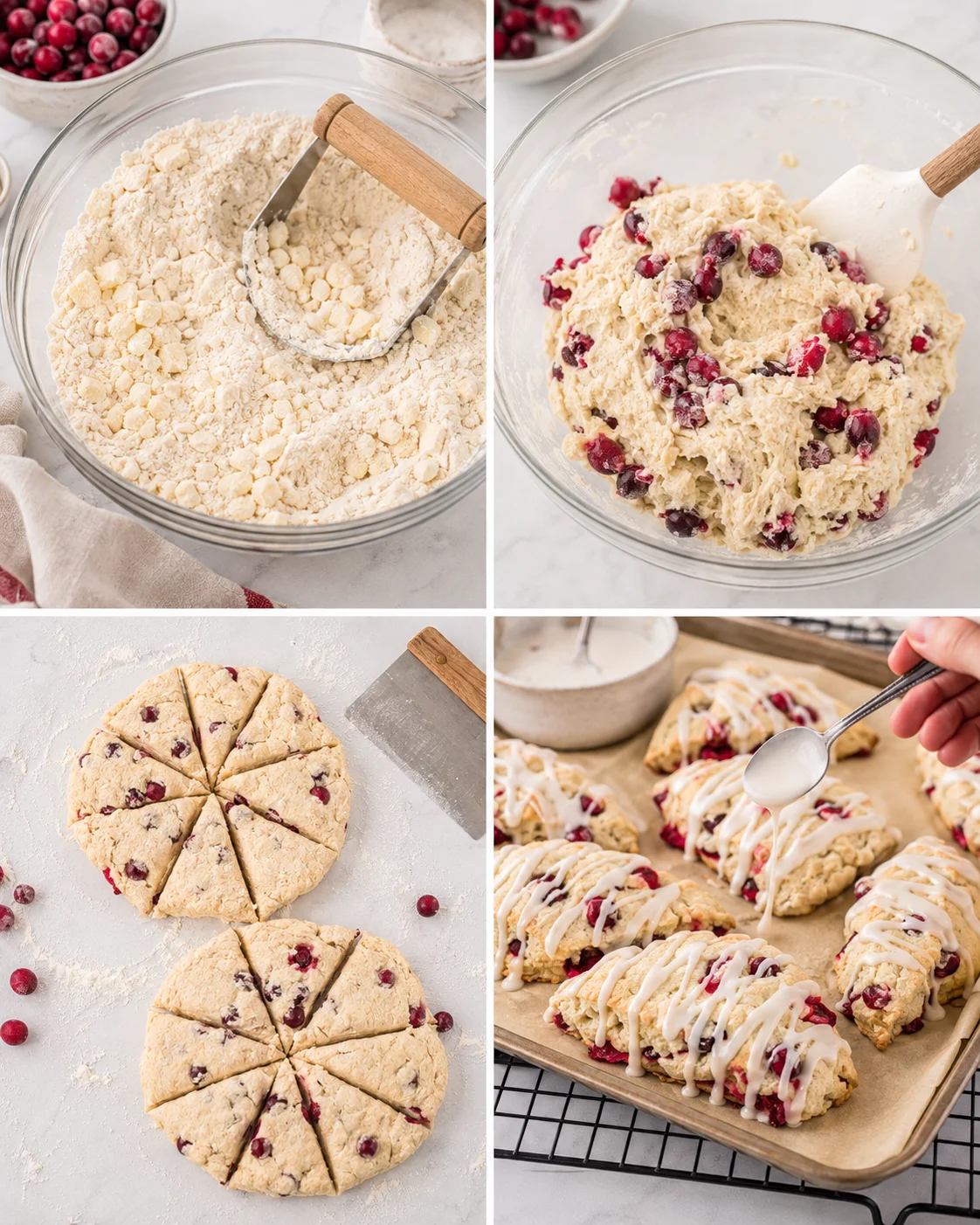
- Cut in the butter. Add the cold ¼ cup butter to the flour-and-sugar mixture. Use a pastry cutter to work it in until the butter is in pea-sized chunks or very coarse crumbs. A fork can also help with this step. If using a food processor, pulse carefully and stop before the butter is fully blended into the flour.
- Whisk the wet ingredients. In a separate bowl, whisk the large egg and ⅓ cup buttermilk until the mixture is smooth and even.
- Bring the dough together. Add the buttermilk mixture to the butter-and-flour mixture. Mix carefully just until the flour mixture is wet. Do not keep stirring once there are no large dry areas.
- Add the cranberries. Toss in ¾ cup frozen cranberries. Gently fold until the cranberries are distributed and a dough forms.
- Flour the work surface. Lightly flour the countertop and, if needed, your hands. The extra flour listed with the ingredients is for this step.
- Divide and shape. Divide the dough into two equal portions. Using your hands, shape each portion into a flat circle about 1 inch thick. Use a light touch and do not reach for a rolling pin.
- Cut the wedges. Use a knife or pizza cutter to cut each circle into eight triangular wedges, like a pizza. You will have 16 small scones in all.
- Bake. Place the wedges on the parchment-lined sheet pan. Bake for 14–16 minutes, or until the scones begin to turn golden brown.
- Cool before finishing. Transfer the scones to a wire rack and let them cool completely before glazing.
- Add the optional glaze. Once the scones are cool, combine 1 cup powdered sugar with 2–3 tablespoons heavy cream or whole milk in a small bowl. Stir to make a thick, pourable glaze, then drizzle it over the tops of the scones.
Tips for Success
The most important technique is to avoid overworking the dough. Too much mixing and handling can make the scones dense. Mix only until the flour is wet, fold the cranberries in gently, and use your hands rather than a rolling pin when shaping. The small pieces of cold butter should still be visible as pea-sized chunks or coarse crumbs before the wet ingredients are added.
Cold ingredients matter most for the butter. Keeping the butter cold means it does not melt into the dough before baking. As the scones bake, the butter melts and contributes to a lighter, fluffier texture. Set out the flour, sugars, baking powder, and tools first, then bring the butter into the process when you are ready to cut it in.
Do not worry if the dough looks rustic. The two circles only need to be about 1 inch thick, and the cut edges do not need to be perfectly identical. A gentle shape is more useful than repeated reworking. After cutting, move the wedges to the pan and bake them rather than pressing the scraps together over and over.
If the wedges cannot all fit in the oven at once, bake them in batches. The dough can sit out while the first batch bakes, which takes about 15 minutes. Keep the unbaked wedges arranged so they are ready to transfer to the sheet pan when the oven is available.
Watch for the visual doneness cue in the recipe: the scones should just begin to turn golden brown. Allow them to cool completely on a wire rack before adding glaze. Glazing warm scones can make the finish runnier than intended, while a fully cooled surface lets the thick glaze sit in a visible drizzle.
Read the dough as you mix
The dough should move through a few clear stages. First, the flour, white sugar, light brown sugar, and baking powder should be evenly combined. Next, the cold butter should break into small pieces surrounded by the dry ingredients. Pea-sized chunks and coarse crumbs are useful visual cues: they show that the butter has been cut in without being completely disappeared.
After the egg and buttermilk are whisked together, add them to the bowl and mix carefully. The goal is a wet flour mixture that can gather into dough, not a smooth batter. Once the flour is wet, add the frozen cranberries and fold gently. Continuing to beat or stir after this point can make the dough harder to shape and may lead to denser scones.
Shape without pressing out the texture
Use a lightly floured countertop and divide the dough into two portions before shaping. Form each portion into a circle with your hands, aiming for about 1 inch of thickness. The circles do not need to look perfectly polished. A light touch keeps the dough from being compressed, and skipping the rolling pin avoids the extra pressure that can make the scones tougher.
Cut each circle into eight wedges with a knife or pizza cutter. This makes the batch easy to portion and gives the scones their characteristic triangular shape. If a few wedges are slightly different in size, arrange them with a little space on the parchment-lined pan and use the golden-brown edges as the main doneness cue. The recipe yields 16 small scones from the two circles.
Keep the optional steps separate
The powdered-sugar glaze is mixed after the baked scones have cooled, so it does not need to be part of the dough-making routine. If you are keeping the scones plain, you can omit the powdered sugar and cream entirely. Coarse sugar is an alternative finish that is added before baking, while orange zest belongs in the dough and orange juice belongs in the glaze when you choose the citrus variation.
Plan the bake around the pan
A single sheet pan may not hold every wedge in one batch. That is not a problem: the unbaked dough can sit out while the first group bakes for about 15 minutes. Have the remaining wedges shaped and ready so you can transfer them to the pan as soon as it is available. This keeps the sequence simple without requiring the dough to be repeatedly reshaped.
Variations
Choose a different sugar combination. Light brown sugar can be replaced with all granulated white sugar. Dark brown sugar can be used instead when you want a slightly different flavor.
Use a buttermilk alternative. For the ⅓ cup used in the ingredient list, one option is to combine ⅓ cup whole milk with 1 teaspoon lemon juice and let it sit for five minutes. The recipe notes also give a broader homemade-buttermilk method: add 2–3 teaspoons lemon juice or white vinegar to milk and let it sit until it begins to sour, about 5 minutes. Stir before using.
Change the cranberry choice. Fresh cranberries should be frozen before they go into the dough, because unfrozen berries may pop and add too much moisture. Dried cranberries can also be used, although they will not give the same fresh quality or pretty color as whole cranberries.
Add citrus. Grate a little orange zest into the dough for extra pop. When orange zest is used, orange juice can replace the cream in the glaze to make an orange glaze.
Add vanilla. Vanilla extract is an optional addition; use 1 teaspoon for this recipe.
Finish without glaze. Leave the scones plain, or sprinkle their tops with coarse sugar before baking. This gives the surface a little sweetness without making a separate drizzle.
Storage
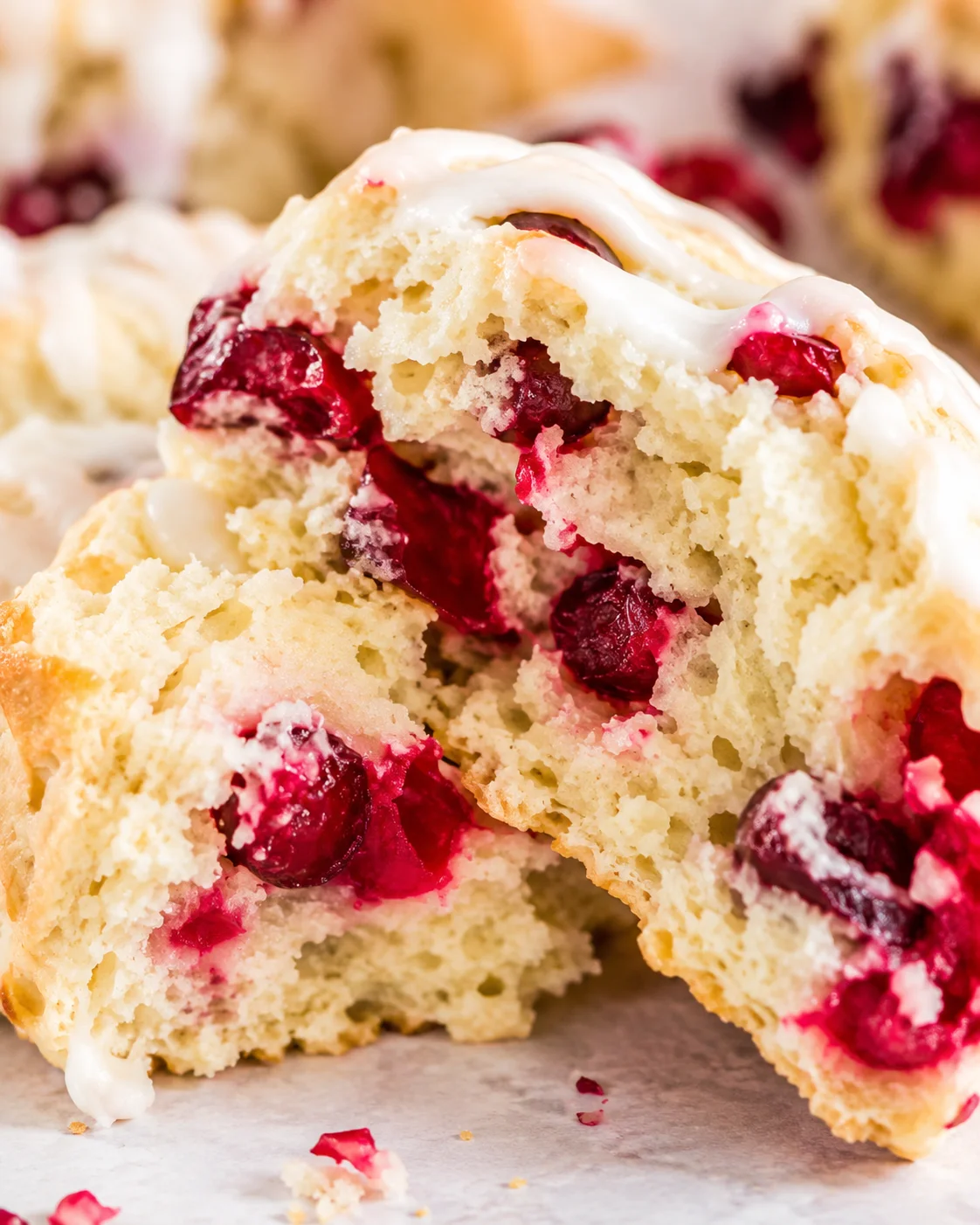
Store baked cranberry scones at room temperature in an airtight container for 1–2 days. After that, they will keep for another 3 days in the refrigerator. If you plan to refrigerate them, cool them completely before storing so the container does not trap unnecessary warmth around the scones.
Freezing instructions
The scones can be frozen after baking. For longer storage, wrap them individually in plastic wrap and place them in the freezer for up to three months. Individual wrapping makes it easier to remove only the number you need. If the scones are glazed, allow the glaze to set before wrapping them.
For make-ahead baking, the source specifically gives storage guidance for baked scones. The shaping and batch-baking note also means the dough can wait on the counter for the roughly 15 minutes needed for one batch to bake when the wedges do not fit on the pan at the same time.
Serving Suggestions
Serve these scones with coffee or tea, or enjoy them on their own. Their triangular shape and cranberry color make them a natural addition to a holiday breakfast or dessert table. For a sweeter presentation, drizzle the cooled scones with the powdered-sugar glaze. For a simpler finish, use coarse sugar before baking or leave the tops plain.
The glaze is a preference rather than a requirement. A plain scone lets the sweet-tart cranberries stand out, while the glaze adds another layer of sweetness. The orange-zest and orange-juice variation makes a citrus-forward finish without changing the basic dough method.
FAQ
What makes these cranberry scones different from other scones?
These are sweeter, triangular American-style scones, and they can include a glaze. Scones made and eaten in New Zealand are closer to what is called a biscuit in the United States. The recipe is designed around two circles cut into eight wedges each rather than round portions.
What is the secret to lighter, flakier scones?
Use cold butter and handle the dough as little as possible. The butter should be cut into pea-sized chunks or very coarse crumbs, not fully blended into the flour. Overworking the dough can make the baked scones dense, so stop mixing as soon as the flour is wet and the dough forms.
Can I use fresh cranberries?
Yes, but freeze fresh cranberries before using them. Frozen berries are less likely to pop and add too much moisture to the dough. Dried cranberries are another option, although they will not provide the same freshness and pretty color as whole cranberries.
Do the scones need the glaze?
No. The glaze is an optional step. The scones can be served plain, or their tops can be sprinkled with coarse sugar before baking. If you want the glazed version, wait until the scones are completely cool, then mix the powdered sugar with heavy cream or whole milk until thick and pourable.
What can I use if I do not have buttermilk?
Make a quick alternative with whole milk and an acid. For the ⅓ cup used here, combine ⅓ cup whole milk with 1 teaspoon lemon juice and let it sit for 5 minutes. Another option is to add 2–3 teaspoons lemon juice or white vinegar to milk and wait until it begins to sour, about 5 minutes, before using it.
How should I store leftover scones?
Keep them in an airtight container at room temperature for 1–2 days. They will then last another 3 days in the refrigerator. For longer storage, wrap the baked scones individually in plastic wrap and freeze them for up to three months.
Nutrition
The supplied nutrition estimate is per small scone: 170 calories, 37 g carbohydrates, 2 g protein, 1 g fat, 1 g saturated fat, 0.2 g polyunsaturated fat, 0.3 g monounsaturated fat, 0.001 g trans fat, 13 mg cholesterol, 299 mg sodium, 87 mg potassium, 1 g fiber, 17 g sugar, 54 IU vitamin A, 5 mg vitamin C, 35 mg calcium, and 1 mg iron. Nutritional information is an estimate and should be recalculated with the actual ingredients used and a preferred nutrition calculator.
PrintLight and flaky American-style cranberry scones shaped into wedges, featuring frozen cranberries for a sweet-tart flavor and an optional powdered-sugar glaze.
- Prep Time: 15 minutes
- Cook Time: 15 minutes
- Total Time: 30 minutes
- Yield: 16 small scones 1x
- Category: Breakfast
Ingredients
- 2 1/4 cups all-purpose flour, plus more for flouring the surface and hands
- 1/2 cup white sugar
- 1/3 cup light brown sugar, packed (or substitute with granulated white sugar or dark brown sugar)
- 1 3/4 teaspoons baking powder
- 1/4 cup (1/2 stick) cold salted butter (if using unsalted butter, add extra pinch of salt)
- 1 large egg
- 1/3 cup buttermilk (homemade alternative: 1/3 cup whole milk plus 1 teaspoon lemon juice, let sit 5 minutes)
- 3/4 cup frozen cranberries
- Optional glaze: 1 cup powdered sugar, 2 to 3 tablespoons heavy cream or whole milk
Instructions
- Preheat oven to 350°F (175°C) and line a sheet pan with parchment paper.
- In a large bowl, mix 2 1/4 cups all-purpose flour, 1/2 cup white sugar, 1/3 cup packed light brown sugar, and 1 3/4 teaspoons baking powder.
- Add the cold 1/4 cup butter and work it into the dry ingredients using a pastry cutter or fork until pea-sized chunks or coarse crumbs remain.
- In a separate bowl, whisk together 1 large egg and 1/3 cup buttermilk until smooth.
- Add the wet mixture to the dry ingredients and mix carefully and minimally until the flour is just wet, avoiding overmixing.
- Fold in 3/4 cup frozen cranberries gently until evenly distributed.
- Lightly flour the countertop and your hands if needed; divide the dough into two equal portions.
- Shape each portion into a flat circle about 1 inch thick using your hands; avoid rolling pins.
- Cut each circle into eight triangular wedges using a knife or pizza cutter.
- Place the wedges on the parchment-lined sheet pan, spacing them with room to bake evenly.
- Bake for 14-16 minutes or until edges turn golden brown.
- Transfer scones to a wire rack and let cool completely.
- If using, prepare the glaze by mixing 1 cup powdered sugar with 2-3 tablespoons heavy cream or whole milk until thick and pourable.
- Drizzle glaze over cooled scones.
Notes
Do not overwork the dough to maintain tenderness and flakiness; stop mixing once the flour is wet., Keep butter cold and cut into pea-sized chunks for optimal texture., Do not use rolling pin; hand-shaping preserves the dough’s light texture., Frozen cranberries help prevent added moisture; fresh cranberries should be frozen before use., Glaze is optional; scones can be finished with coarse sugar before baking instead., If adding orange zest to the dough, use orange juice instead of cream in the glaze for an orange-flavored glaze., The dough can rest at room temperature while baking in batches if all wedges do not fit on the pan at once., Store baked scones at room temperature in airtight containers for 1-2 days or refrigerate up to 3 more days., Freeze individually wrapped scones (glazed and set) for up to 3 months.
Nutrition
- Serving Size: 1 small scone
- Calories: 170 calories per small scone
- Fat: 1 g fat per serving
- Carbohydrates: 37 g carbohydrates per serving
- Protein: 2 g protein per serving