Italian Pasta Salad with Homemade Italian Dressing

This Italian pasta salad is bright, zesty, and built for the kind of table where everyone takes “just one more spoonful.” Rotini catches the tangy homemade Italian dressing, while pepperoncini, Genoa salami, pepperoni, juicy cherry tomatoes, crisp bell peppers, black olives, and buttery mozzarella pearls give every bite a different balance of savory, fresh, briny, and lightly spicy flavor. It is substantial enough for a light lunch, but it is also an easy side dish for a summer gathering or any meal that needs a colorful make-ahead addition.
The dressing is what pulls the whole bowl together. It is tangy and zesty, full of dried herbs and spices, with Parmesan adding a savory, nutty finish. This salad has been described as “out of this world,” “beyond amazing,” and “the very best Italian dressing” paired with a pasta salad. You can assemble it up to 24 hours ahead and keep it bright and fresh by reserving part of the dressing until serving time.
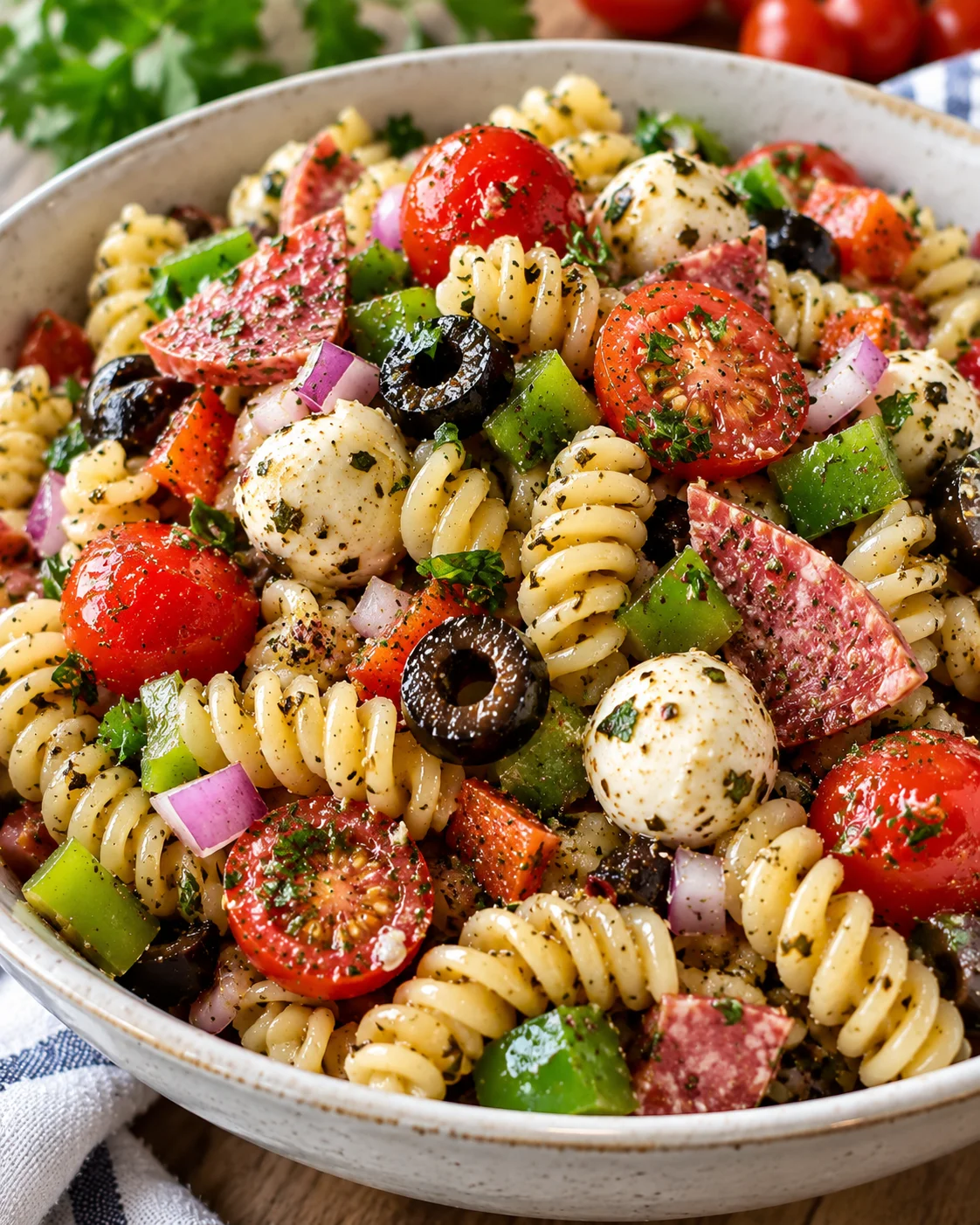
Why You’ll Love This Italian Pasta Salad
The homemade Italian dressing does the heavy lifting. Pasta salad ingredients can look similar from one recipe to the next, so the dressing is where this version gets its personality. Red wine vinegar and lemon juice bring lively acidity, olive oil rounds it out, dried herbs add fragrance, and finely grated Parmesan gives the vinaigrette body and savory depth. You can also fine-tune the balance before it goes into the salad.
Pepperoncini keep it lively. These mild yellow-green chili peppers are mostly tangy with a slightly sweet flavor and a small zip of heat. They wake up the pasta and rich deli meats without making the salad aggressively spicy. Their bright bite is especially welcome alongside creamy mozzarella and salty olives.
Two deli meats add dimension. Genoa salami and pepperoni are not interchangeable in flavor. Salami brings a seasoned, garlicky richness, while pepperoni contributes savory, spicy saltiness and a hint of smokiness. Together, they give the bowl an Italian deli-style character.
It is flexible without losing its identity. The listed measurements provide a balanced starting point, but the salad welcomes favorite vegetables, proteins, cheeses, and supported variations. You can make it more vegetable-forward, vegetarian, spicy, gluten-free, Greek-inspired, Caprese-style, antipasto-inspired, or creamy.
It is genuinely make-ahead friendly. The salad can chill for at least 30 minutes before serving and can be prepared up to 24 hours in advance. Keeping the remaining dressing separate prevents the pasta from absorbing every drop and tasting dry by the time guests arrive.
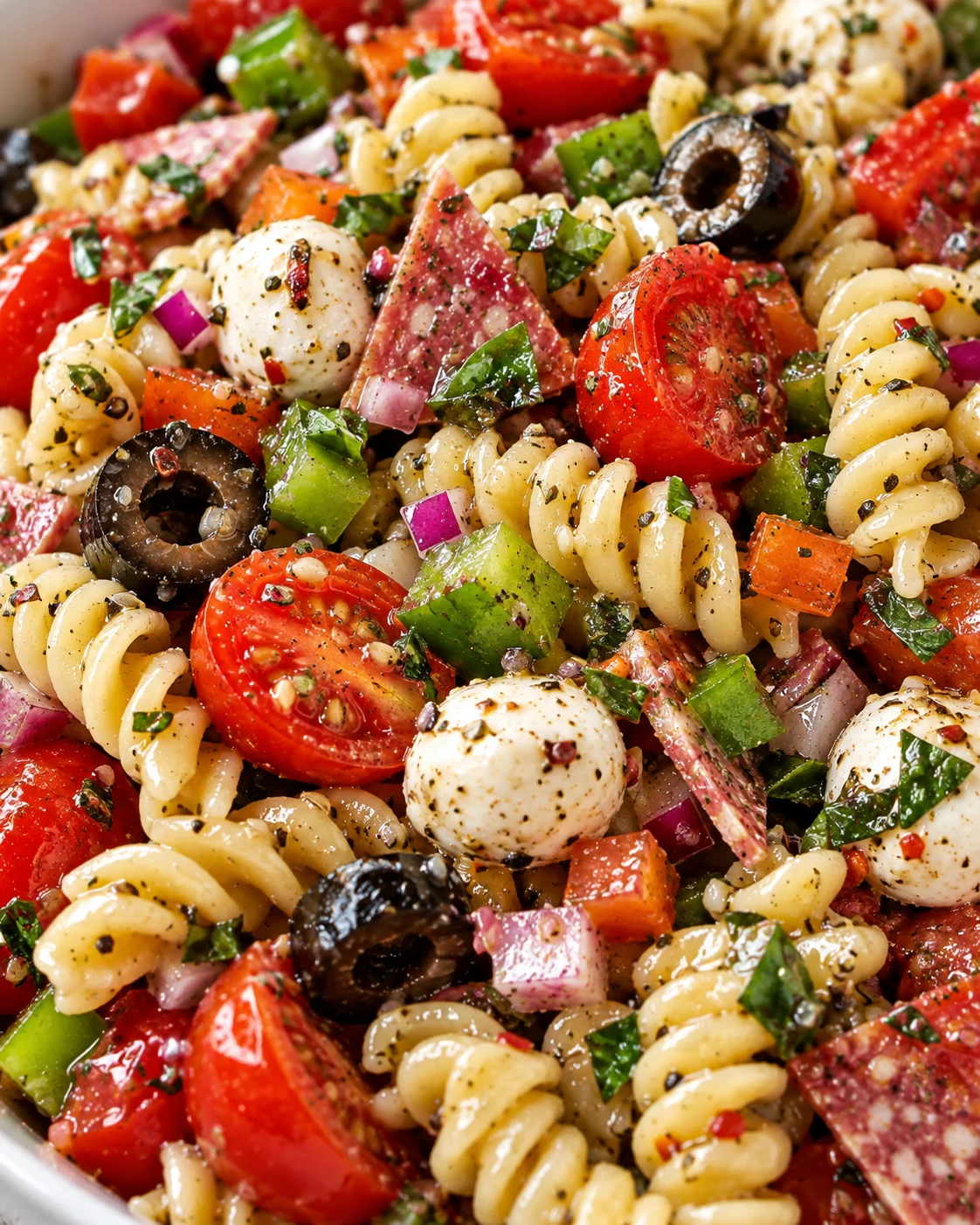
Italian Pasta Salad Ingredients
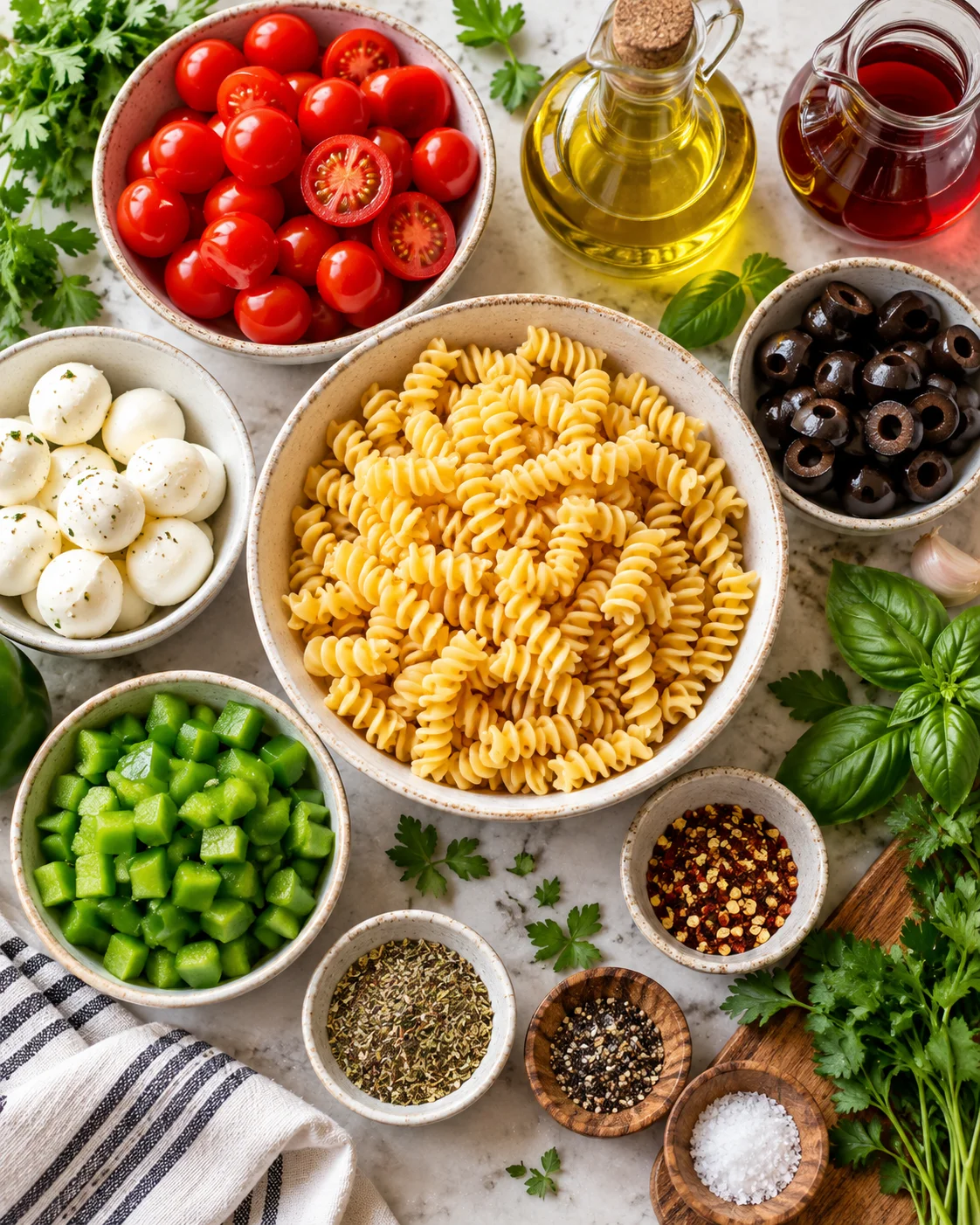
The ingredient list is easy to shop for, but a few choices make a noticeable difference in the finished salad. Prepare one batch of homemade Italian dressing according to its directions, then gather the following salad ingredients.
- Rotini: The twists hold onto the vinaigrette and catch small pieces of vegetables, meat, and cheese. Cook it just to al dente so it stays pleasantly firm after chilling.
- Pepperoni: Use 3.5 to 4 ounces, quartered, which is about ¾ cup. Pepperoni has a savory, spicy saltiness, a hint of smokiness, and seasoning from paprika, chili flakes, garlic, fennel seed, and salt. Pre-sliced pepperoni is convenient; brands named in the recipe include Ezzo’s, Boar’s Head, and Battistoni. For the freshest, tastiest option, ask for a pepperoni “stick”—a quarter or half stick—from the deli counter and quarter it yourself. Pre-sliced pepperoni has already begun to oxidize.
- Genoa salami: Use 4 ounces of sliced salami, quartered, or about ¾ cup. Genoa salami is seasoned with garlic, salt, black and white pepper, and red or white wine. Find it at the deli counter or in packages of specialty deli meats. If Genoa salami is unavailable, use your favorite alternative.
- Cherry tomatoes: One pint, halved. Choose ripe tomatoes that are juicy and flavorful but still firm. They release less water into the salad than overly soft tomatoes, helping the dressing stay lively.
- Bell peppers: Use one chopped green bell pepper for earthy flavor and one chopped yellow or orange bell pepper for sweetness. The color contrast also makes the salad look especially inviting.
- Red onion: ½ cup finely diced red onion adds rich, zippy sweetness. Small pieces distribute its flavor without overwhelming a forkful.
- Black olives: Use 1 cup, drained and halved. Whole olives are preferable because you can cut them into sturdy halves; pre-sliced olives can fall apart and get lost among the other ingredients.
- Pepperoncini: Add 2 tablespoons chopped pepperoncini. This is a key ingredient rather than a background garnish: it supplies tang, mild heat, and a little sweetness. Pepperoncini usually comes in a glass jar near sandwich condiments.
- Fresh mozzarella pearls: Use 8 ounces. Look for the small pearls in the specialty cheese section; they are a good size for salad, with a soft, buttery, melt-in-your-mouth texture. If you cannot find pearls, chop fresh mozzarella into chunks.
- Parmesan and parsley: Finish with Parmesan and fresh parsley. Parmesan gives a salty, nutty note, and parsley adds a fresh herbal lift. Add both just before serving for the best freshness and visual appeal.
For the Homemade Italian Dressing
Use quality extra-virgin olive oil for the best flavor. Red wine vinegar provides a fruity tang, while lemon juice adds a fresh citrus pop without making the dressing taste lemony. Freshly grate the Parmesan on the smallest hole of a box grater so it becomes powdery and blends into the dressing. Sugar balances the vinegar and lemon juice.
The seasoning blend includes dried parsley, dried basil, dried oregano, garlic powder, onion powder, paprika, salt, and pepper. Together, these seasonings make a dynamic dressing with only a few shakes or whisk strokes. Since the dressing is the main flavoring for the salad, taste it before combining it with the pasta and adjust the balance to your preference.
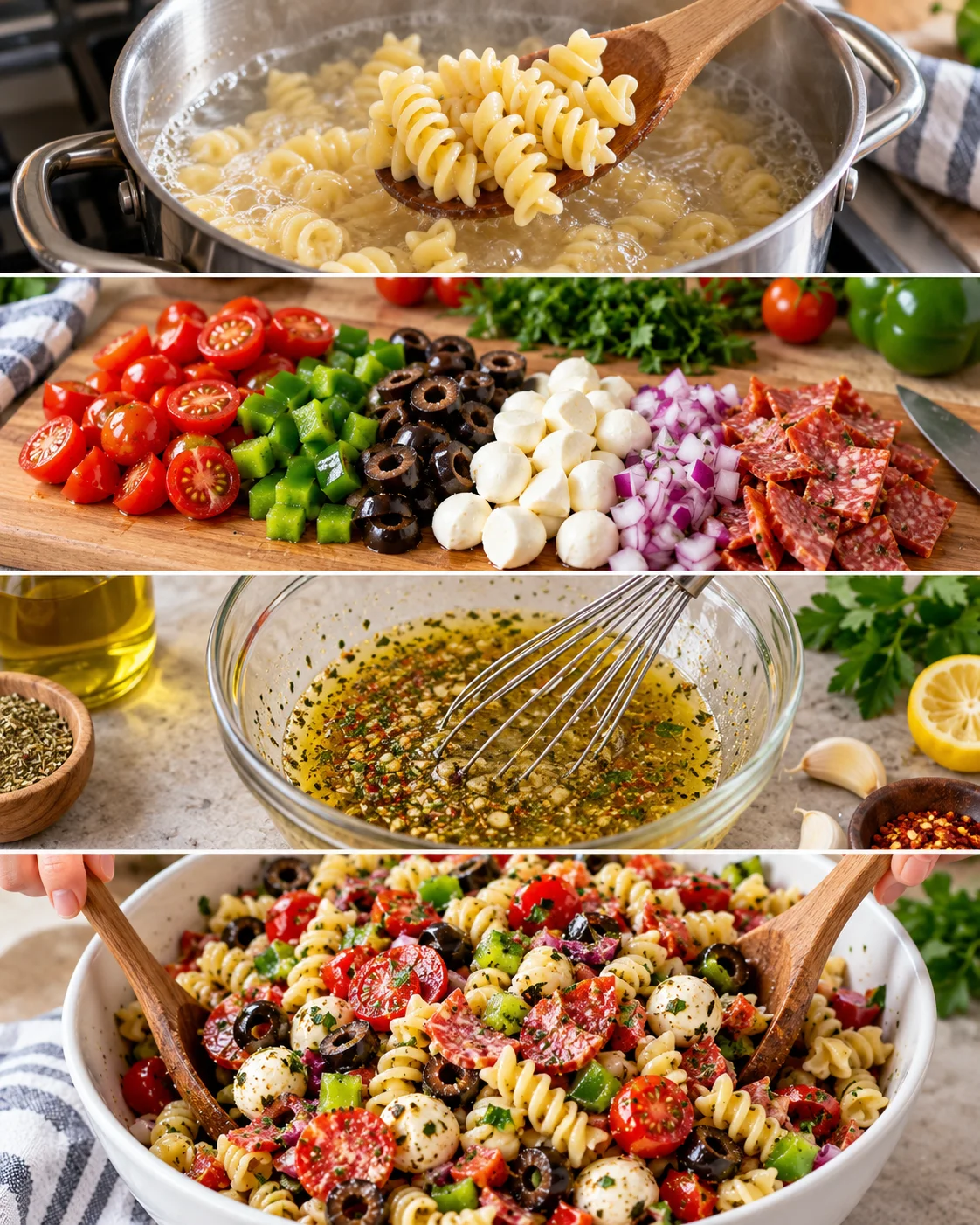
How to Make Italian Pasta Salad with Italian Dressing
Have the vegetables, meats, and cheese ready before the pasta comes out of the pot. The important sequence is to dress the pasta while it is still warm, add only half of the dressing at first, and chill the reserved dressing separately.
- Prepare the dressing. Make the homemade Italian dressing according to its directions in a mason jar or mixing bowl. Refrigerate it until you are ready to assemble the salad. Before using it, shake the jar or whisk the dressing again so the oil, vinegar, herbs, and Parmesan recombine.
- Cook the rotini. Bring a large pot of generously salted water to a boil and cook 1 pound of rotini according to the package directions. Cook it until al dente—soft but still with a bit of a bite—rather than fully soft. Drain well and transfer the hot pasta to a large serving bowl.
- Dress the warm pasta. Pour half of the Italian dressing over the warm rotini. Toss immediately until the pasta is coated. The warm noodles absorb the vinaigrette’s flavor, and this quick coating helps keep the pasta from drying together and tearing when the rest of the salad is tossed.
- Add the salad ingredients. Add the quartered pepperoni and salami, halved cherry tomatoes and black olives, the chopped green bell pepper and the chopped yellow or orange bell pepper, finely diced red onion, chopped pepperoncini, and mozzarella pearls.
- Toss gently. Toss everything together until the ingredients are evenly distributed and the mozzarella remains in recognizable pieces. Taste a bite, keeping in mind that the salad will become more integrated as it chills.
- Chill. Cover the bowl and refrigerate the salad for at least 30 minutes before serving. For make-ahead entertaining, it can chill for up to 24 hours. Keep the remaining dressing in a separate covered container in the refrigerator.
- Finish before serving. Shake or whisk the reserved dressing again, then toss it with the chilled salad. Add fresh parsley and Parmesan just before serving.
How to Make and Adjust the Dressing
Add the olive oil, red wine vinegar, lemon juice, powdery grated Parmesan, sugar, dried parsley, dried basil, dried oregano, garlic powder, onion powder, paprika, salt, and pepper to a mason jar or mixing bowl. Shake the jar vigorously or whisk until combined. The dressing may separate while it sits, especially after chilling, so shake or whisk it again before each use.
Taste the dressing before pouring it over the pasta. For less acidity, add more sugar. For less tang, add more olive oil. For more tang, add additional vinegar. These adjustments are best made gradually so the dressing stays balanced and does not overpower the vegetables, deli meats, or mozzarella.
Tips for Success
- Use the measurements as a starting point. The salad measurements are suggestions that create a well-balanced bowl, not a reason to avoid your favorite ingredients. Add or swap vegetables as you like, using the variations below for specific combinations.
- Cook the pasta al dente. No one wants mushy pasta salad. Rotini should be soft enough to chew but retain a little bite, because it will continue to soften slightly as it absorbs dressing and chills.
- Salt the cooking water. Salting is the one opportunity to season the pasta from within. Use 1 tablespoon of salt for 6 quarts of water when cooking 1 pound of pasta. The pasta itself should not taste flat beneath the dressing.
- Use plenty of water. Pasta needs room to move so it cooks evenly instead of clumping. For 1 pound of pasta, use a large pot with about 6 quarts of water, which generally fills the pot about three-quarters full.
- Dress the pasta right away. Do not leave drained rotini sitting while you chop the vegetables. Toss it immediately with some vinaigrette. Without that first coating, the pasta can dry together and tear when you finally mix in the other ingredients; the warm pasta also absorbs more flavor from the dressing.
- Reserve the second half of the dressing. Pasta continues to absorb vinaigrette as it rests. If you use all of the dressing before chilling, the finished salad can taste dry and bland. The fresh dressing added just before serving restores a glossy texture and lively flavor.
- Let it chill before serving. Thirty minutes is the minimum chilling time for the flavors to come together. If you have the time, chilling for about an hour allows the dressing, vegetables, meats, and herbs to meld more fully. The salad is traditionally served cold or at room temperature.
- Garnish at the end. Parsley and Parmesan are freshest and most attractive when added just before the final toss and serving.
- Keep the dressing mobile. A cold vinaigrette can separate and thicken slightly. Shake the jar or whisk it before pouring so every portion gets oil, vinegar, herbs, and Parmesan rather than mostly one component.
- Refresh leftovers thoughtfully. If a refrigerated portion seems drier over time, add a little more dressing to that portion before eating. The pasta absorbs dressing as it sits, so adding more at serving is more effective than overdressing the entire bowl at the beginning.
Italian Pasta Salad Variations
Keep the rotini, dressing, and the overall mix-and-chill method, then use one of these ideas to make the bowl fit your table. Swaps change the flavor and texture, so treat them as options rather than guaranteed equivalents.
- Swap the protein: Use turkey pepperoni, ham, grilled chicken, crumbled or sliced cooked sausage, canned tuna, or cooked shrimp in place of the salami and/or pepperoni.
- Make it vegetarian: Replace the pepperoni and salami with marinated artichoke hearts and sun-dried tomatoes, or add chickpeas or marinated, pan-fried, or grilled tofu.
- Use alternate vegetables: Add chopped asparagus, mushrooms, zucchini, cucumber, green beans, or peas. These give you more ways to use the recipe across seasons while keeping the salad colorful and substantial.
- Make a roasted vegetable mix: Add roasted zucchini, eggplant, and cherry tomatoes for a warmer, earthier direction. Let roasted vegetables cool enough that they do not make the mozzarella melt before mixing them in.
- Add more antipasto-style ingredients: Try sun-dried tomatoes, roasted bell peppers, artichokes, or capers for extra concentrated, briny flavor.
- Add a spicy kick: Stir in diced jalapeños or a dash of red pepper flakes if you prefer more heat than the pepperoncini provides.
- Make it gluten-free: Use gluten-free pasta, such as Tinkyada, or try sweet potato noodles or zoodles. Cook any alternative according to its package or preparation directions and pay attention to texture before dressing.
- Go Greek-inspired: Replace black olives with Kalamata olives, use cucumber instead of green bell pepper, and add feta cheese for a Mediterranean-style variation.
- Make it Caprese-style: Leave out the salami and pepperoni, use extra mozzarella pearls, and add fresh basil leaves for a classic Caprese flavor.
- Build an antipasto mix: Add marinated mushrooms, artichokes, and roasted red peppers for an antipasto-inspired salad with extra savory and tangy accents.
- Make it creamy: Stir in a few tablespoons of mayonnaise and sour cream for a richer, creamier mouthfeel. This changes the dressing’s texture, so keep the salad chilled and adjust the final dressing gradually.
Storage, Make-Ahead, and Freezing
To make the salad ahead, combine the pasta salad ingredients in a bowl and toss them with half of the dressing. Cover and refrigerate for up to 24 hours. Refrigerate the remaining dressing separately. When you are ready to serve, toss the salad with that remaining dressing, then garnish with Parmesan and fresh parsley. This approach is useful for entertaining because the bowl is assembled in advance without sacrificing the dressing’s fresh, bright flavor.
For leftovers, cover the pasta salad tightly with plastic wrap or transfer it to an airtight container. Store it in the refrigerator for 4–5 days. The pasta will absorb more dressing as it sits, so the salad may become drier over time. Add more dressing to your individual portion to freshen it up.
Freezing is generally not recommended. The pasta can become mushy and lose its firm, al dente texture, and the dressing may separate. Fresh, high-water vegetables such as tomatoes, cucumbers, and bell peppers can turn watery and lose their crispness after freezing and thawing. Cheese and creamy dressings may separate and become grainy or watery, while freezing can dull the vivid flavor of fresh herbs and spices. For the best texture and flavor, prepare the salad fresh or refrigerate it for a short period instead of freezing it.
Serving Suggestions
This Italian pasta salad is a showstopping side dish for a summer gathering, potluck, picnic, or casual dinner, and it also works as a light lunch or dinner any time of year. Its salty meats, creamy cheese, crisp vegetables, and tangy dressing pair especially well with grilled or barbecue food.
- Potluck main dishes: Serve it with Chicken Caprese, Chicken Kabobs, Italian Chicken, steak prepared with a steak marinade, grilled pork tenderloin, grilled barbecue chicken, BBQ ribs, or BBQ beef brisket.
- Sandwiches and burgers: Pair it with BBQ beef brisket sandwiches, French dip sandwiches, Italian beef sandwiches, homemade burgers, turkey burgers, or BBQ bacon burgers.
- Other side dishes: Add baked beans, strawberry spinach salad, elote, grilled zucchini, or cornbread for a generous spread with contrasting textures.
- Fruit: A sweet fruit side balances the zesty vinaigrette. Consider grape salad, watermelon salad, fruit salad, piña colada fruit salad, tropical fruit salad, or berry salad.
Serve it cold for the most melded flavor and crisp vegetables, or let it come to room temperature briefly if that suits the rest of the meal. Give it one final toss and add the garnish just before it reaches the table.
Italian Pasta Salad FAQs
Does pasta need to cool before making pasta salad?
It depends on the dressing. Pasta should cool before you make a creamy pasta salad with a mayonnaise- or sour-cream-based dressing; otherwise, the heat can cause the dressing to break and become runny. For this vinaigrette-based Italian pasta salad, slightly warm pasta is better. Tossing it with the dressing right after draining lets it soak up more flavor.
Why does my pasta salad taste bland?
A pasta salad is only as good as its dressing, so make sure the vinaigrette is seasoned and balanced. The most common problem is using all of the dressing before chilling. The pasta absorbs it as it rests, leaving the salad tasting dry and bland. Reserve half of the dressing and toss it with the chilled salad immediately before serving.
Is pasta salad better warm or cold?
Pasta salad is traditionally served cold or at room temperature. Chilling allows the flavors to meld, while the vegetables and fresh herbs retain more of their crispness and freshness. If a pasta salad contains warm proteins or roasted vegetables, you may prefer it at room temperature, but this Italian version is especially refreshing when chilled.
Should I salt the water for pasta salad?
Yes. Salt the water whether you are cooking pasta for a cold salad or a warm pasta dish. It is the one chance to season the pasta itself and enhance its subtle flavor. Use 1 tablespoon of salt for 6 quarts of water when cooking 1 pound of pasta.
How do you keep pasta from sticking together for pasta salad?
Start with enough cooking water: about 6 quarts for 1 pound of pasta, or a generously filled pot that is typically about three-quarters full. The pasta needs space to move and cook evenly without clumping. After draining, toss it immediately with some of the vinaigrette. If you are making a pasta salad with a creamy dressing instead, toss the drained pasta with a drizzle of olive oil while it cools.
Can you freeze Italian pasta salad?
Freezing is generally a poor fit for this salad. The rotini can become mushy instead of retaining its al dente bite, and the dressing can separate. Tomatoes, cucumbers, bell peppers, and other fresh vegetables may thaw watery and lose their crisp texture. Mozzarella or other dairy ingredients can become grainy or watery, especially in a creamy version, and herbs and spices may taste less vibrant after thawing. Refrigerate the salad for up to 4–5 days instead, adding dressing to portions as needed.


