Creamy Chicken Fettuccine Alfredo with Garlic Parmesan Sauce

This chicken fettuccine Alfredo brings together tender, juicy, golden pan-fried garlic chicken and pasta coated in a creamy Parmesan garlic sauce. The sauce is rich and smooth, with cream cheese adding body and a little tang while chicken broth gives it a savory edge.
The whole meal comes together in about 30 minutes: allow 10 minutes for prep and 20 minutes for cooking. The chicken breasts are cut into thinner pieces so they cook faster and stay tender, then sliced into bite-size strips while the sauce finishes. It is a comforting, restaurant-style dinner that serves four.
If you enjoy a creamy shrimp Alfredo, you will recognize the same straightforward sauce approach here, paired with chicken instead. The finished dish has the indulgent character of the Alfredo served at places such as Olive Garden or Cheesecake Factory, while the process stays manageable in a home kitchen.
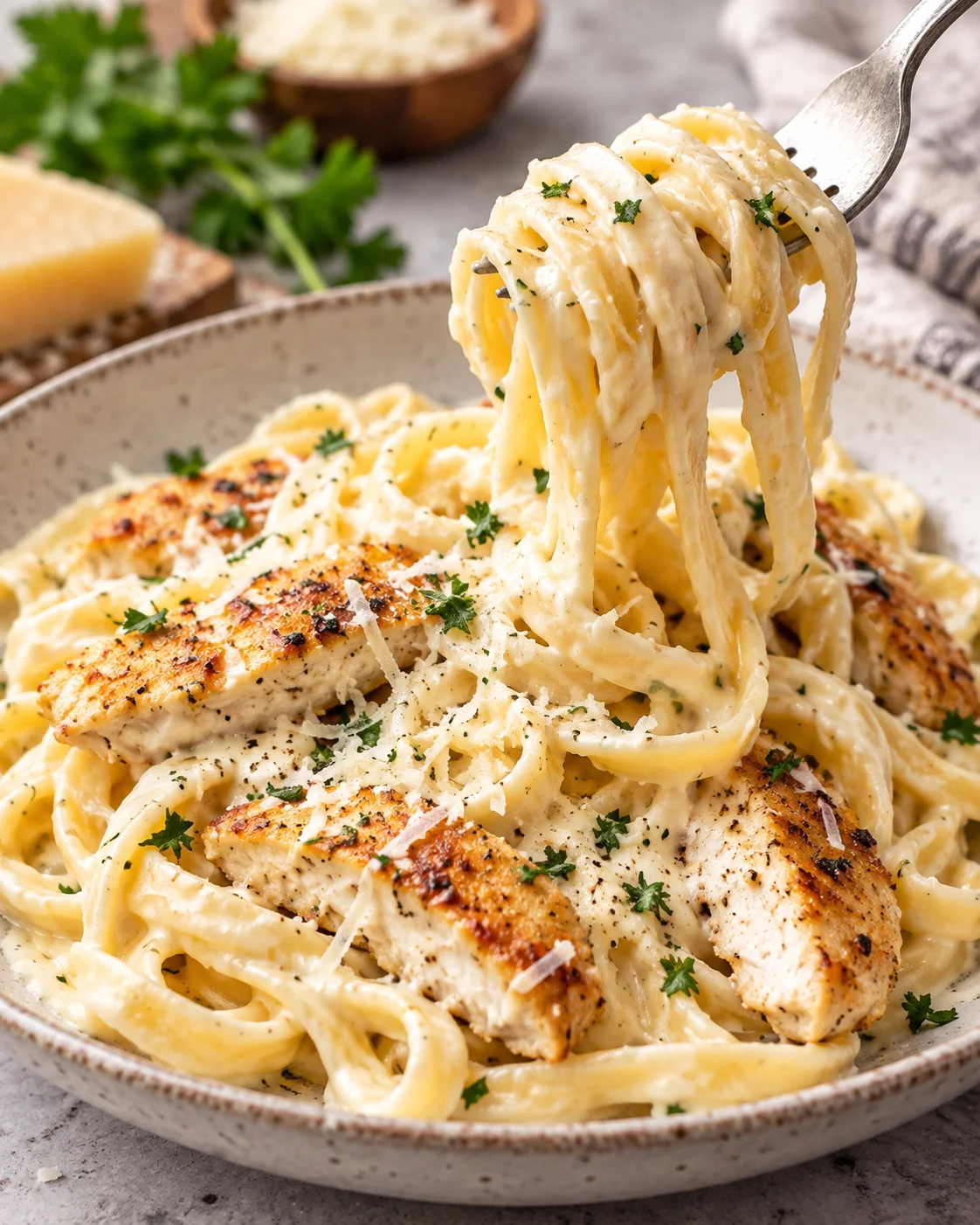
Why You Will Love This Chicken Fettuccine Alfredo
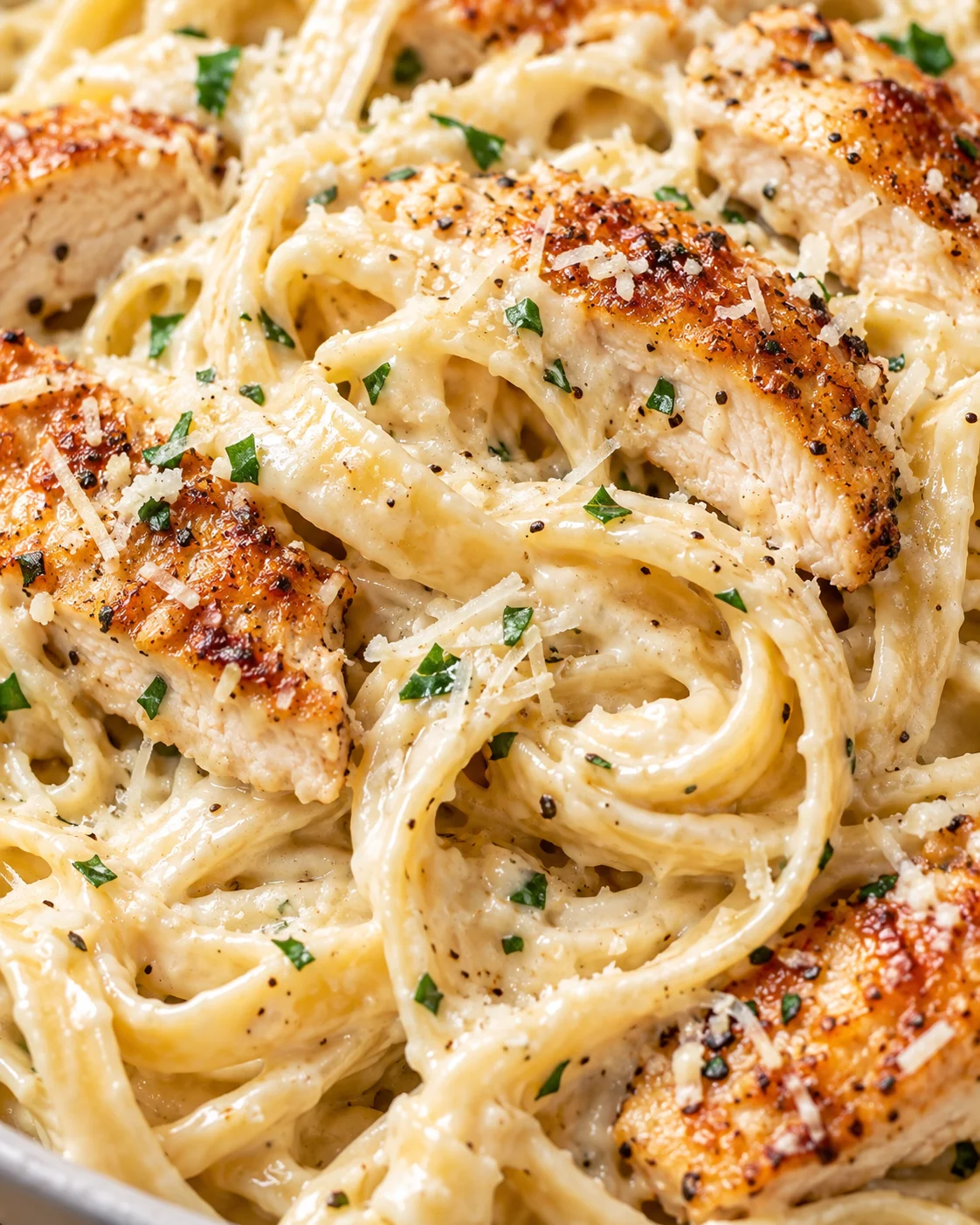
This is more than noodles covered in cream. Flour gives the chicken a golden coating and helps it release from the pan, while garlic powder seasons the cutlets from the start. The chicken is cooked separately so it can brown properly, then the finished strips go back over the sauced pasta.
The Alfredo sauce uses the familiar combination of butter, cream, and Parmesan, with softened cream cheese folded in for extra texture and tang. Traditionalists may not expect cream cheese in Alfredo, but it helps thicken this version and makes the sauce especially creamy. Plenty of garlic and a small amount of chicken broth round out the flavor without making the ingredient list complicated.
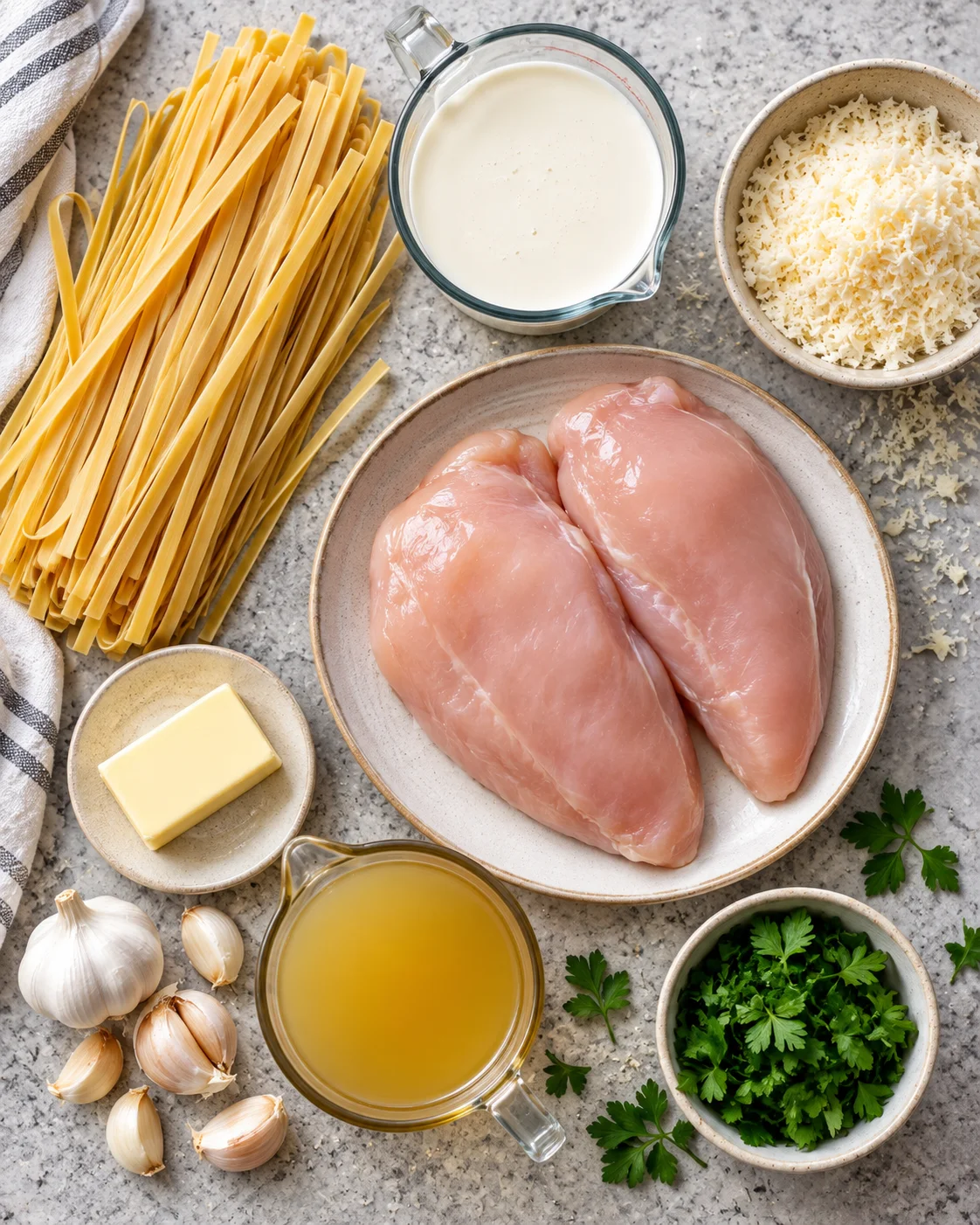
Chicken Fettuccine Alfredo Ingredients
For the chicken and pasta
- 2 large boneless, skinless chicken breasts: Slice each one in half lengthwise to make four thinner cutlets. This shortens the cooking time and helps the chicken stay tender.
- 1/2 teaspoon garlic powder, plus salt and pepper to taste: Season both sides of the chicken before it is dredged.
- Flour for dredging: A light coating helps reduce sticking and creates a golden crust.
- 1 tablespoon olive oil and 3 tablespoons butter, divided: The olive oil and 1 tablespoon of butter cook the chicken; the remaining 2 tablespoons build the sauce.
- 8 ounces uncooked fettuccine: It is the classic pasta choice for Alfredo. Cook it al dente according to the package directions.
For the garlic Parmesan sauce
- 4 ounces cream cheese, softened: This is about half a block of Philly-style cream cheese. It needs to be very soft so it melts smoothly.
- 1 cup freshly grated Parmesan cheese: Freshly grated cheese melts into the sauce more readily than pre-grated Parmesan. Keep extra available for serving.
- 1 cup heavy or whipping cream: Its richness makes a creamy sauce that is much less likely to curdle than sauces made with lower-fat options.
- 1/4 cup chicken broth: This adds savory flavor to the sauce.
- 2 large cloves garlic, minced: The chicken gets garlic powder, and the sauce gets fresh garlic for a fuller garlic flavor.
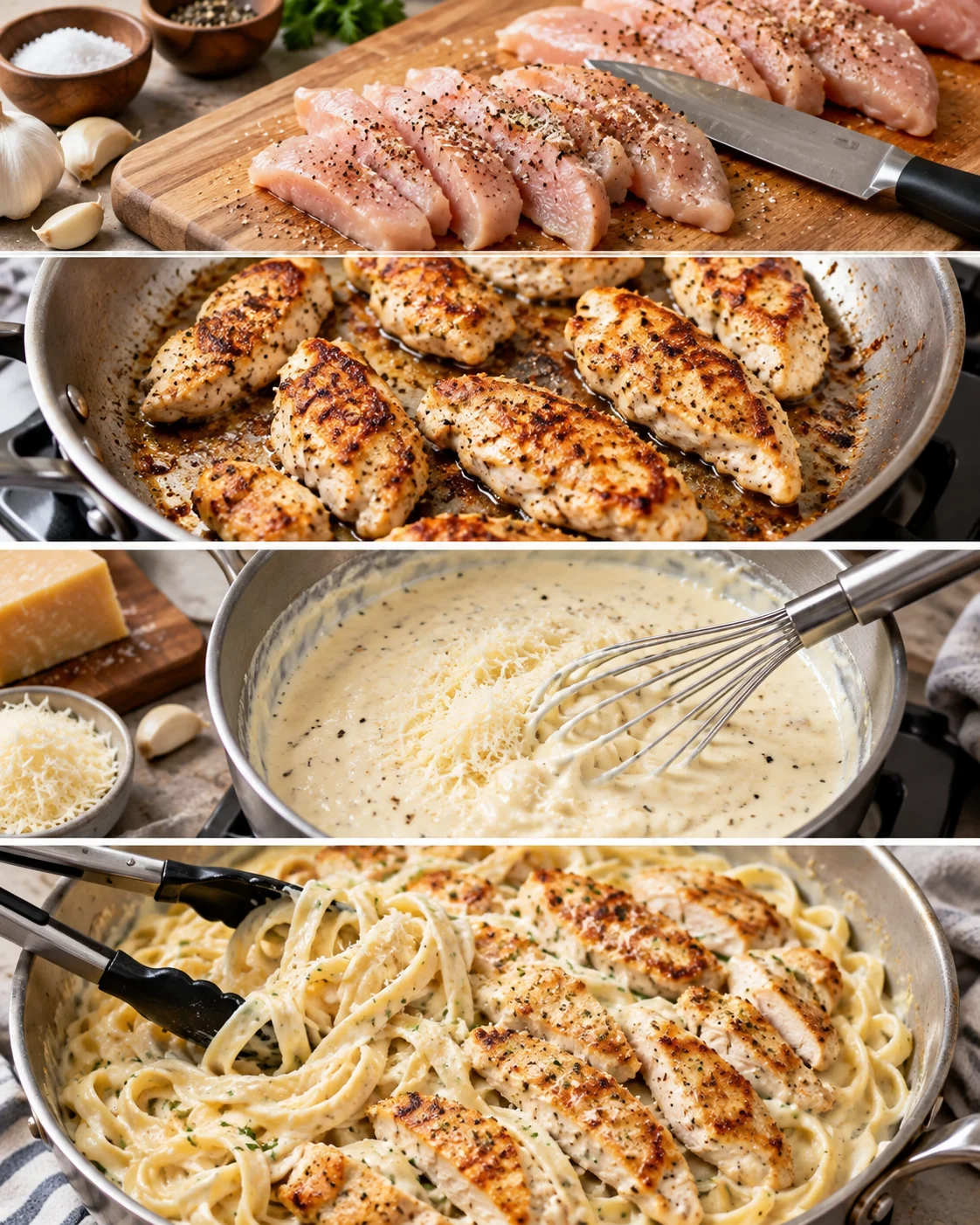
How to Make Chicken Fettuccine Alfredo
- Soften the cream cheese and grate the Parmesan. Take the cream cheese out of the refrigerator at least 30 minutes before you start. If you are short on time, microwave it in 20- to 30-second intervals until it is very soft and pliable. Grate the Parmesan, and prep the other ingredients as you go.
- Cook the fettuccine. Bring a large pot of salted water to a boil. Cook the fettuccine al dente according to the package directions. Before draining, keep some of the hot pasta water nearby in case the sauce needs loosening later.
- Prepare the chicken. Cut both chicken breasts in half lengthwise, giving you four thinner cutlets. Sprinkle both sides with garlic powder, salt, and pepper, then coat each piece in flour.
- Pan-fry the cutlets. Heat a deep skillet over medium-high heat. Add the olive oil and 1 tablespoon of the butter. When the pan is hot, cook the chicken for 5 minutes per side, or until it is golden and cooked through. Take the pan off the heat, transfer the chicken to a plate, and set it aside.
- Start the sauce in the same skillet. If there is a lot of extra grease, wipe out the skillet or give it a quick rinse. There is no need to wash it unless you want to. Add the remaining 2 tablespoons of butter, the cream cheese, heavy cream, chicken broth, and garlic. Return the skillet to the burner over medium heat.
- Melt and reduce. Once the butter has melted and the pan has heated, use a spoon to help the cream cheese melt into the sauce. This takes a couple of minutes. When the cream cheese is incorporated, let the sauce gently bubble for 5 minutes so it reduces somewhat, stirring occasionally. While it cooks, slice the chicken into bite-size strips.
- Add the Parmesan. Stir the Parmesan into the sauce and let it cook for about 1 minute. It should be thick enough by now. If you want it thicker, let it cook a little longer. If it becomes too thick at any point, add a splash of the hot pasta water. Taste the sauce and season with salt and pepper as needed.
- Toss and serve. Drain the fettuccine and add it to the skillet. Toss until the pasta is coated in sauce. Dish it up with the chicken on top, or mix the chicken into the pasta, and grate on more Parmesan as desired.
Tips for Success
- Start with genuinely soft cream cheese. This is the small step that makes the sauce much smoother. Plan on at least 30 minutes at room temperature, or use the short microwave intervals rather than adding a cold block straight to the pan.
- Use an instant-read thermometer for the chicken. Chicken can go from underdone to overdone quickly in a recipe like this. The chicken is safe to eat at 165°F, and its temperature can rise a few degrees after it comes off the heat.
- Grate the Parmesan yourself when possible. It tastes better here and melts into the sauce more easily than pre-grated cheese. A box grater or fine cheese grater works well; keeping a wedge of Parmesan in the refrigerator makes it easy to grate as needed.
- Watch the sauce as it reduces. The five-minute gentle bubble is a guide for reducing the sauce, not a reason to walk away. Stir occasionally, then use hot pasta water if the sauce tightens too much.
- Keep cleanup manageable. A splatter guard can minimize the mess while the chicken cooks. If the skillet only has a little residue, wiping or quickly rinsing it is enough before starting the sauce.
Variations and Substitutions
- Use cooked chicken. Rotisserie or cooked chicken may be used instead when that is easier.
- Change the pasta shape. If you do not have fettuccine, use the pasta you have on hand. A longer pasta is the preferred match for this sauce, but the method still centers on cooking the noodles al dente and tossing them with the sauce.
- Do not casually replace the heavy cream. Milk or another lower-fat substitute can keep the sauce from thickening properly and may cause it to curdle. Alfredo sauce is particularly prone to curdling when made with milk, so substitutions are at your own risk.
This is an intentionally rich treat meal, not a lighter Alfredo. The combination of cream, butter, Parmesan, and cream cheese is what gives it the luxurious texture and the familiar restaurant-style flavor.
Storage, Make-Ahead, and Freezing
Store leftovers in a covered container in the refrigerator for 3 to 4 days. The pasta is best fresh and is not ideal for reheating because the sauce can separate. For the gentlest reheating, warm it slowly in a saucepan over low heat. Add a splash more cream if desired, and stir as it warms.
Freezing leftover fettuccine Alfredo is not recommended. The texture changes after freezing, so this dish is better made and enjoyed fresh, with leftovers kept refrigerated for the shorter storage window above.
Nutrition information is automatically calculated, so should only be used as an approximation.
Serving Suggestions
Serve the chicken Alfredo with a slice of fresh crusty bread to catch the extra sauce. For an even more indulgent pairing, add extra cheesy garlic bread.
A salad gives the creamy pasta a fresh contrast. Try a salad with homemade Olive Garden dressing or Green Goddess dressing, or make a quick Caesar salad with a 10-minute Caesar dressing that needs no blender and garlic croutons. For a lighter option, serve the pasta with a simple Parmesan arugula salad.
Frequently Asked Questions
Why does the cream cheese need to be softened?
Very soft cream cheese melts into the butter, cream, broth, and garlic more smoothly. Let it sit out for at least 30 minutes, or microwave it in 20- to 30-second intervals until it is pliable before you begin.
Can I use rotisserie chicken instead?
Yes. Rotisserie or cooked chicken may be used instead when that is easier.
Can I use a different pasta?
Yes. Use what you have if fettuccine is unavailable. A longer pasta is preferred for this sauce, and whichever shape you choose should be cooked al dente according to its package directions.
Can I use milk instead of heavy cream?
That substitution is not recommended. Milk or another lower-fat option may prevent the sauce from thickening properly and can make Alfredo sauce curdle. Keep the heavy or whipping cream for the most reliable result, and treat substitutions as an experiment at your own risk.
What should I do if the Alfredo sauce is too thick?
Stir in a splash of the hot pasta water until the sauce loosens enough to coat the fettuccine. If the sauce is still too thin, let it gently reduce a little longer before tossing in the pasta.


