Roasted Butternut Squash Soup
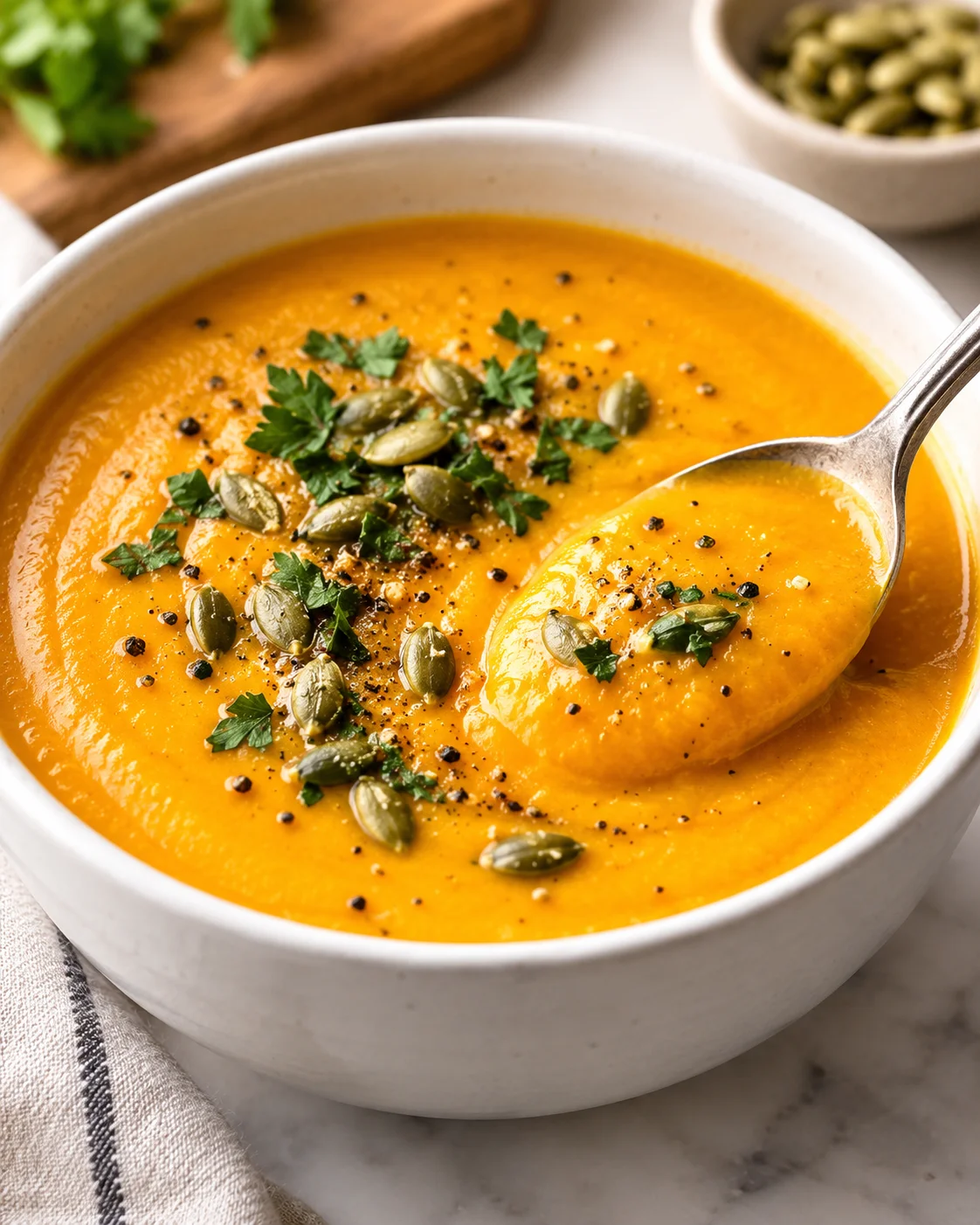
This roasted butternut squash soup is silky smooth, naturally creamy, and filled with cozy sweet-and-savory flavor. Roasting the squash and onion first brings out a caramelized, earthy depth that makes this a particularly inviting fall and winter recipe, while the blender does the work of turning the tender vegetables into a velvety soup.
The method is simple: roast halved butternut squash, add the onion partway through, then blend the cooked vegetables with garlic, maple syrup, warming spices, and vegetable broth. You can start with 3 cups of broth and add more until the texture is just right for you. The base recipe is vegan, vegetarian, and naturally gluten-free, so it fits comfortably on a holiday menu or an everyday table.
At a Glance
- Yield
- 4 servings
- Prep time
- 10 mins
- Cook time
- 1 hr
- Total time
- 1 hr 10 mins
Why You’ll Love This Butternut Squash Soup
Roasting is the defining step here. Instead of putting raw squash straight into a pot, you roast the halves cut-side down until the flesh is tender. Like the method used for roasted spaghetti squash, that dry oven heat encourages the squash’s natural sweetness and adds a caramelized, earthy flavor that a stovetop-only version does not provide. The onion roasts on the same baking sheet, so it becomes soft and deeply flavored without creating another pan to wash.
The finished soup has a smooth, blended texture and a naturally creamy feel even before you add any dairy. Ginger and nutmeg give it gentle warmth, maple syrup rounds out the squash’s sweetness, and onion and garlic keep the flavor savory. The seasoning is balanced rather than spice-heavy, and you can adjust the broth, maple syrup, salt, and pepper to suit the bowl in front of you.
- It uses an easy roasting method. Halving the squash is less work than peeling and cutting it into cubes, and the flesh can be scooped out after roasting.
- It is flexible at serving time. The soup is lovely on its own, or you can finish each bowl with the listed pepitas, parsley, and freshly ground black pepper.
- It suits several menus. The base is vegan, vegetarian, and naturally gluten-free, and it is especially fitting for fall, winter, and Thanksgiving menus.
If you enjoy smooth blended soups, you may also like tomato soup, carrot ginger soup, and potato leek soup.

Butternut Squash Soup Ingredients
Gather the ingredients below before you start. The squash is the main ingredient, and the remaining additions are intentionally simple so its roasted flavor stays at the center.
- 3 ½ pounds butternut squash: Look for one large squash, or weigh a few smaller ones to reach the total amount. The method roasts the squash in halves. For a related roasting guide, see roasted butternut squash.
- 1 tablespoon avocado oil: Use it to coat the squash, and rub a little oil on the onion before it joins the baking sheet.
- 1 small yellow onion, halved: Roasting the onion cut-side down softens it and adds a rich, caramelized note.
- 1 small garlic clove, peeled: The recipe uses one small raw clove in the blender, with a separate roasting option for anyone sensitive to raw garlic’s pungency.
- ½ tablespoon maple syrup: This adds a slightly sweet finish. Adjust the amount to your preferred sweetness level.
- 1 teaspoon salt
- Freshly ground black pepper, to taste
- ¼ teaspoon ground nutmeg
- ¼ teaspoon ground ginger
- 3 to 4 cups vegetable broth: Start with 3 cups, then add more to thin the soup to your liking. Vegetable broth keeps the recipe vegetarian; chicken broth can be used instead if that is what you have on hand.
- Optional garnish: pepitas, parsley, and freshly ground black pepper.
Equipment
- High-powered blender: A Vitamix blender produces an especially smooth, creamy soup.
- Immersion blender: This is listed as an alternative for blending in the pot if you do not have a countertop blender.
- Heavy-duty baking sheet: A sturdy tray is recommended because it is less likely to bend or warp while cooking.
How To Make Butternut Squash Soup
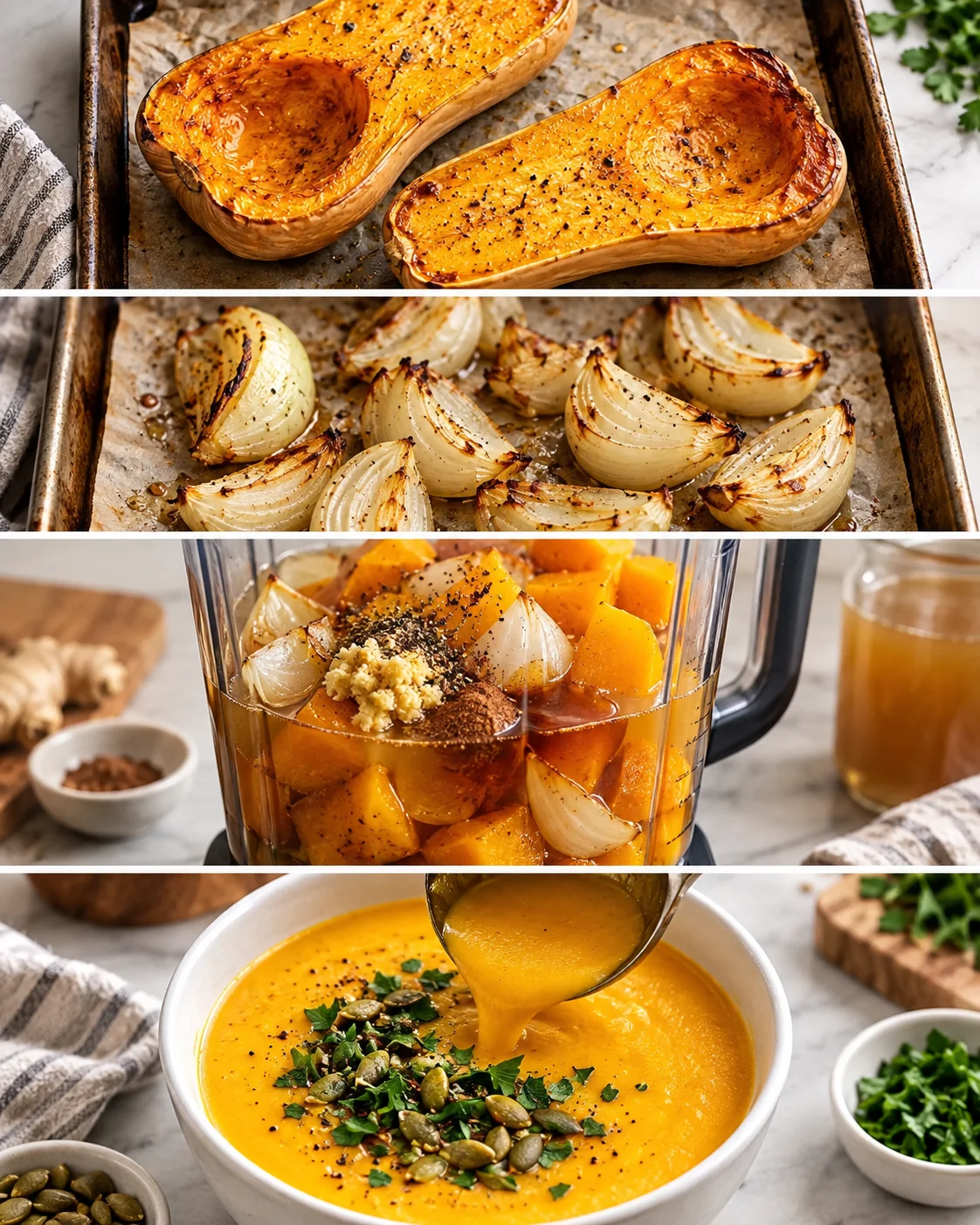
- Prepare the squash and preheat the oven. Preheat your oven to 425°F (220°C). Slice the ends off the butternut squash. Stand the squash upright on its bulb end and carefully slice it in half lengthwise. Use a spoon to remove the seeds and membrane. If the squash is difficult to slice, microwave it for 2 to 3 minutes first; this can make the cutting step easier.
- Season and begin roasting. Transfer the squash halves to a baking tray with the cut side up. Coat them with the avocado oil and sprinkle with salt and pepper. Flip the halves so the cut side is down, then roast for 60 minutes at 425°F (220°C).
- Add the onion after 30 minutes. After the squash has roasted for 30 minutes, rub a little oil on the cut side of the halved onion. Place the onion on the baking tray cut-side down. Continue cooking the squash and onion for another 30 minutes, then remove the tray from the oven.
- Blend the soup. Let the roasted squash cool enough to handle. Scoop out the flesh with a large spoon and transfer it to a high-powered blender. Remove the onion’s outer layer and add the onion to the blender. Add the peeled garlic clove, maple syrup, salt, nutmeg, ginger, and 3 cups of vegetable broth. Start with 3 cups so you can control the consistency.
- Blend until creamy and adjust. Blend on high for 1 to 2 minutes, until the soup is smooth and creamy. Add more broth, up to the remaining amount in the 3-to-4-cup range, if you would like a thinner soup. Taste and add more salt and pepper if needed. For an optional richer finish, blend in a tablespoon or two of fresh butter if you tolerate dairy.
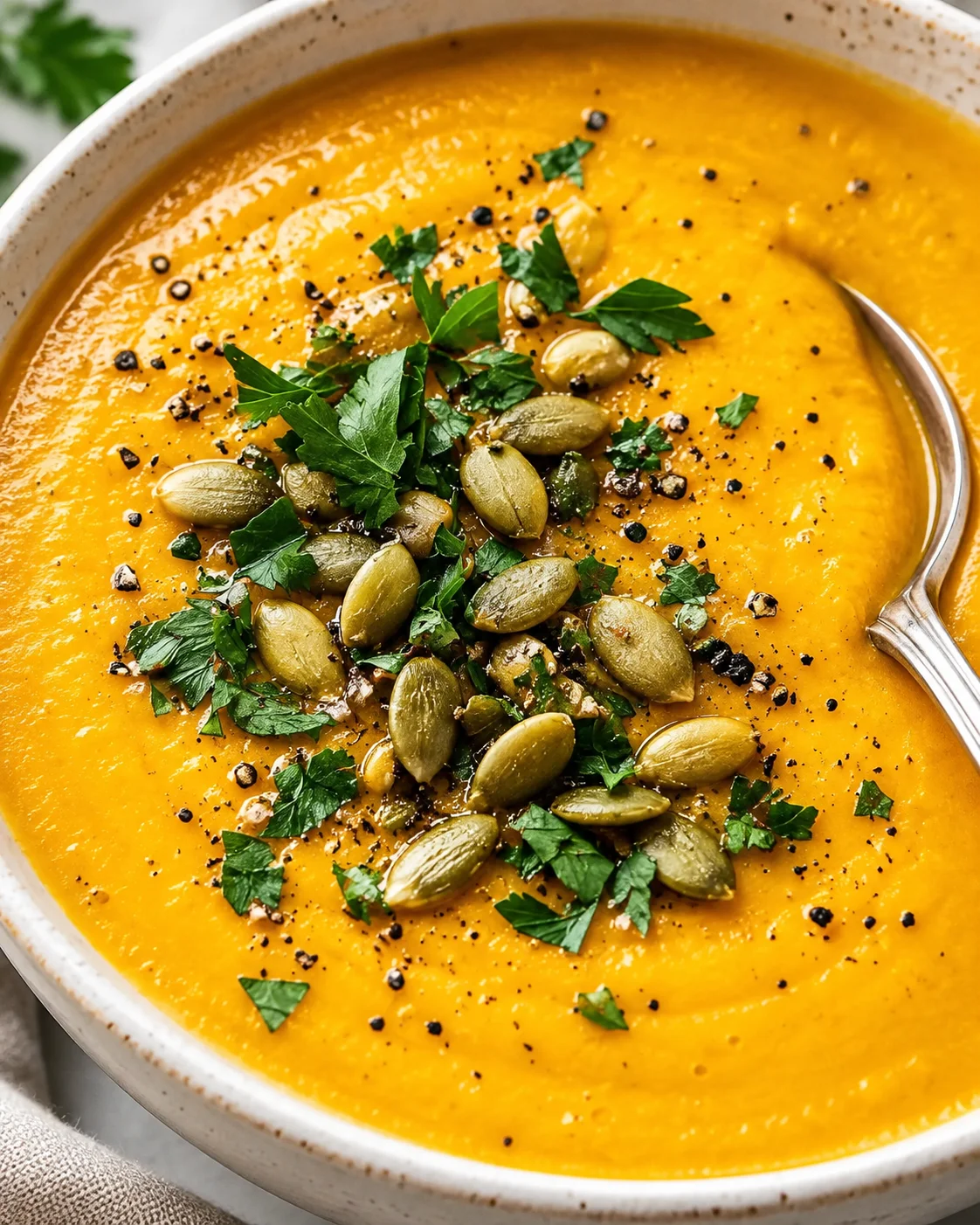
- Serve. Pour the soup into serving bowls. If you like, garnish the top with pepitas, parsley, and freshly ground black pepper.
The squash should be tender enough to scoop after its full roasting time. Give it the brief cooling period it needs before handling. The final texture is controlled at the blender: use the initial broth for a thicker soup, or add more for a looser consistency.
Cooking Tips
- Use halves instead of cubes. Roasting butternut squash halves is easier than cutting the squash into cubes. If you need help with the knife work, see this guide to how to peel and cut butternut squash, but follow the halved-squash method here.
- Make the soup ultra-creamy. The roasted squash already gives the soup a creamy body. If you tolerate dairy, add a splash of heavy cream or a tablespoon or two of butter while blending. For a dairy-free option, use coconut milk or ¼ cup soaked raw cashews.
- Pay attention to the garlic. Use 1 small raw garlic clove. High-powered blenders can make raw garlic taste much more pungent because of the speed of their blades, so the smaller amount suits this method.
- Roast the garlic for a gentler flavor. If you are sensitive to garlic, wrap the peeled clove in aluminum foil and roast it on the sheet pan with the onion. Roasting helps mute the raw garlic’s pungency while keeping its flavor in the soup.
- Choose a sturdy tray. A heavy-duty baking sheet helps prevent bending and warping in the oven. This matters when the tray holds large squash halves and the onion for the full roasting time.
- Finish with contrast. Pepitas and toasted almonds add crunch, while fresh parsley, thyme, sage, and chives add a fresh herbal note. You can also use crispy bacon bits, roasted chickpeas, or crispy shallots.
Variations
The base recipe is already dairy-free, and the easiest changes affect broth, sweetness, garlic, or creaminess rather than the roasted squash itself.
- Use chicken broth: Replace the vegetable broth with chicken broth if that is what you have available. The vegetable-broth version keeps the soup vegetarian.
- Adjust the maple syrup: Begin with the listed ½ tablespoon, then adjust the amount to your preferred sweetness level. The squash’s sweetness can vary, so tasting after blending helps you decide whether the balance is right.
- Add dairy: Blend in a splash of heavy cream or a tablespoon or two of butter for extra richness if you tolerate dairy. Fresh butter is an optional addition.
- Keep it dairy-free: Add coconut milk or ¼ cup soaked raw cashews while blending. These options keep the soup dairy-free without changing the roasted squash-and-onion foundation.
- Soften the garlic: Roast the garlic in foil with the onion instead of adding it raw to the blender if you prefer a less pungent garlic flavor.
Storage Tips
Let the soup cool to room temperature, then transfer it to an airtight container. It will keep in the refrigerator for 4 to 5 days, which makes it useful for a reheatable meal throughout the week.
For longer storage, pour the soup into freezer-safe containers or silicone molds. Silicone molds are useful for single servings. The soup will keep frozen for up to 3 months. To enjoy it again, thaw it in the refrigerator overnight, then reheat gently on the stovetop or in the microwave. If the texture has thickened, add a splash of broth or water while reheating to loosen it.
Serving Suggestions
Pour the blended soup into bowls and finish it with the optional garnish of pepitas, parsley, and freshly ground black pepper. For more variety, use fresh thyme, sage, or chives, or add toasted almonds, crispy bacon bits, roasted chickpeas, or crispy shallots for a contrasting topping.
This roasted butternut squash soup also fits naturally into fall, winter, and Thanksgiving menus. If you want to keep exploring the same seasonal ingredient, try Mashed Butternut Squash, Apple Sausage Stuffed Butternut Squash, Roasted Butternut Squash Salad, Kale and Butternut Squash Frittata, or Butternut Squash and Eggplant Stir Fry. You can also browse butternut squash recipes and soup recipes.
Frequently Asked Questions
Why is the squash roasted in halves?
Halving the squash is easier than peeling and cutting it into cubes. Roasting the halves cut-side down also brings out natural sweetness and caramelized, earthy flavor. After roasting, you can scoop out the flesh with a large spoon.
How much broth should I use?
Use 3 to 4 cups of vegetable broth. Start with 3 cups in the blender, blend for 1 to 2 minutes, then add more broth if you prefer a thinner consistency. Taste after blending and adjust salt and pepper as needed.
Can I use chicken broth?
Yes. Chicken broth works when that is what you have on hand. Use vegetable broth when you want to keep the soup vegetarian.
How can I make the garlic flavor milder?
Wrap the peeled garlic clove in aluminum foil and roast it on the sheet pan with the onion. This mutes the pungency of raw garlic. The note is especially useful with a high-powered blender, which can make raw garlic seem much stronger than expected.
Can I make the soup creamy without dairy?
Yes. The soup is naturally creamy without cream. For an added dairy-free creaminess, blend in coconut milk or ¼ cup soaked raw cashews. If you tolerate dairy, a splash of heavy cream or a tablespoon or two of butter is another optional finish.
How long does butternut squash soup keep?
In an airtight container, it keeps in the refrigerator for 4 to 5 days. Freeze it in freezer-safe containers or silicone molds for up to 3 months. Thaw overnight in the refrigerator and reheat gently on the stovetop or in the microwave, adding broth or water if needed to loosen the soup.
Nutrition Information
Nutrition information: Calories: 292 kcal; Carbohydrates: 54 g; Protein: 4 g; Fat: 9 g; Saturated Fat: 4 g; Cholesterol: 15 mg; Sodium: 1,589 mg; Potassium: 1,437 mg; Fiber: 8 g; Sugar: 13 g; Vitamin A: 42,870 IU; Vitamin C: 85.6 mg; Calcium: 200 mg; Iron: 2.8 mg.


