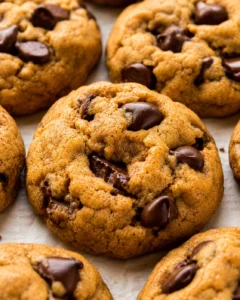
Chewy Pumpkin Chocolate Chip Cookies
These chewy pumpkin chocolate chip cookies have the warm spice flavor of fall baking with a soft, dense center and rich pockets of chocolate. Brown butter brings a nutty depth, while blotted pumpkin puree adds real pumpkin flavor without making the dough overly wet. The finished cookies are thick, chewy, and slightly fudgy in the middle rather than fluffy or cakey.
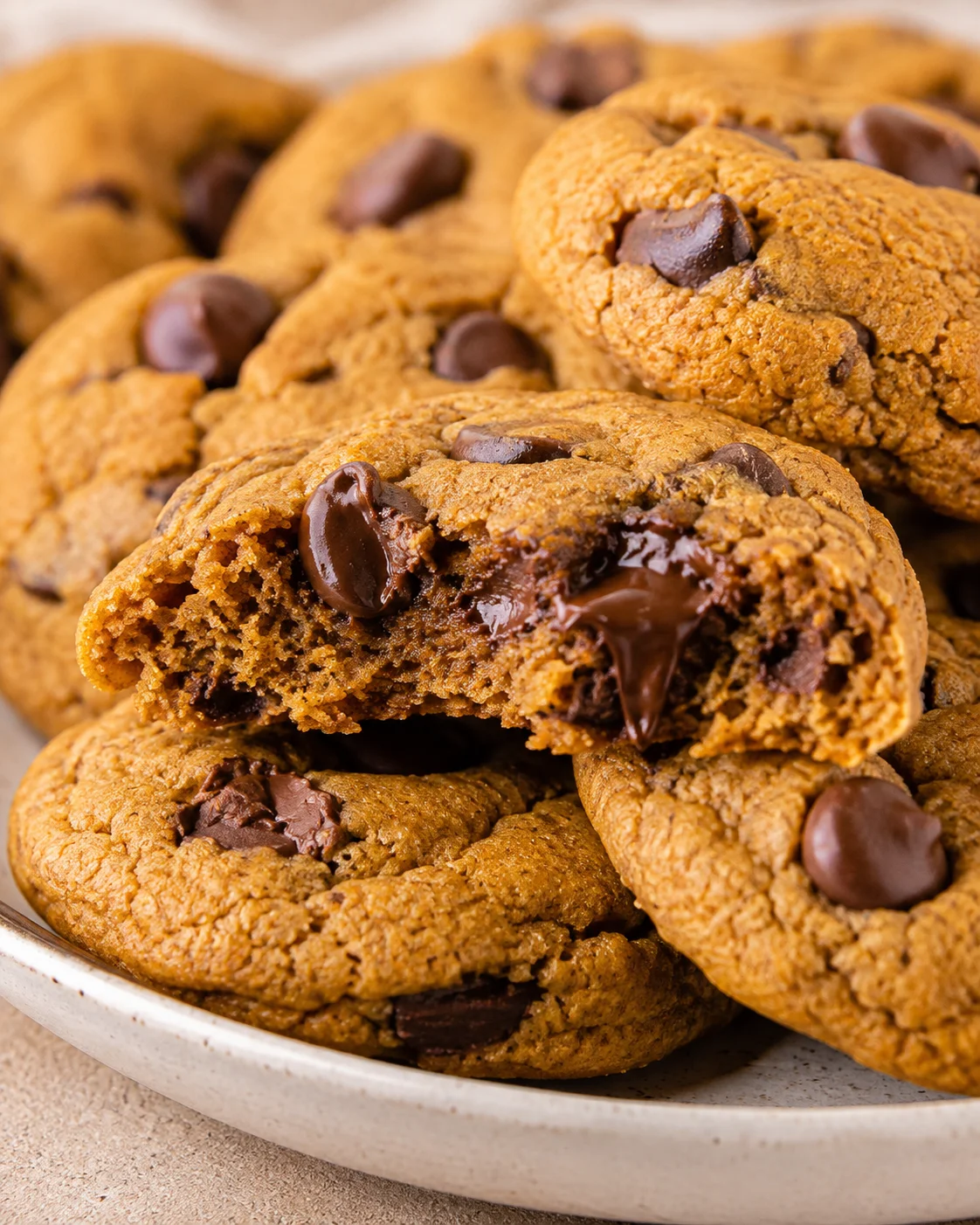
The method has a few deliberate details that make a difference. The browned butter needs to cool until it is between 70 and 75°F while remaining liquid, and the pumpkin needs to be pressed dry before it goes into the dough. Once those steps are complete, the cookie dough comes together without a mixer. You will whisk the butter and sugars, add the yolks, vanilla, and pumpkin, fold in the dry ingredients and chocolate, then bake one tray at a time.
Plan for about 1 hour and 30 minutes of prep time, including the butter-cooling period, and 9 to 13 minutes of baking for each tray. The recipe makes about 15 large cookies. Let them cool completely on the pan before moving them so the centers have time to set while keeping their soft texture.
Why You Will Love This
A pumpkin cookie can easily become puffy or cake-like because pumpkin puree brings extra moisture to the dough. This pumpkin chocolate chip cookies recipe takes a more focused approach to texture. The butter is browned first, the puree is blotted until it is much drier, and egg yolks are used instead of whole eggs. Together, those choices give the dough a richer, denser structure and help the cookies bake up chewy instead of fluffy.
The flavor is balanced between warm pumpkin spice, caramel-like brown sugar, nutty browned butter, and chocolate. Chopped semi-sweet chocolate creates larger, softer pockets as it melts. Chocolate chips can still be used, but chopped chocolate gives the most noticeable pools of chocolate throughout the cookies. Pressing a few larger pieces onto the dough balls before baking makes those pockets especially easy to see on the finished cookies.
This is also a practical recipe for a home kitchen. It does not require a stand mixer or hand mixer, and the dough is mixed in one bowl after the butter is prepared. The instructions explain what the butter should look like, how dry the pumpkin should feel, what the sugar mixture should resemble, and how to judge the cookies when the centers are still slightly underbaked. Those cues are useful because the dough is intentionally thick and the cookies continue to settle as they cool.
The recipe gives you large, bakery-style cookies when you use a 3-tablespoon scoop. If you prefer smaller cookies, a standard 2-tablespoon scoop works too; the smaller portions bake faster, so begin checking them 2 to 3 minutes earlier. The dough can also be frozen in balls for a later bake, which makes it possible to bake only the number of cookies you want at one time.
What keeps the cookies chewy?
Using egg yolks instead of whole eggs is one part of the texture. Egg whites contain more water, while yolks contribute fat and richness. The yolks help the cookies stay dense and give the centers a fudgy quality. Brown butter is another part of the structure and flavor. Browning cooks off some of the butter’s water and adds a deep, nutty taste. With less water available to create steam in the oven, the cookies can spread more like a classic chocolate chip cookie instead of puffing up.
Blotting the pumpkin is the third important step. Spread the puree over a plate, press paper towels into it, scrape it back into a pile, and repeat with fresh paper towels. Continue until it feels similar to soft playdough and measures roughly 1/3 cup, or 75 grams. Removing that excess liquid concentrates the pumpkin in the amount that remains and keeps the dough from carrying more moisture than the recipe is designed to handle.
There is no need to rush the butter-cooling stage or skip the pumpkin-blotting stage. Both are part of the recipe’s method, not optional decoration. When the butter is cool but still liquid, it can be whisked with the sugars. When the pumpkin is dry enough to form a soft ball, it can be incorporated without undoing the dough’s dense consistency.
Ingredients
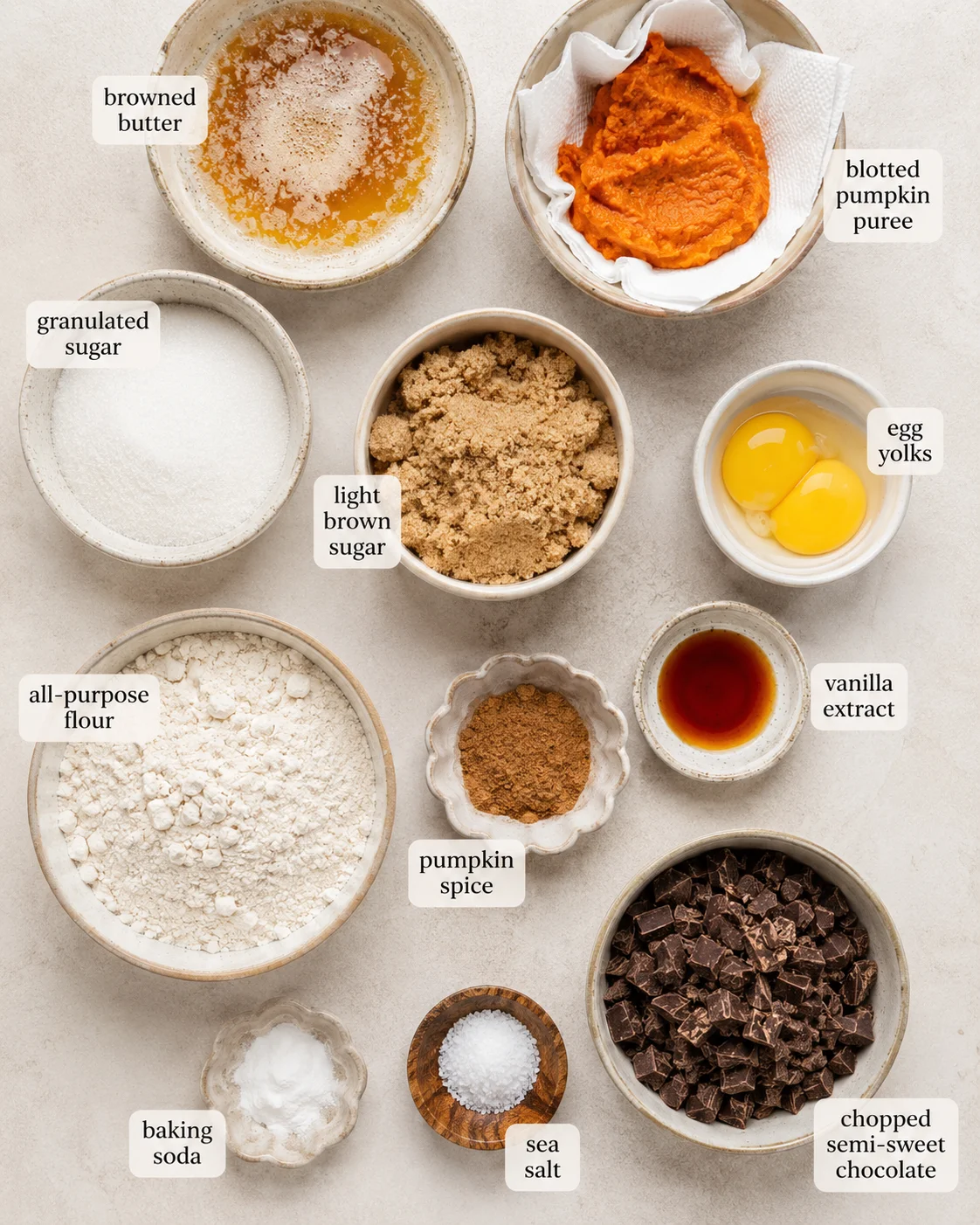
Gather the ingredients before starting, especially because the butter and pumpkin each need a little preparation. The quantities below make about 15 large cookies.
- 1 cup (226 g) cold unsalted butter: The butter is browned in a large stainless steel pan. Starting with cold butter gives you the stated amount before browning and makes it easier to monitor the cooking process.
- 2/3 cup (160 g) Libby’s pumpkin puree, room temperature: The puree is blotted until it is reduced to roughly 1/3 cup, or 75 grams. Use plain pumpkin puree rather than pumpkin pie filling so the sugar and spice in the dough remain balanced.
- 1/2 cup (100 g) granulated sugar: This works with the brown sugar to sweeten the dough and contributes to the cookie’s spread and edges.
- 1/2 cup (100 g) packed light brown sugar: Pack the sugar into the measuring cup. Its deeper caramel note fits the brown butter and pumpkin spice.
- 2 large egg yolks (36 g), room temperature: Yolks add richness without the extra water from egg whites. Bringing them to room temperature helps them blend into the butter mixture.
- 2 teaspoons vanilla extract: Vanilla rounds out the brown sugar, pumpkin spice, butter, and chocolate.
- 1 2/3 cups plus 1 tablespoon (220 g) all-purpose flour: Measure carefully. The most reliable approach is to fluff the flour, spoon it into a measuring cup, and level it, or weigh it with a kitchen scale. Scooping directly from the flour container can pack in too much.
- 2 1/2 teaspoons pumpkin spice: This provides the warm spice character that makes the cookies read as a fall dessert.
- 1 teaspoon baking soda: Mix it thoroughly with the flour so it is distributed through the dough.
- 1/2 teaspoon fine sea salt: Salt keeps the sweetness in balance and sharpens the flavor of the chocolate and spices.
- 1 cup (125 g) chopped semi-sweet chocolate bar: Larger chopped pieces melt into softer pools. Chocolate chips may be used when needed, but they contain stabilizers that help them hold their shape, so the result will have fewer broad melted pockets.
You will also need a large stainless steel pan for browning the butter, a glass measuring bowl for cooling it, paper towels for blotting the pumpkin, two baking trays, parchment paper, a wire cooling rack, and a large 3-tablespoon cookie scoop. A kitchen thermometer is useful for checking the butter temperature. If you make the smaller version, use a standard 2-tablespoon cookie scoop.
Ingredient preparation notes
Keep the butter cold until it goes into the pan. Have the pumpkin at room temperature before spreading it on the plate. Room-temperature yolks and pumpkin blend more easily with the cooled butter mixture. Chopping the chocolate into a range of pieces gives the dough both small bits and larger molten pockets. If you want visible chocolate on top, reserve a few larger pieces to press into the shaped dough balls.
Measure the flour with care. Fluff it first, then spoon it into a measuring cup and level the top. A scale is even more precise because the recipe provides a weight of 220 grams. Accurate flour measurement matters in a dense cookie dough: too much flour can make the dough harder to scoop and can affect how much the cookies spread.
Instructions
Follow the order below. The butter and pumpkin are prepared separately before the dough is mixed, and the butter temperature is important enough that it should not be guessed by appearance alone.
- Prepare the oven and trays. Preheat the oven to 350°F (180°C). Line two baking trays with parchment paper and set them aside. The parchment keeps the shaped dough from sticking and makes it easier to move the cookies once they have cooled.
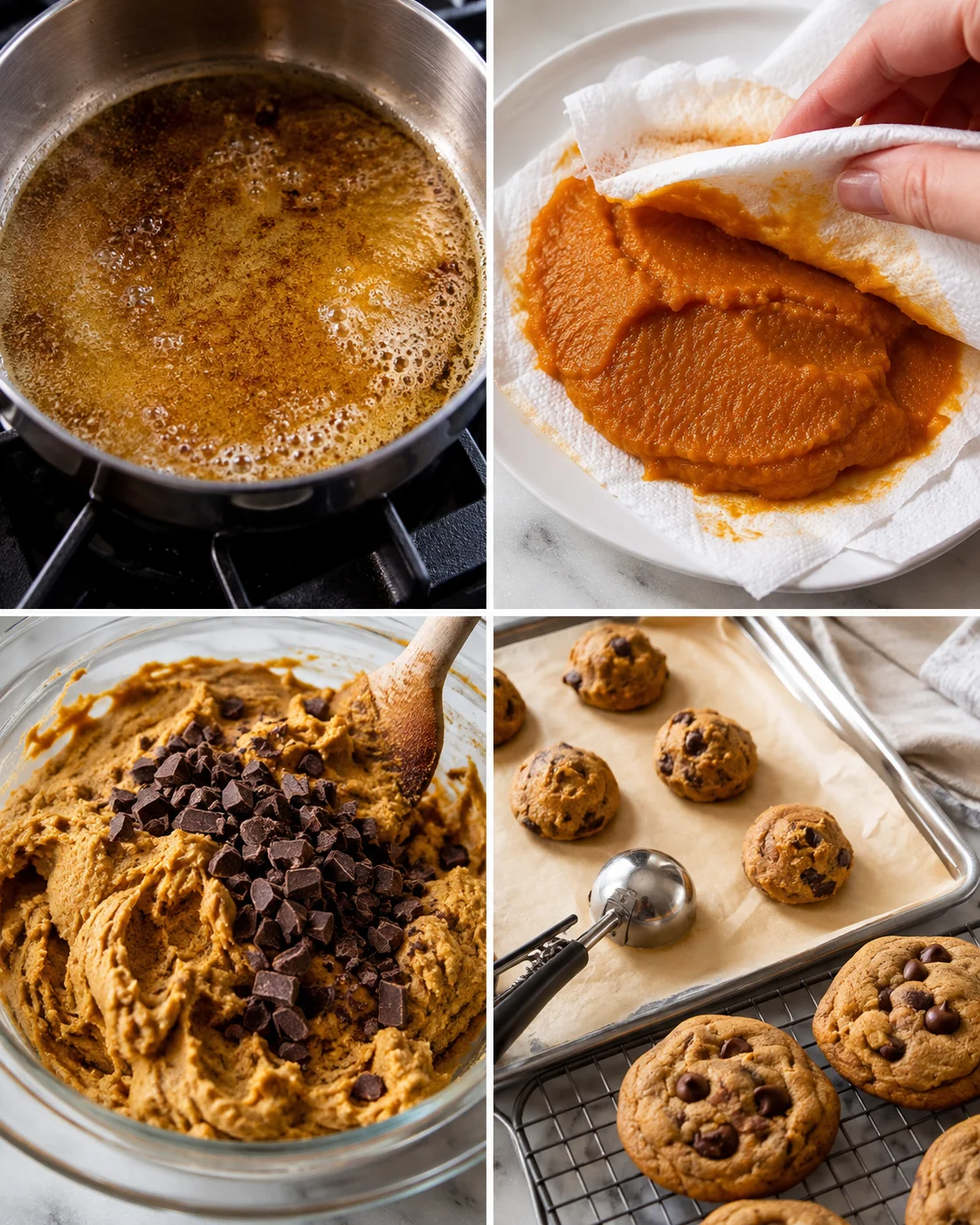
- Brown the butter. Put the cold unsalted butter in a large stainless steel pan over the heat. As it cooks, it will foam, pop, and crackle. That activity is normal, but stay nearby and stir the butter occasionally so it does not burn. Continue until the bottom of the pan is covered with brown bits and the butter smells nutty. Remove the pan from the heat. You should have just under 1 cup of browned butter, about 184 grams.
- Cool the browned butter carefully. Scrape all the browned butter and the brown bits into a glass measuring bowl. Place it in the refrigerator for 50 to 60 minutes. Stir it every 10 to 15 minutes as it cools. Insert a thermometer to check that it reaches 70 to 75°F. The butter should be cool but still liquid. If it has become solid, it is not ready for the next step; keep its texture in mind as you check it. This cooling period is part of the preparation time, so allow for it before mixing the dough.
- Blot the pumpkin puree. While the butter cools, spread the room-temperature pumpkin puree over a plate. Press a stack of paper towels into the puree and let the towels soak up the extra liquid. Scrape the pumpkin into a pile, spread it around the plate again, and press it with a new stack of paper towels. Repeat until the puree feels fairly dry, like soft playdough, and measures roughly 1/3 cup, or 75 grams. The original 2/3 cup amount is reduced by about half during this process. Do not skip the repeated spreading and blotting; this is how the puree reaches the dough’s intended consistency.
- Whisk the cooled butter and sugars. When the butter is between 70 and 75°F and still liquid, add the packed light brown sugar and granulated sugar. Whisk for exactly 1 minute. The mixture should look like pale, wet sand. Whisking for the full minute helps the butter and sugar emulsify before the yolks, vanilla, and pumpkin are added.
- Add the yolks, vanilla, and pumpkin. Whisk in the room-temperature egg yolks and vanilla extract. Add the dried pumpkin puree and whisk until the mixture is combined. Scrape the sides and bottom of the bowl if any butter or pumpkin is clinging there. The mixture does not need to be beaten with a mixer; a whisk is enough for this one-bowl dough.
- Fold in the dry ingredients and chocolate. Add the all-purpose flour, pumpkin spice, baking soda, fine sea salt, and chopped semi-sweet chocolate. Fold everything together with a spatula or sturdy spoon just until combined. Stop when the flour is no longer visible. Mixing beyond that point can make the dough less tender. The chocolate should be distributed throughout without being crushed into the dough.
- Scoop and shape the cookies. Use a large 3-tablespoon cookie scoop to portion the dough. Roll each portion between your palms, then place the dough balls on the parchment-lined trays 2 to 3 inches apart. If you want broad pools of chocolate, chop the chocolate into larger pieces and press a few more pieces onto the tops of the dough balls before baking. The cookies need room to spread without touching.
- Bake one tray at a time. Bake one tray at a time for 9 to 13 minutes. The edges should be golden brown while the middle still looks slightly underbaked. Avoid waiting until the centers look fully firm in the oven; they will continue to set as they cool. The exact point within the baking range depends on the appearance of the edges and center, so use those visual cues along with the timer.
- Scoot the edges and cool. As soon as the tray comes out of the oven, place a large round cookie cutter around each cookie and gently scoot the edges inward. This makes the cookies thicker and more rounded. Keep the cookies on the baking tray and place the tray on a wire cooling rack. Let them cool completely before removing them. Moving them too early can disturb the soft centers, while complete cooling gives the cookies time to settle into their chewy texture.
What each visual cue means
The butter begins by foaming and making a popping, crackling sound. It is ready when you can see brown bits coating the bottom of the pan and the aroma is nutty. The butter then needs to be cool enough to protect the dough’s texture but fluid enough to whisk with the sugars. The thermometer range of 70 to 75°F is the clearest check.
The pumpkin should no longer look loose and watery after blotting. It should gather into a pile and feel like soft playdough. The sugar and butter mixture should resemble pale, wet sand after the one-minute whisk. The finished dough should hold a scoopable shape when portioned. In the oven, look for golden edges and a center that is still slightly underbaked rather than waiting for the entire cookie to look firm.
Those cues work together. The butter temperature controls the starting consistency of the dough, the dried pumpkin keeps the dough from carrying excess liquid, and the center’s slightly underbaked appearance protects the soft texture after cooling. Treat the visual checks as part of the method, not as optional descriptions.
Tips
Keep the butter from burning
Use a large stainless steel pan so there is room for the butter to foam. Stay close once the butter begins to foam, pop, and crackle. Stir occasionally and watch for the brown bits to appear on the bottom. Remove the pan from the heat once the butter smells nutty and the bottom is covered with those brown bits. The butter continues to be hot after the pan leaves the burner, so transfer it to the glass measuring bowl promptly.
The butter should be stirred as it cools in the refrigerator every 10 to 15 minutes. This keeps the cooling process even and lets you observe whether the butter is thickening while remaining liquid. Use a thermometer and wait for 70 to 75°F. A cool, liquid butter mixture is the target; rushing this step can change how the dough behaves when the sugars and flour are added.
Blot enough pumpkin
Blotting pumpkin is not the same as pressing it once and moving on. Spread the puree thinly, press it with paper towels, scrape it into a pile, spread it again, and use fresh paper towels. Continue until the puree is fairly dry and resembles soft playdough. It should measure approximately 1/3 cup, or 75 grams, after the liquid has been absorbed. This is the texture check that shows the puree is ready to mix.
Have extra paper towels nearby because the first stack absorbs the most liquid. If the puree still smears loosely across the plate, continue blotting. If it can be gathered into a soft ball and no longer looks watery, it is ready. This step concentrates the pumpkin flavor and helps keep the baked cookies thick and chewy.
Measure flour accurately
Flour is easy to overmeasure when it is scooped directly from a bag or canister. Fluff the flour first, spoon it into the measuring cup, and level it with a straight edge. The recipe gives a weight of 220 grams, so using a kitchen scale is the most direct way to reach the intended amount. Accurate flour helps keep the dough balanced with the browned butter, dried pumpkin, sugars, and chocolate.
Mix only until combined
After the flour, spices, baking soda, salt, and chocolate are added, fold until the dough comes together and the dry streaks disappear. There is no benefit to working the dough after that point. A gentle fold keeps the shaped portions easy to scoop and helps the cookies remain tender.
Use the chocolate intentionally
Chopped chocolate creates the largest melted pockets because the pieces do not all have the same size and edges. Chocolate chips can be used if they are what you have, but their stabilizers help them hold their shape. For visible chocolate on top, press a few larger chopped pieces into each dough ball just before baking. Keep the chocolate pieces in the dough even if you reserve some for the tops; the mixture should still have chocolate throughout.
Space the dough balls
Place the large dough balls 2 to 3 inches apart on the parchment-lined trays. This leaves room for the cookies to spread and makes it possible to scoot the edges with a cookie cutter after baking. Bake one tray at a time so the cookies receive the stated heat and so you can judge the edges and centers without crowding the oven.
Judge doneness by the edges and center
Start checking during the 9-to-13-minute baking range. Golden edges and a slightly underbaked middle are the target. The cookies do not need to look fully firm when they leave the oven. They finish setting on the hot tray, and the wire rack helps the tray cool gradually. After the cookies are completely cool, remove them from the parchment.
When cookies do not spread as much
If refrigerated or frozen dough is not spreading as much as expected, let it come closer to room temperature before baking. Refrigerated dough can take about 1 hour, while frozen dough can take about 2 hours. Watch the dough rather than relying on a rushed timer. Once it is ready to bake, use the same edge and center cues to decide when the cookies are done.
Variations
Chopped chocolate or chocolate chips
The preferred choice is a chopped semi-sweet chocolate bar because the irregular pieces melt into rich, soft pools. Chocolate chips are an acceptable alternative when that is what you have on hand. The chips will hold their shape more readily, so expect a different distribution of melted chocolate rather than the same broad pools produced by chopped pieces.
Large or smaller cookies
For the large cookies described in the main method, use a 3-tablespoon scoop and space the dough balls 2 to 3 inches apart. For smaller cookies, use a standard 2-tablespoon scoop. The smaller portions bake faster, so start checking them 2 to 3 minutes earlier. Keep the centers slightly underdone when you remove them from the oven, then let them cool on the tray.
Freeze the shaped dough
Shape the dough into balls and place them on a baking tray. Freeze the tray until the dough balls are firm, then transfer them to a freezer bag or airtight container. Bake the frozen dough straight from frozen, adding 1 to 2 extra minutes to the baking time. If the cookies are not spreading as much as you want, let the frozen dough come toward room temperature before baking; this can take about 2 hours.
Use the extra pumpkin in another bake
The recipe does not use the entire can of pumpkin puree. Save the extra puree for another fall dessert, such as pumpkin spice cheesecake cookies or pumpkin cream cheese cupcakes. Keeping the remaining puree for another bake is a simple way to use what is left without changing the cookie formula.
Storage
Storing baked cookies
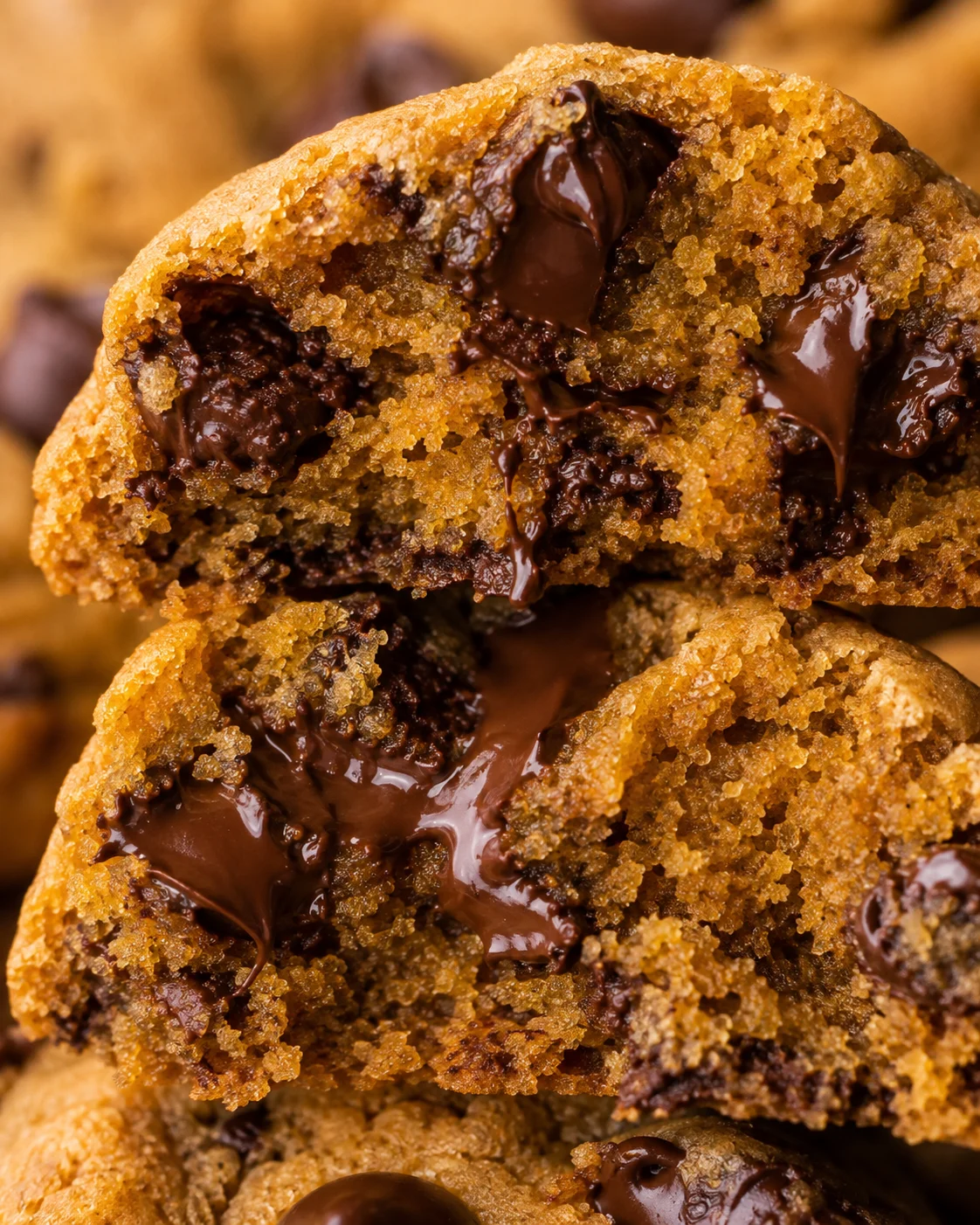
Place baked cookies in an airtight container and keep them at room temperature for 2 to 3 days. Let them cool completely before sealing the container so the cookies are stored after the centers have set. The cookies are soft and chewy, with a gooey center when they are freshly baked and cooled, so handle them gently until they have cooled all the way.
Refrigerating or freezing dough
The cookie dough balls can be refrigerated or frozen. For frozen dough, freeze the portions on a baking tray until firm, then move them to a freezer bag or airtight container. Bake them straight from frozen and add 1 to 2 minutes to the baking time. If refrigerated or frozen dough is not spreading as much as desired, bring it closer to room temperature before baking. Allow about 1 hour for refrigerated dough and about 2 hours for frozen dough to reach room temperature.
Freeze the dough in individual portions rather than as one large mass. Portioning first makes it possible to bake a partial batch and keeps the scoop size consistent. The 3-tablespoon portions produce the large cookies described here; use the 2-tablespoon scoop when preparing the smaller variation.
Serving Suggestions
Serve the cookies after they have cooled completely, when the edges have set and the centers remain soft. Their warm pumpkin spice, brown butter, and chocolate flavor makes them a natural fall dessert, but the portions also work for a casual snack or a seasonal cookie tray. Arrange the cookies in a single layer if you want the chocolate pieces and rounded edges to remain visible.
For the richest chocolate pockets, make sure some of the larger chopped pieces are pressed onto the tops before baking. The cookie-cutter scoot at the end of baking gives the edges a thicker, rounder shape. Let the cookies cool on the wire rack before serving so the texture is settled enough to lift cleanly.
FAQ
Why are pumpkin cookies often cakey?
Pumpkin puree adds moisture, and that extra moisture can make a cookie puff rather than spread. This recipe blots the pumpkin until it is reduced from 2/3 cup to roughly 1/3 cup, or 75 grams. It also uses egg yolks instead of whole eggs and browned butter, which helps produce a denser, chewier cookie with fudgy centers.
Can I use chocolate chips instead of chopped chocolate?
Yes. Chopped semi-sweet chocolate is preferred for larger, gooey pools, but chocolate chips can work when that is what you have. Chips contain stabilizers that help them keep their shape during baking, so they will not melt into the same broad pockets as chopped chocolate. You can still press some chips onto the tops of the dough balls before baking.
How do I know when the browned butter is ready?
The butter will foam, pop, and crackle as it cooks. Stir it occasionally and remove the pan from the heat when the bottom is covered with brown bits and the butter smells nutty. Transfer it to a glass measuring bowl, then cool it in the refrigerator for 50 to 60 minutes, stirring every 10 to 15 minutes. It is ready for the dough when it reaches 70 to 75°F and is still liquid.
How dry should the pumpkin puree be?
Spread the puree on a plate and repeatedly press it with fresh stacks of paper towels. Scrape it into a pile and spread it again between presses. The finished puree should feel fairly dry, similar to soft playdough, and should measure about 1/3 cup, or 75 grams. This is roughly half of the starting 2/3 cup amount.
Can I make smaller cookies?
Yes. Use a standard 2-tablespoon cookie scoop instead of the large 3-tablespoon scoop. Smaller cookies bake faster, so start checking them 2 to 3 minutes earlier than the large cookies. Remove them when the edges are golden brown and the centers still look slightly underbaked.
Can I freeze the cookie dough?
Yes. Freeze the shaped dough balls on a baking tray until firm, then transfer them to a freezer bag or airtight container. Bake them straight from frozen and add 1 to 2 extra minutes to the baking time. If the dough is not spreading as much as expected, allow frozen portions to come toward room temperature before baking; this can take about 2 hours.
Nutrition
The supplied nutrition estimate is per 1 cookie: 246 calories, 25 grams carbohydrates, 2 grams protein, 16 grams fat, 4 grams saturated fat, 3 grams polyunsaturated fat, 6 grams monounsaturated fat, 26 milligrams cholesterol, 295 milligrams sodium, 73 milligrams potassium, 1 gram fiber, 13 grams sugar, 2,271 IU vitamin A, 0.5 milligrams vitamin C, 19 milligrams calcium, and 1 milligram iron. Nutrition information is an estimate, and its accuracy is not guaranteed.
Once the cookies have cooled, they are ready to enjoy: soft in the center, chewy around the edges, warmly spiced, and dotted with melted chocolate. Keep the butter cool but liquid, blot the pumpkin thoroughly, and use the edge-and-center cues in the oven for the texture this recipe is designed to deliver.
PrintChewy, thick pumpkin chocolate chip cookies with browned butter and blotted pumpkin puree for a soft, dense center and rich chocolate pockets, featuring warm fall spices.
- Prep Time: 1 hour 30 minutes (including butter cooling and pumpkin blotting)
- Cook Time: 9 to 13 minutes per tray
- Total Time: 1 hour 40 minutes to 1 hour 45 minutes
- Yield: About 15 large cookies 1x
- Category: Dessert
Ingredients
- 1 cup (226 g) cold unsalted butter
- 2/3 cup (160 g) Libby’s pumpkin puree, room temperature (blotted to 1/3 cup or 75 g)
- 1/2 cup (100 g) granulated sugar
- 1/2 cup (100 g) packed light brown sugar
- 2 large egg yolks (36 g), room temperature
- 2 teaspoons vanilla extract
- 1 2/3 cups plus 1 tablespoon (220 g) all-purpose flour
- 2 1/2 teaspoons pumpkin spice
- 1 teaspoon baking soda
- 1/2 teaspoon fine sea salt
- 1 cup (125 g) chopped semi-sweet chocolate bar
Instructions
- Preheat oven to 350°F (180°C). Line two baking trays with parchment paper.
- Brown the cold unsalted butter in a large stainless steel pan over medium heat until it foams, pops, crackles, and brown bits form on the bottom with a nutty aroma. Remove from heat; yield about 1 cup (184 g) browned butter.
- Transfer browned butter to a glass measuring bowl and refrigerate for 50-60 minutes, stirring every 10-15 minutes, cooling until 70-75°F and still liquid.
- Spread room-temperature pumpkin puree thinly on a plate; repeatedly press with fresh paper towels, scrape into a pile, and spread again until it measures about 1/3 cup (75 g) and feels like soft playdough.
- Whisk the cooled browned butter and both sugars together for exactly 1 minute until mixture looks like pale, wet sand.
- Whisk in egg yolks and vanilla extract; then whisk in blotted pumpkin puree until combined, scraping sides and bottom of bowl as needed.
- Fold in flour, pumpkin spice, baking soda, salt, and chopped semi-sweet chocolate using a spatula just until no dry streaks remain; avoid overmixing.
- Use a 3-tablespoon cookie scoop to portion dough; roll into balls and place 2-3 inches apart on prepared trays. Optionally, press a few larger chocolate pieces onto the tops of dough balls.
- Bake one tray at a time for 9 to 13 minutes until edges are golden and centers slightly underbaked.
- Immediately after baking, use a large round cookie cutter to gently scoot cookie edges inward for thicker, rounded cookies. Cool completely on trays placed over wire racks before removing.
Notes
Use chopped semi-sweet chocolate for large, soft melted chocolate pockets; chocolate chips can be used as an alternative but yield fewer melted pockets., For smaller cookies, use a 2-tablespoon scoop and reduce baking time by 2-3 minutes; watch for golden edges and slightly underbaked centers., Butter must be cooled to 70-75°F but remain liquid before mixing with sugars to maintain dough consistency., Pumpkin puree must be blotted thoroughly to prevent excess moisture and ensure chewy texture., Avoid overmixing once dry ingredients and chocolate are added to keep dough tender., Dough balls can be frozen individually on a tray then stored airtight; bake from frozen adding 1-2 minutes to bake time., Allow refrigerated or frozen dough balls to come close to room temperature before baking if cookies do not spread sufficiently., Cookies are best stored at room temperature in an airtight container for 2-3 days after completely cooling to preserve texture.
Nutrition
- Serving Size: 1 cookie
- Calories: 246 calories per cookie
- Fat: 16 grams per cookie
- Carbohydrates: 25 grams per cookie
- Protein: 2 grams per cookie