Glazed Lemon Scones Recipe

These glazed lemon scones bring together a buttery, tender center, lightly crisp edges, and a fresh lemon glaze that adds a bright finish. The dough is scented with lemon zest and vanilla, while the simple powdered-sugar glaze supplies the sweet citrus note on top. Each batch makes eight scones, so there is enough to share with a small table or to enjoy alongside several cups of tea or coffee.
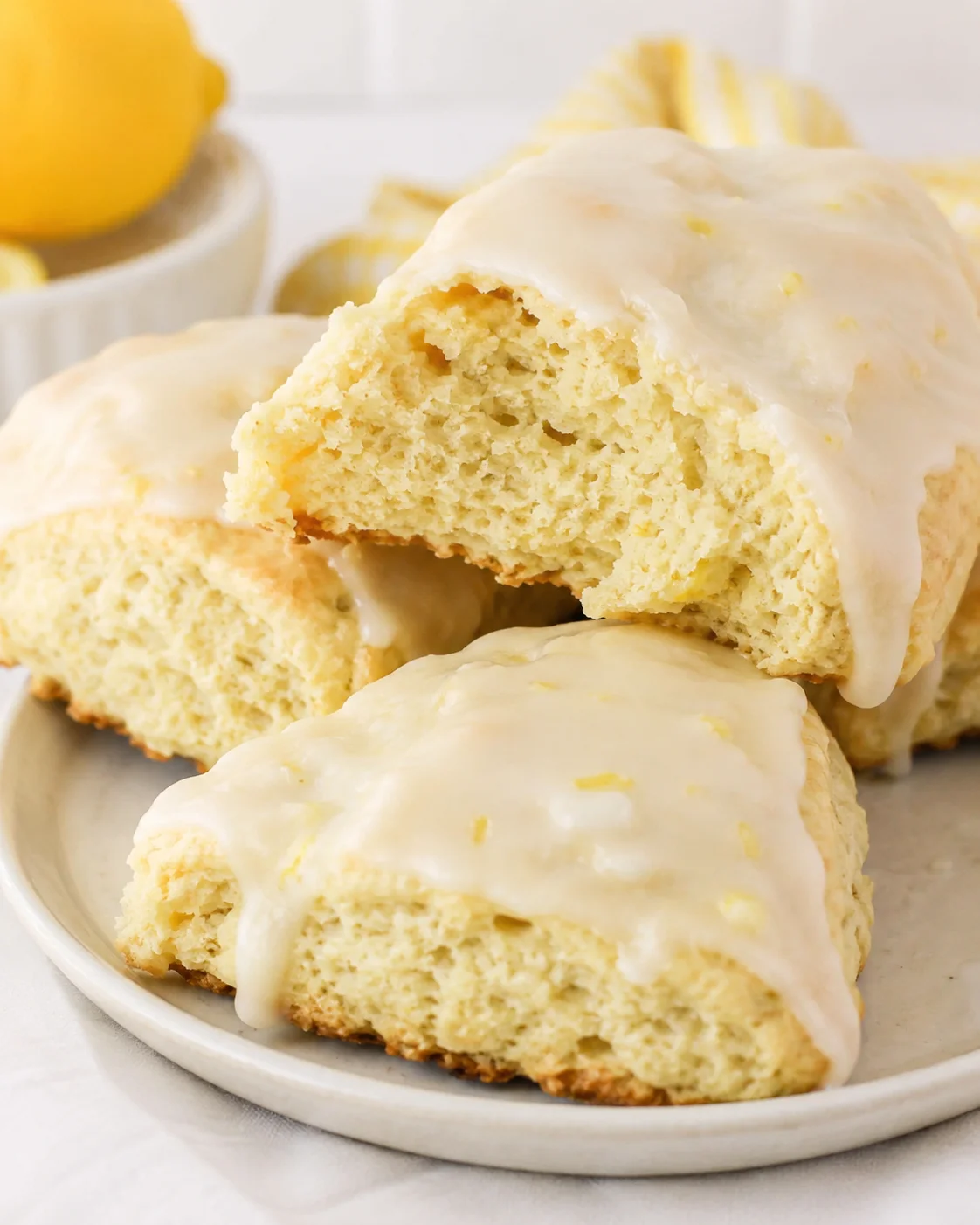
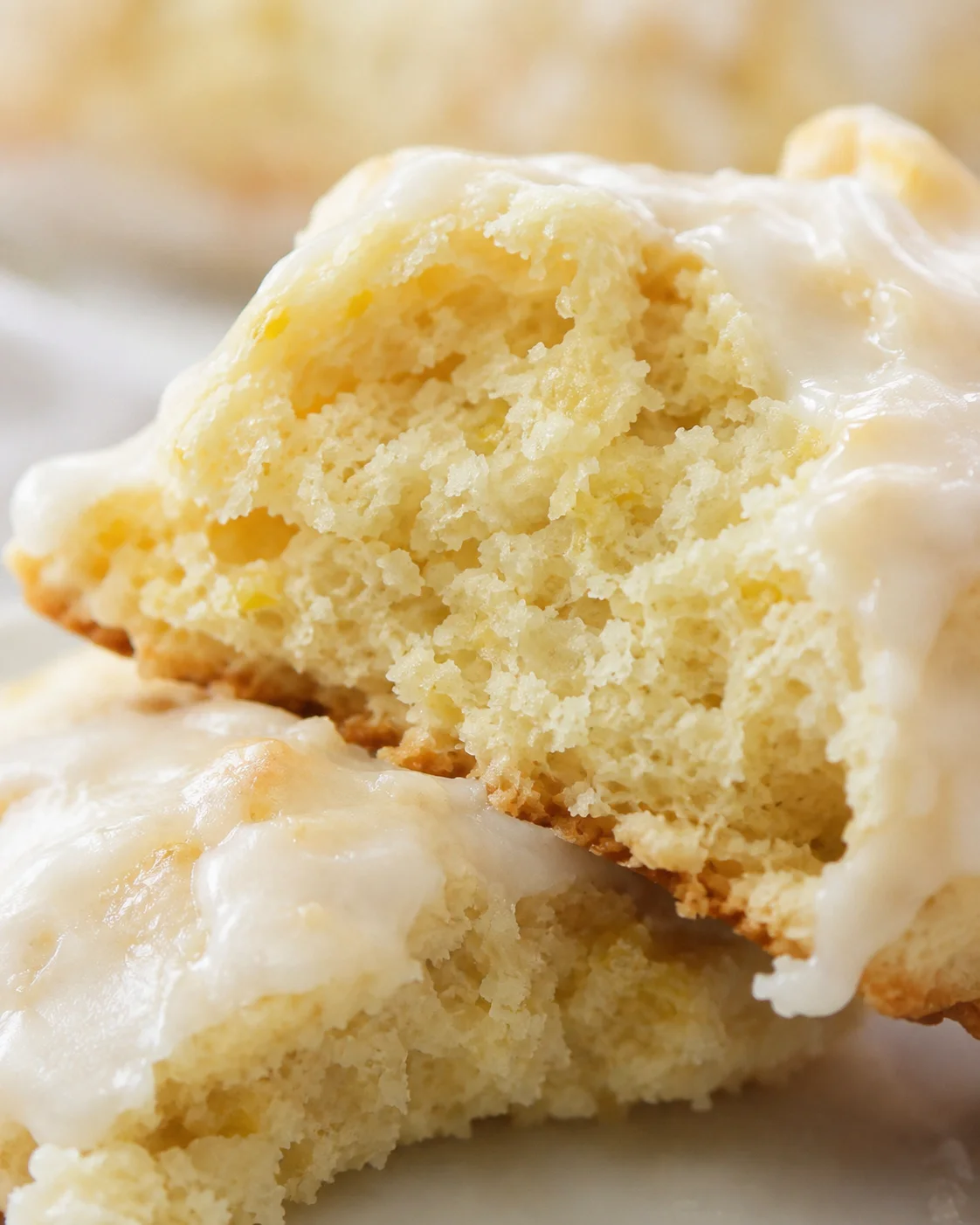
If dry scones have put you off in the past, this lemon scones recipe is built around the details that help keep the inside moist and fluffy. Cold, cubed butter creates small pockets throughout the dough, and the dough is shaped into a one-inch-thick circle before it is cut into wedges. The result is a scone with a crunchy outer layer and a soft interior, finished with a glaze that complements the citrus flavor rather than hiding it.
The recipe takes about one hour and fourteen minutes in total: one hour of preparation and fourteen minutes of baking. The glaze needs about fifteen minutes to set after it is applied. Plan to enjoy the scones the day they are baked for the best texture, or freeze them unglazed for longer storage.
Why You Will Love This Lemon Scones Recipe
There is a lot to like about these glazed lemon scones, especially when you want a baked treat with a clear, fresh flavor. Lemon zest goes into both the dough and the glaze, so the citrus character is present from the first bite through the finish. Lemon juice is reserved for the glaze, where it blends with powdered sugar into a smooth, bright topping.
- Buttery texture: Unsalted butter is added cold and cubed, giving the baked scones the flaky, buttery layers and fluffy pockets associated with a well-made scone.
- Balanced sweetness: Granulated sugar sweetens the dough, while the powdered-sugar glaze adds a little more sweetness at the surface. The scone itself is not meant to be an overly sweet dessert.
- Clear lemon flavor: Fresh lemon zest flavors the dough and the glaze, and fresh lemon juice gives the glaze its lively citrus taste.
- Simple shaping: The dough is formed into one circle and divided into eight pieces with a pastry wheel or large pizza cutter. There is no need to shape eight separate portions by hand.
- Easy serving: The finished scones work as a dessert or a companion for hot tea or coffee. They can be glazed right away once cooled, or thawed and iced after freezing.
The finished appearance is part of the appeal: look for golden-brown edges, a pale tender interior, and a glossy coating that settles after it rests. Letting the glaze set on a wire rack keeps the topping from pooling around the bottoms and makes the wedges easier to serve.
Ingredients
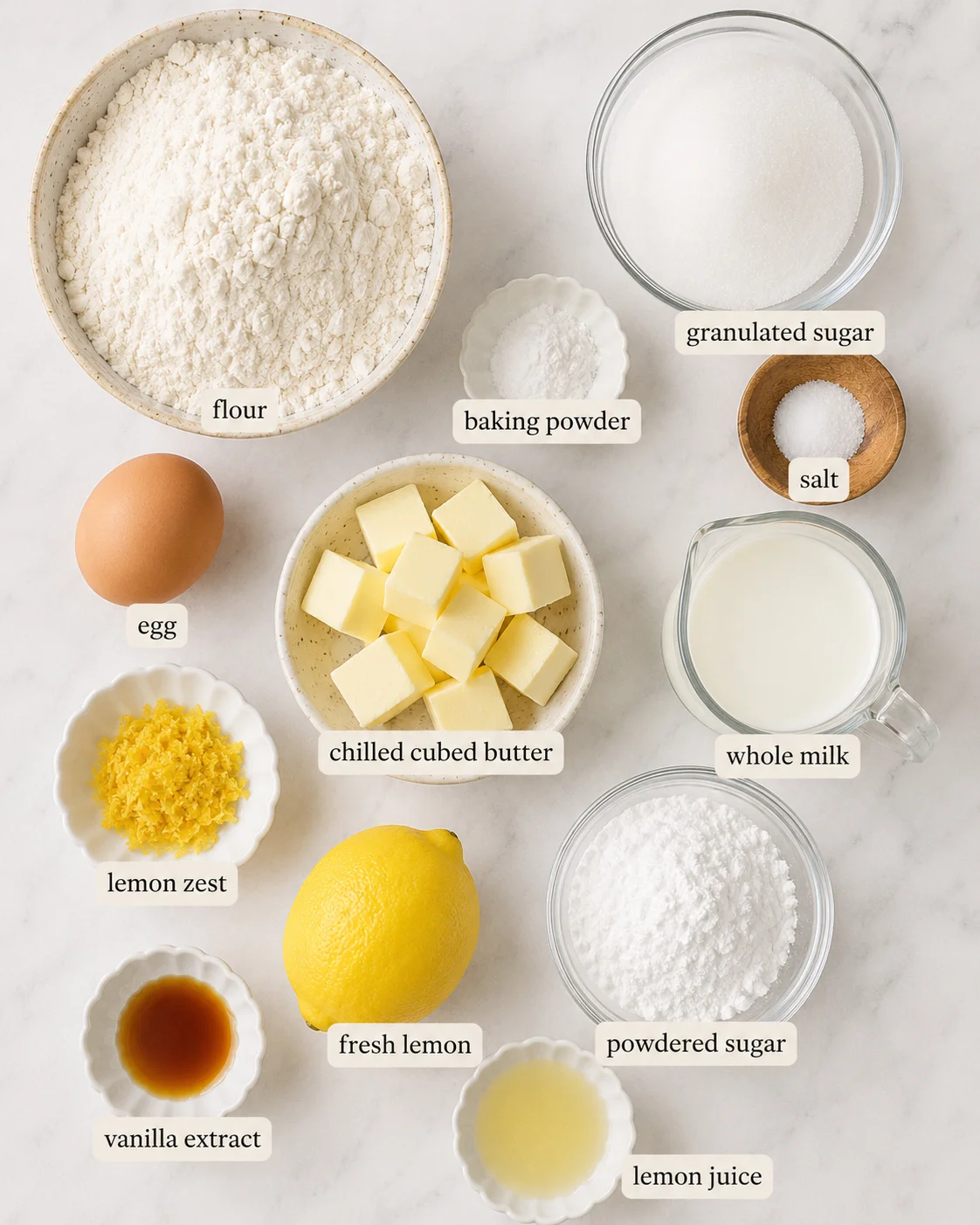
Gather the ingredients before mixing. The dough uses a short list of familiar baking staples, and the glaze comes together separately with powdered sugar, lemon juice, and a small amount of zest. Keep the butter chilled until it is time to add it to the mixer.
For the scone dough
- 2 ½ cups unbleached flour: This is the flour base of the scones.
- ⅓ cup granulated sugar: Adds sweetness to the dough without making the scones overly sweet.
- 1 tablespoon baking powder: Helps the scones rise. Aluminum-free baking powder is suggested in the recipe notes to avoid a bitter taste; Rumford is named as an example and is described as containing no added aluminum.
- ½ teaspoon salt: Enhances the flavor and keeps the sweetness balanced.
- 1 large egg: Helps bind and moisten the dough. The ingredient notes mention that a farm-fresh egg may be used if available.
- 12 tablespoons unsalted butter, chilled and cubed: The cold butter is responsible for buttery layers and small fluffy pockets in the baked scones.
- ½ cup whole milk: Adds moisture to the dough.
- ½ teaspoon lemon zest: Brings lemon flavor into the scone itself.
- 1 tablespoon vanilla extract: Rounds out the flavor of the dough. Vanilla bean paste can be used in one of the listed variations.
For the lemon glaze
- 1 cup powdered sugar: Forms the sweet base of the glaze.
- 3 tablespoons fresh lemon juice: Loosens the powdered sugar and provides the glaze’s citrus flavor.
- ¼ teaspoon lemon zest: Adds another small burst of lemon to the topping.
Equipment and Supplies
A stand mixer with a paddle attachment makes the dough quickly, but the dough can also be brought together with a mixing spoon and kneaded by hand if a stand mixer is not available. Prepare the baking sheet before you start so the shaped dough can go straight onto the lined pan.
- Lemon zester: For removing the yellow, bumpy portion of the lemon peel. Avoid the white pith underneath when zesting.
- Cutting board and chef’s knife: For cutting the chilled butter into small cubes.
- Stand mixer with paddle attachment: For mixing the dry ingredients, butter, and wet ingredients.
- Rubber spatula: For removing the dough from the mixer bowl.
- Measuring cups and spoons: For measuring the dough and glaze ingredients.
- Large baking sheet: The wedges need room to separate as they bake.
- Pastry wheel or large pizza cutter: For dividing the dough circle into eight triangles.
- Parchment paper or a nonstick baking mat: For lining the baking sheet and preventing sticking.
- Wire baking rack: For cooling and glazing the scones.
- Two medium bowls: One for whisking the wet ingredients and one for mixing the glaze.
- Whisk: For combining the glaze and whisking the egg, vanilla, milk, and zest.
Instructions
Read through the method before beginning. The important sequence is to combine the dry ingredients first, work in the chilled butter until tiny balls form, add the whisked wet ingredients, and then shape the dough before baking. The oven rack should be in the center position throughout the bake.
- Heat the oven and prepare the pan. Preheat the oven to 425°F. Position the oven rack in the center space. Line a large baking sheet with parchment paper or a nonstick baking mat.
- Mix the dry ingredients. Attach the paddle to the stand mixer. Add the flour, salt, baking powder, and granulated sugar to the mixing bowl. Beat at low speed until the dry ingredients are combined.
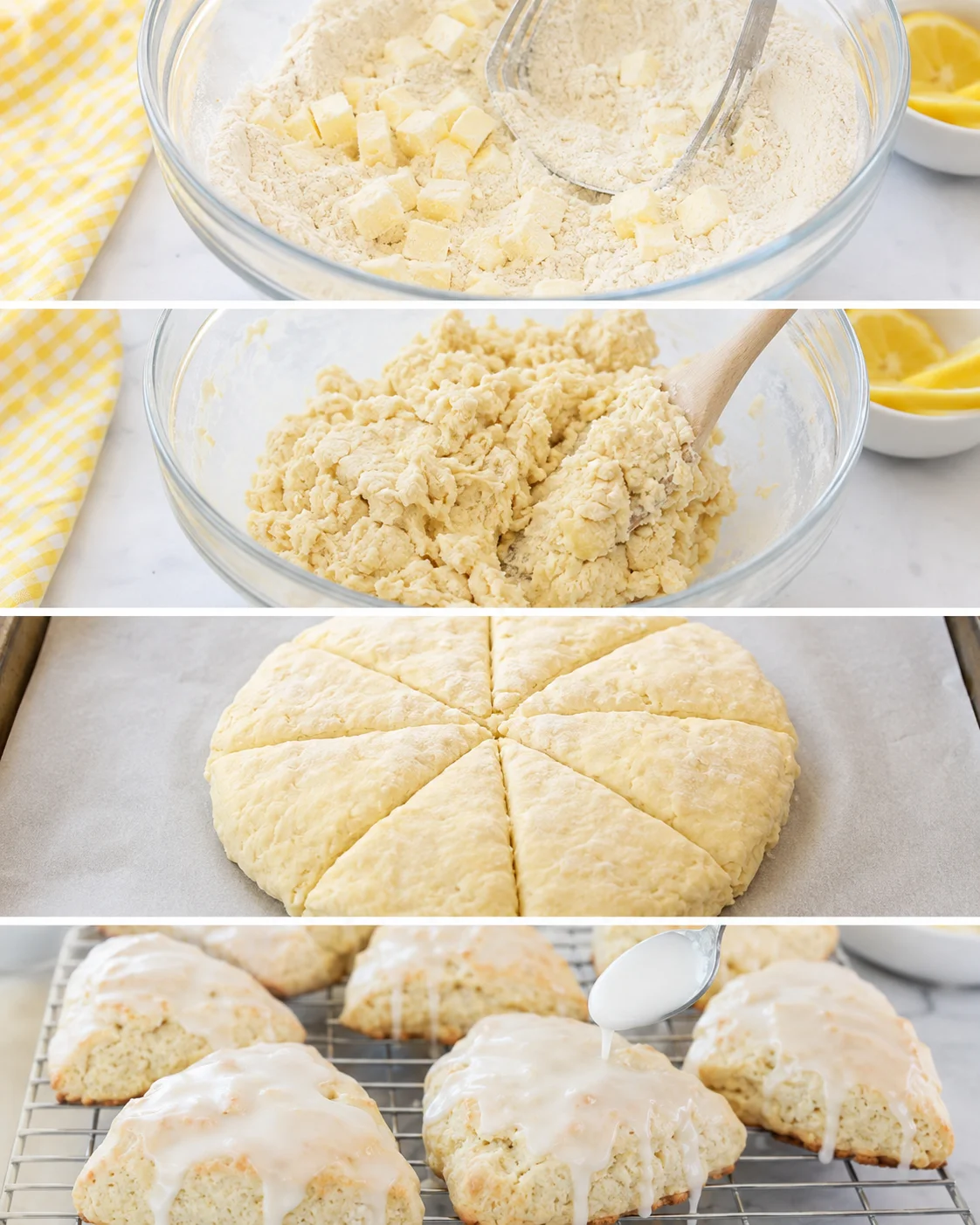
- Work in the butter. Add the chilled, cubed unsalted butter. Mix at medium speed until the mixture forms tiny balls. This is the stage where the cold butter becomes distributed through the flour mixture without turning into a smooth, melted paste.
- Whisk the wet ingredients. In a separate bowl, whisk together the egg, vanilla extract, whole milk, and half of the lemon zest. The remaining zest is reserved for the glaze.
- Bring the dough together. Add the wet mixture to the stand mixer. Mix until the dough comes together and forms a ball. Stop once the dough has formed; avoid continuing to mix after it is cohesive.
- Shape the dough. Use a rubber spatula to remove the dough from the mixer. Transfer it to the parchment-lined baking sheet and shape it into a circle about 1 inch thick.
- Cut the wedges. Use a pastry wheel or large pizza cutter to divide the dough into eight pieces. Slightly separate the pieces on the baking sheet so there is room for them to bake.
- Bake. Bake on the center oven rack for 12 to 14 minutes, or until golden-brown edges form. The recipe lists 14 minutes alongside that doneness cue.
- Cool the scones. Transfer the baked scones to a wire baking rack and let them cool before glazing. Cooling first keeps the glaze from immediately melting away.
- Make the glaze. Whisk the powdered sugar, the remaining lemon zest, and the fresh lemon juice together in a medium bowl until the mixture forms the glaze.
- Glaze and set. Dip the tops of the cooled scones into the glaze. Place them back on the wire rack and allow the glaze to set for about 15 minutes.
Tips
Keep the butter cold
Many baked goods begin with room-temperature butter, but these scones use chilled butter. Cold, cubed butter helps create the flaky and buttery layers that distinguish the texture. If you want the butter especially cold, the recipe notes that it can be frozen for at least one hour before it is carefully cubed.
Cube the butter before adding it to the mixer so it can distribute through the flour mixture. The goal is not to cream the butter with the sugar. Instead, the mixer works the cubes into the dry ingredients until the mixture resembles tiny balls. Keeping the butter chilled through this step gives the dough a better chance of retaining its layered texture in the oven.
Use the stand mixer or mix by hand
The paddle attachment is the quickest way to combine the dough. Use low speed for the flour, salt, baking powder, and sugar, then medium speed once the butter is added. After the wet ingredients go in, mix only until the dough forms a ball.
If you do not have a stand mixer, combine the ingredients with a mixing spoon and knead the dough by hand. The same sequence still applies: mix the dry ingredients, work in the cold butter, whisk the wet ingredients separately, and bring everything together before shaping.
Measure and place the zest carefully
The dough needs ½ teaspoon of lemon zest, and the glaze needs another ¼ teaspoon. The instructions use half of the dough’s zest in the wet mixture and reserve the rest for the glaze. Keeping those portions separate makes it easy to follow the recipe and ensures that the glaze receives its intended lemon accent.
When zesting, remove only the yellow outer portion of the peel. A lemon zester is designed for this job. The white layer beneath the yellow peel is not the part called for in the recipe.
Shape and space the wedges
Shape the dough into an even circle about 1 inch thick. An even thickness helps the eight pieces bake at the same rate. After cutting, move the wedges slightly apart on the large baking sheet. The pieces need space around them as they bake, and the roomy pan also makes it easier to transfer the finished scones to the rack.
Use the visual cue for doneness
The baking range is 12 to 14 minutes at 425°F. Watch for golden-brown edges as the main visual cue. If you remove the scones before the edges develop color, they may not have the finished appearance described for this recipe; if they stay in longer than needed, the edges can become darker and the interior less tender.
Cool before dipping
The scones should be cooled on a wire rack before the glaze is added. Dip only the tops into the glaze, then return the wedges to the rack. Let the coating set for about 15 minutes before serving. The rack allows excess glaze to settle away from the scones rather than collecting around their bottoms.
Variations
The recipe includes several ways to adjust the vanilla and lemon extract profile. These options are flavor variations rather than changes to the dough’s other ingredient quantities. Because the listed alternatives do not give a replacement measurement, use the same amount of flavoring called for in the recipe and choose from the combinations below without adding extra liquid.
- Half vanilla extract and half lemon extract: Divide the tablespoon of flavoring between vanilla and lemon extracts.
- All vanilla extract: Keep the listed flavoring as vanilla extract for a straightforward vanilla note alongside the lemon zest.
- All vanilla bean paste: Replace the vanilla extract with vanilla bean paste. The recipe describes vanilla bean paste as a more premium and expensive option.
- Half vanilla bean paste and half lemon extract: Combine the two flavor directions for a vanilla-forward dough with added lemon character.
Vanilla bean paste is also mentioned as an option in the ingredient notes for amplifying the flavor. Whichever listed variation you choose, keep the fresh lemon zest in the dough and glaze so the defining citrus element remains part of the recipe.
Storage
Room temperature
These lemon scones are best enjoyed the same day they are baked. If you need to hold them, store them in an airtight container for up to 24 hours. The short room-temperature window is useful to keep in mind when planning the glaze and serving time: bake and glaze them on the day you want the best texture, then cover them once the glaze has set.
Freezer
Freeze the scones only after they have baked and cooled completely. Do not glaze them before freezing. Arrange the cooled, unglazed scones on a baking sheet and freeze them for 2 hours. Once firm, move them to an airtight bag or container and store them for up to 3 months.
To enjoy frozen scones, thaw them at room temperature. Add the glaze after they have thawed if you want the iced finish. The recipe also notes that the scones can be enjoyed without icing, so glazing is optional at that stage.
Serving Suggestions
Serve the glazed scones as a dessert companion for hot tea or coffee. The buttery dough, fresh lemon glaze, and warm drink make a simple pairing for a breakfast-style treat, an afternoon break, or a small dessert spread. The glaze supplies the finishing sweetness, so the wedges can be served as they are once the coating has set.
For a clean presentation, place the glazed scones on a plate after the 15-minute setting period. If you are serving a batch over time, keep the remaining wedges in an airtight container and plan to use them within the 24-hour room-temperature window. For a later occasion, freeze the cooled scones without glaze and finish them after thawing.
Recipe Details
- Yield: 8 scones.
- Prep time: 1 hour.
- Cook time: 14 minutes.
- Total time: 1 hour 14 minutes.
- Course: Dessert.
- Cuisine: American.
- Estimated recipe cost: $4.
FAQ
How many scones does this recipe make?
The recipe makes eight scones. The dough is shaped into one circle about 1 inch thick and divided into eight pieces before baking.
What temperature should the oven be?
Preheat the oven to 425°F and keep the rack in the center position. The scones bake for 12 to 14 minutes, with golden-brown edges indicating that they are ready.
Can I use room-temperature butter?
The recipe calls for chilled, cubed unsalted butter. Cold butter is an important part of the method because it helps create the flaky, buttery layers and fluffy pockets in the scones. The recipe notes that the butter can be frozen for at least one hour before cubing if you want it especially chilled.
Can I make the dough without a stand mixer?
Yes. A stand mixer with a paddle attachment is the faster option, but the dough can be combined with a mixing spoon and kneaded by hand. Follow the same order of ingredients and bring the mixture together only until a ball forms.
When should I glaze the scones?
Cool the baked scones on a wire rack before glazing. Whisk the powdered sugar, remaining lemon zest, and fresh lemon juice together, dip the tops into the glaze, and let the coated scones rest on the rack for about 15 minutes so the glaze can set.
Can I freeze glazed lemon scones?
Freeze them after baking and cooling, but leave them unglazed. Freeze the scones on a baking sheet for 2 hours, then transfer them to an airtight bag or container for up to 3 months. Thaw them at room temperature and glaze them afterward if desired.
Nutrition
The listed nutrition is for 1 scone and is intended as a guide. Each scone is listed at 408 calories, with 54 g carbohydrates, 6 g protein, 19 g fat, 11 g saturated fat, 1 g trans fat, 70 mg cholesterol, 166 mg sodium, 233 mg potassium, 1 g fiber, 24 g sugar, 584 IU vitamin A, 2 mg vitamin C, 98 mg calcium, and 1 mg iron.
PrintButtery, tender lemon scones with a bright lemon glaze, featuring a flaky texture from cold butter and a balanced sweetness.
- Prep Time: 1 hour
- Cook Time: 14 minutes
- Total Time: 1 hour 14 minutes
- Yield: 8 scones 1x
- Category: Dessert
- Cuisine: American
Ingredients
- 2 ½ cups unbleached flour
- ⅓ cup granulated sugar
- 1 tablespoon aluminum-free baking powder (e.g., Rumford)
- ½ teaspoon salt
- 1 large egg
- 12 tablespoons unsalted butter, chilled and cubed
- ½ cup whole milk
- ½ teaspoon lemon zest (fresh)
- 1 tablespoon vanilla extract (or vanilla bean paste or lemon extract per variations)
- 1 cup powdered sugar
- 3 tablespoons fresh lemon juice
- ¼ teaspoon lemon zest (fresh)
Instructions
- Preheat oven to 425°F and position oven rack in the center. Line a large baking sheet with parchment paper or nonstick baking mat.
- In a stand mixer fitted with paddle attachment, combine flour, salt, baking powder, and granulated sugar at low speed until mixed.
- Add chilled, cubed unsalted butter to the dry mixture. Mix at medium speed until mixture forms tiny balls (butter is distributed without melting).
- In a separate bowl, whisk together egg, vanilla extract, whole milk, and half of the lemon zest.
- Add wet mixture to stand mixer and mix until dough forms a ball. Stop mixing once cohesive.
- Remove dough with rubber spatula and transfer to the prepared baking sheet. Shape into a circle approximately 1 inch thick.
- Using a pastry wheel or large pizza cutter, divide the dough circle into eight wedges. Slightly separate the wedges on the baking sheet to allow expansion during baking.
- Bake on center oven rack for 12 to 14 minutes until golden-brown edges form.
- Transfer baked scones to a wire rack and allow to cool before glazing.
- Whisk together powdered sugar, remaining lemon zest, and fresh lemon juice in a bowl to form the glaze.
- Dip the tops of cooled scones into the glaze, return to the wire rack, and allow glaze to set for about 15 minutes before serving.
Notes
Keep the butter cold (can freeze for at least one hour before cubing) to create flaky layers and fluffiness., Avoid overmixing the dough once wet ingredients are added to prevent tough scones., Cut zest carefully, using only the yellow outer peel, avoiding the white pith., Scones can be frozen unglazed after baking and cooling; freeze on a baking sheet for 2 hours, then store in airtight container up to 3 months. Thaw at room temperature and glaze before serving., Use the visual cue of golden-brown edges to determine doneness for best texture., For flavor variations, substitute vanilla extract with vanilla bean paste or lemon extract in the amounts specified without changing wet ingredient volumes.
Nutrition
- Serving Size: 1 scone
- Calories: 408 calories
- Fat: 19 g
- Carbohydrates: 54 g
- Protein: 6 g