Easy Crisp Pickled Okra

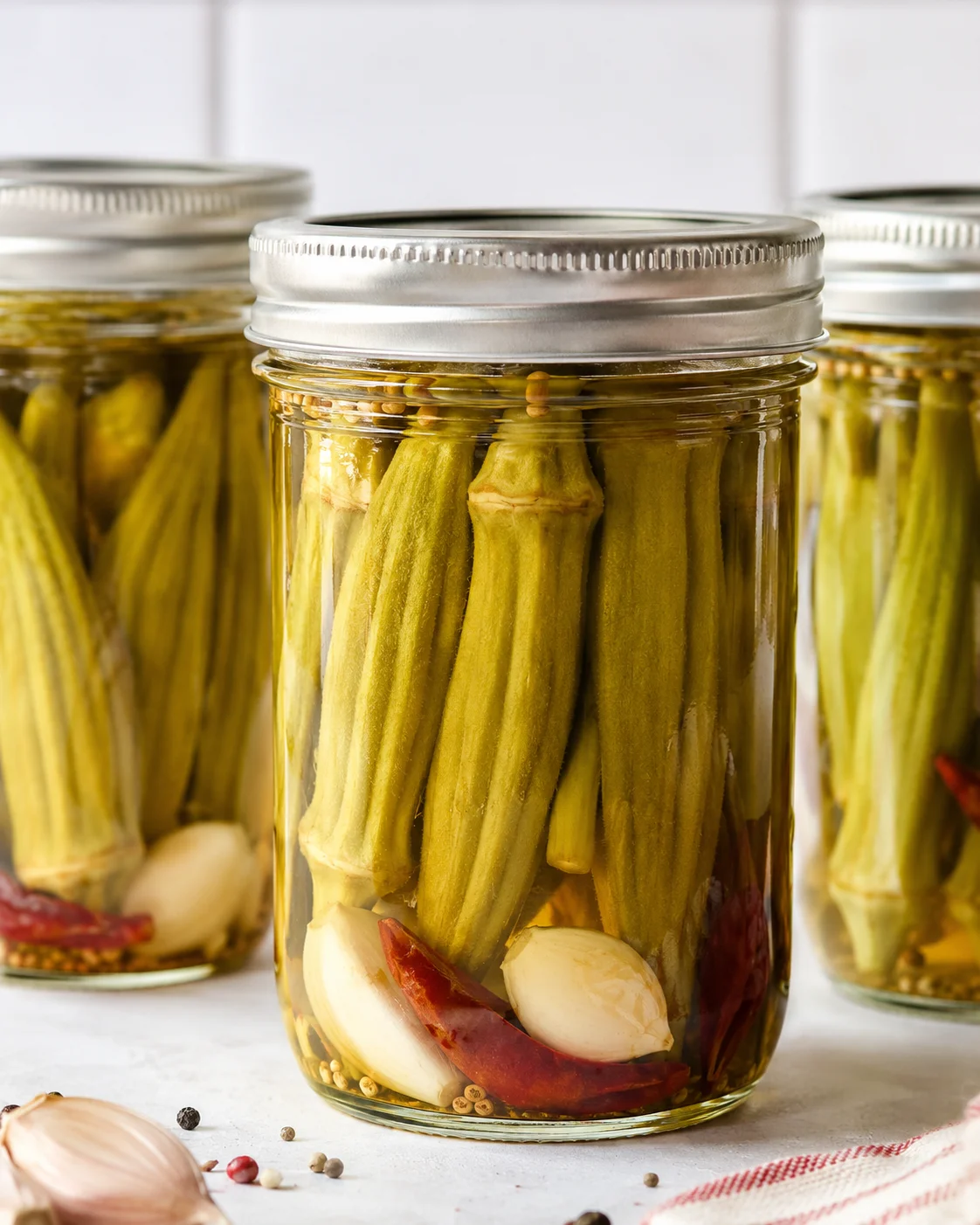
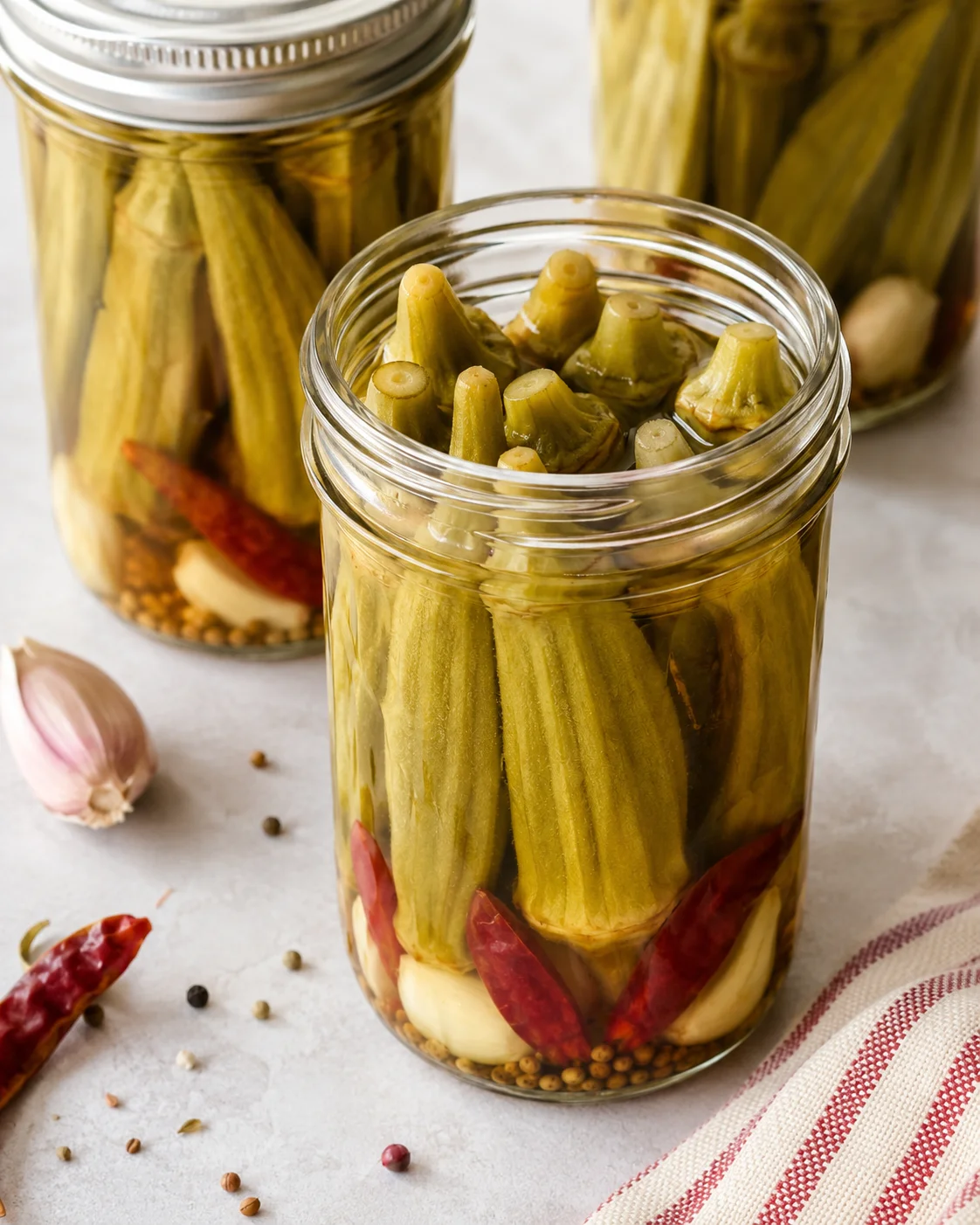
Let me show you how to make pickled okra with a little secret ingredient that keeps them extra crunchy! This small batch of okra pickles is processed using a simple water bath technique—no pressure canner needed!
Have you ever tried making pickled okra but ended up with soft, soggy pods? I totally get it—I’ve been there! But I have a handy trick that keeps your pickled okra perfectly crisp every time. It’s a shortcut my mom passed down to me years ago, and I’m thrilled to share it with you.
Pickle Crisp. That’s the magic!
You’re very welcome!
If you’ve struggled with soggy pickled okra, this recipe is exactly what you need. I’ll walk you through a super easy shortcut using Ball Pickle Crisp (that’s calcium chloride) to keep your okra crisp and tasty. Plus, you’ll learn a simple small-batch water bath canning method that doesn’t require a pressure canner.
Here’s what you’ll get:
- a straightforward ingredient and equipment list (and tips on where to find Pickle Crisp),
- clear step-by-step canning instructions for half-pint and pint jars (10 minutes in a boiling water bath for half-pints; check notes for quarts),
- a fridge-friendly no-cook shortcut if you want to skip the water bath,
- flavor variations, storage tips, and pro advice to keep your okra crunchy and delicious.
Keep scrolling to the printable recipe for exact measurements and full details. Don’t worry, this pickled okra recipe is totally doable whether you’re new to canning or just crave reliably crisp pickles!
How Calcium Keeps Them Crunchy
Pickle Crisp is simply calcium chloride—a natural firming agent—commonly found in commercial pickles and canned veggies. It helps your pickled okra stay crunchy instead of turning mushy. Just a pinch in each jar saves you from the fuss of using lime, making your pickles pop with crispness!
I’m confident this is the best pickled okra recipe out there thanks to this one secret ingredient. Of course, you can still make quick pickled okra without it—just leave it out, but know that your okra won’t be as crunchy.
Fresh Ingredients and Supplies
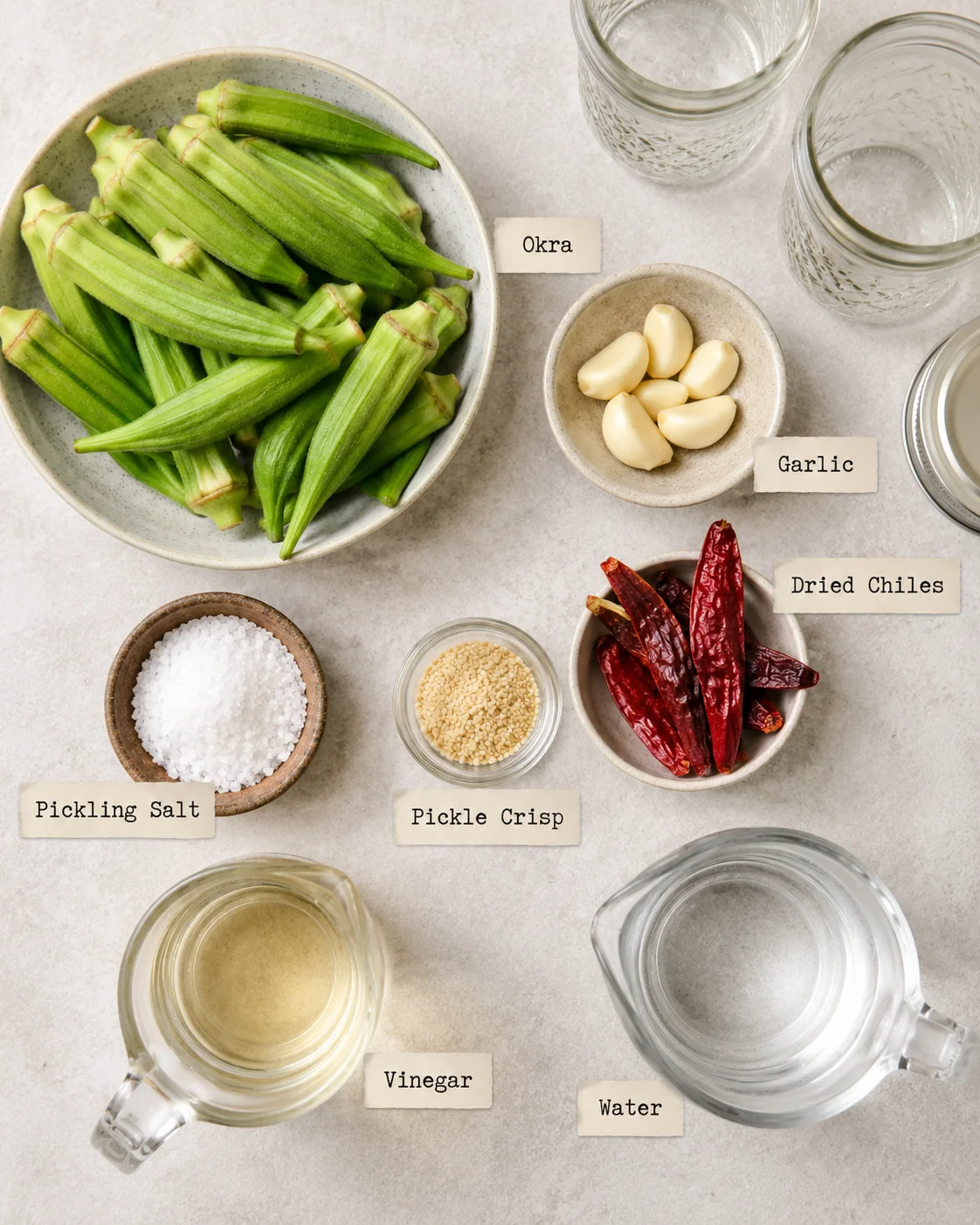
- 2 pounds fresh okra (2 ½ to 4 inches long)
- 2 cups 5% acidity vinegar (Apple cider or Distilled white)
- 2 cups water
- 2 tablespoons pickling salt
- 6 large cloves garlic, halved (or 6 teaspoons chopped garlic)
- 6 small dried red chile peppers (Arbol or Thai) (or 3 teaspoons crushed red pepper flakes, optional)
- ¾ to 1 teaspoon Ball Pickle Crisp (Calcium Chloride granules) (optional)
- 6 half pint or 3 pint jars, washed and sterilized
Water-Bath Canning Steps
- Bring a large pot of water to a rolling boil with enough depth to cover jars by 1 inch.
- Sterilize jars by boiling them in the pot for 10 minutes, then remove and drain on a towel.
- Wash okra pods and pat dry on kitchen towels.
- In a medium saucepan combine vinegar, water, and pickling salt and bring to a boil over medium heat.
- Add two halved garlic cloves and one dried red chile (or 1 tsp chopped garlic and 1/2 tsp crushed red pepper) to each jar; sprinkle just under 1/8 tsp Pickle Crisp per half-pint or just under 1/4 tsp per pint.
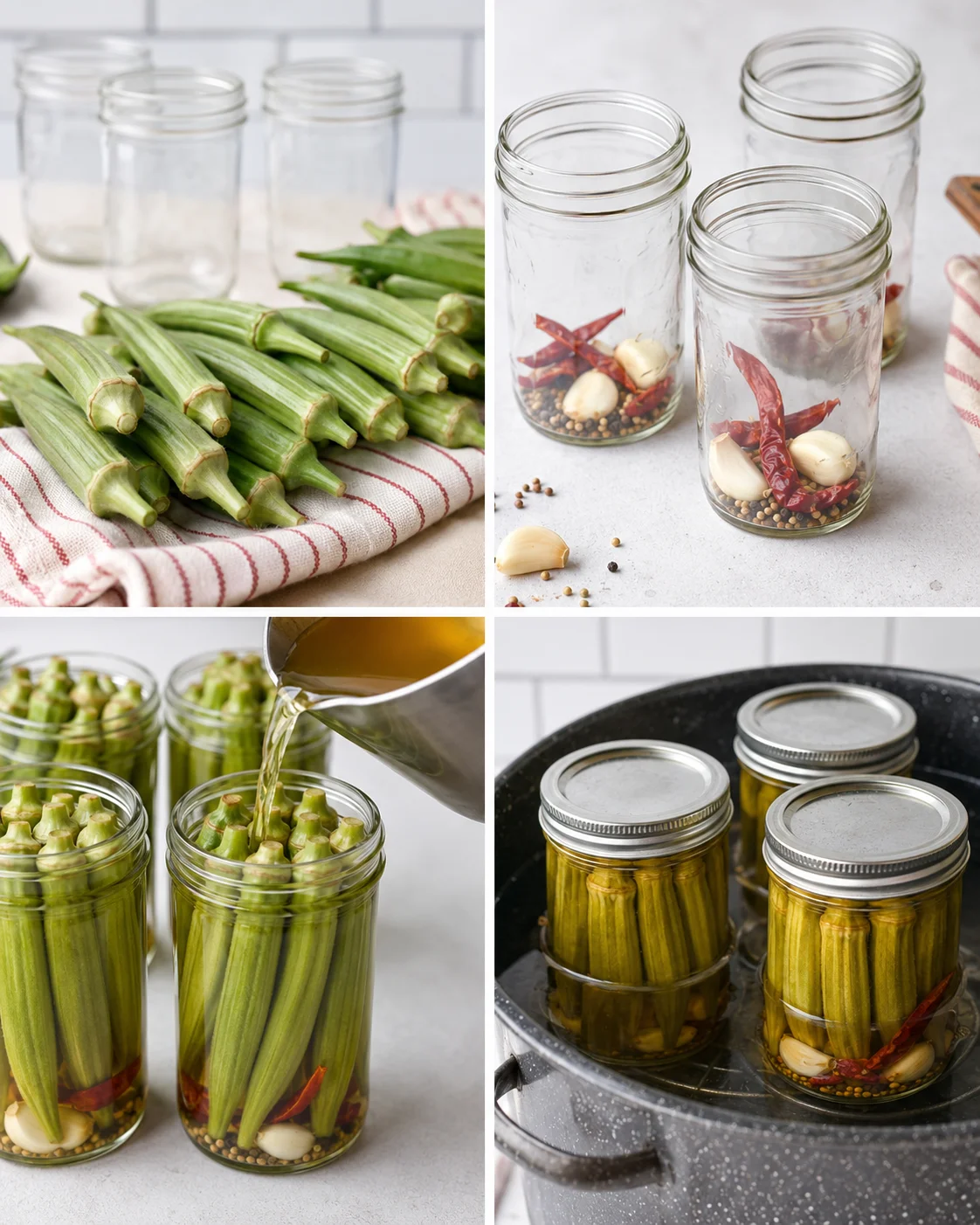
- Pack okra tightly into each jar, alternating tip-side up and down and placing smaller pods at the top.
- Place jars on a kitchen towel or cutting board to protect the counter.
- Carefully ladle the boiling brine into each jar to within 1/4 inch of the rim.
-
Run a table knife along the sides and center of each jar to release air bubbles.
- Place lids and screw on rings until snug but not over-tightened.
- Using jar lifters, lower the jars onto the wire rack in the boiling water bath and ensure water covers jars by 1 inch.
- Cover the pot, bring the water back to a rolling boil, and process jars for 10 minutes (15 minutes for quart jars).
- Carefully remove the hot jars with the jar lifter and set them on a kitchen towel to cool until sealed.
- (No-cook alternative) Pour the hot brine over okra in clean jars, let sit at room temperature 24 hours, then refrigerate.
Pro Tips for Crunchy Pickles
- Grab bottled or refrigerated peeled chopped garlic to save time instead of peeling and chopping fresh cloves.
- Speed up water boiling by starting with hot tap water and covering the pot with a lid.
- Get your water boiling before prepping to save time when canning jams or pickles.
- Use the same pot to both sterilize jars and do your water bath canning. Top it off with fresh water if some evaporates to keep the jars submerged.
Instead of trying to move a massive pot of hot water, keep the pot on your stove and add small amounts of water to it as needed. This keeps things safer and easier as you sterilize or process jars.
I like to add garlic and spices directly into the bottom of each jar rather than mixing them into the brine. That way, I get just the right amount in every jar.
My favorite way to enjoy these pickled okra? Alongside a pulled pork sandwich for a southern-style meal or served in little Mason jars as fun party snacks—perfect for charcuterie boards!
Got questions or want to share how much you loved this pickled okra? Drop a comment below the printable recipe! And hey, a 5-star rating would totally make my day!
Other Shortcut Pickles and Condiments you will love
- Shortcut Sweet Heat Pickles and Vidalia Onions
- Instant Pot Bacon Jam
-
Easy Peach Pepper Jelly
Nutrition analysis on GritsAndGouda.com recipes are mostly calculated on an online nutrition calculator. I am not a dietitian and nutritional information is an estimate and can vary based on products used.
Flavor Swaps and Add-Ins
Here’s how to mix it up and personalize your crispy pickled okra.
- For a Hot & Spicy Pickled Okra, bump up crushed red pepper flakes to 1 teaspoon or toss in 3 dried hot peppers.
- Add ½ teaspoon of sugar per pint jar if you want to soften the vinegar’s sharp edge without making it taste sweet.
- No whole dried chiles? No problem! Crushed red pepper flakes are easy to find in spice aisles, and dried chiles usually hang out in the international foods section of your grocery store.
- Try other seasonings like pickling spice blends, whole peppercorns, mustard seeds, dill seeds, or even a pinch of turmeric for a colorful kick.
Here are some easy swaps and extra flavor ideas to customize your crispy pickled okra.
- Spicy Pickled Okra—Kick things up by adding a full teaspoon of crushed red pepper flakes or tossing in three dried hot peppers.
- Smooth the Vinegar Punch—Add ½ teaspoon of granulated sugar to each pint jar to mellow the sharpness without making it sweet.
- No Dried Chiles? Crushed red pepper flakes are great stand-ins and easy to find in spice aisles. Dried chiles usually hide out in international foods sections.
- Add Some Zing—Try pickling spices, whole peppercorns, mustard seeds, dill seeds, or a pinch of turmeric for a pop of color and taste.
How to Store Pickled Okra
Store your home-canned jars of pickled okra in a cool, dark spot like your pantry or cellar, away from direct light. For the best crunch and flavor, use unopened jars within 12 months. The flavor actually deepens with time but quality is best within that first year. Don’t forget to label your jars with the canning date!
Once opened, keep your pickled okra submerged in the brine, store them in the fridge, and use within 1–2 months. Always scoop out okra with a clean utensil to avoid any contamination.
If you go the fridge refrigerator-style (unprocessed) method in this recipe, keep those jars cold and enjoy within one month.
These pickled okra are meant to be eaten cold or at room temperature. No need to heat them up! If you want to warm some up gently, transfer a portion to a microwave-safe dish and heat briefly—but be warned, heat softens the okra and you’ll lose that crisp bite.
Always check your jars before eating—toss any with broken seals, weird smells, mold, or signs of spoilage.
Pickling and Safety FAQs
Make sure to grab vinegar that’s 5% acidity (this is the safe amount for canning). I prefer apple cider vinegar for its flavor, but distilled white vinegar works equally well.
Pickling salt is just plain, granulated salt with no additives or anti-caking agents that could cloud or darken your pickles. Sometimes called canning or preserving salt, it’s the best choice. You can substitute pure sea salt, but always double-check that it has no additives for the best results.
More in Recipes

Healthy Pumpkin Truffles

10-Minute Vegan Pumpkin Pasta

Gluten Free Pumpkin Muffins