Crunchy Pickled Okra (Canning & Preserving)

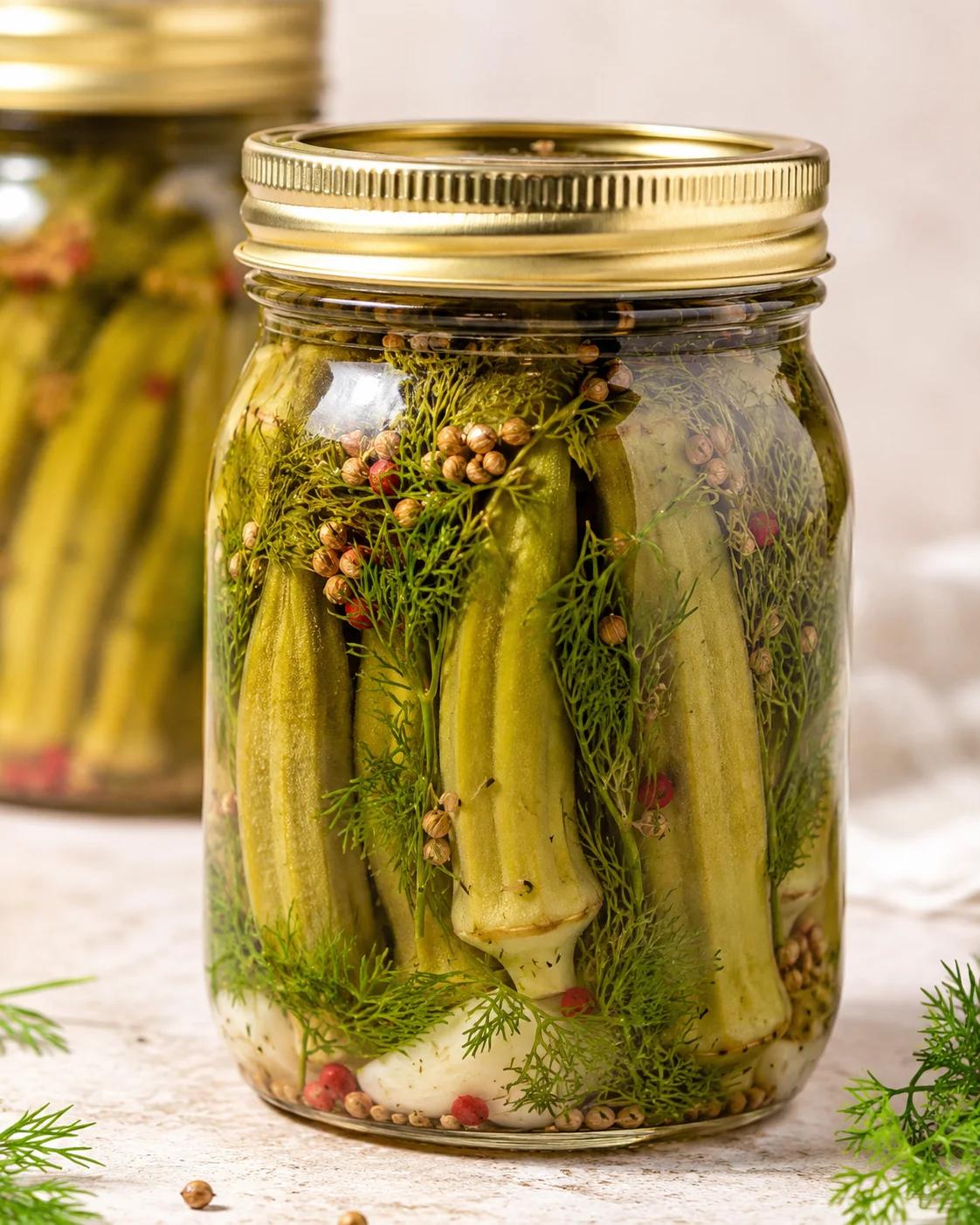
Crunchy Pickled Okra (Canning & Preserving)
Crunchy pickled okra is such a fantastic way to capture that fresh summer flavor all year long! These pickles are bright, tangy, and satisfyingly crisp—not a bit slimy—thanks to a straightforward garlic and dill seasoning blend. Below, I share two easy methods: a quick fridge pickle for fast snacking and a water bath canning technique for longer storage.
I’ll be honest—I haven’t cooked with okra as often as other veggies, mostly because that slimy texture scared me off in the past. But learning how to make pickled okra changed the game completely! It’s a great way to preserve this Southern classic, and better still, your pickled okra will stay firm and crunchy—just like you want your pickles to be.
What’s even better? I’ll walk you through two easy approaches: a quick refrigerator version perfect for small batches and immediate enjoyment, and a water bath canning method that lets you store your okra pickles for up to a year in your pantry.
The whole process is refreshingly simple. With just a few pantry staples and fresh okra, you can prep delicious pickled okra in 5 easy steps and under 30 minutes. These Southern-style crunchy pickles are versatile and a great swap for dill pickles on so many dishes. Keep reading for my favorite ways to serve them!
Welcome, friends! If you enjoy crunchy, tangy pickles but have shied away from okra because of its reputation for sliminess, this recipe is made for you. You’ll discover how to transform fresh okra into firm, crisp pods bursting with garlic and dill flavor using simple pantry ingredients and easy steps. These pickled okra pods shine as cocktail garnishes, sandwich toppings, or a zesty addition to your charcuterie and BBQ spreads.
This post breaks down two trusted methods: a speedy refrigerator pickle for quick batches that you can dive into right away, and a shelf-stable water bath canning approach so you can enjoy these pickles all year round. The prep is fast and simple—you’ll just wash, trim, pack, pour the brine, and then process or chill. All done in under 30 minutes of hands-on time.
- How to pick the freshest okra—ideally young pods about 3–4 inches long—and why it matters for your pickles.
- A step-by-step guide for sterilizing jars, making the brine, packing jars perfectly, and ensuring no air bubbles sneak in.
- Detailed instructions for both quick fridge pickling and proper water-bath canning methods along with how long each lasts.
- Expert tips to keep your pickled okra crisp, plus creative serving ideas and simple ways to customize your flavor.
Scroll down for a full ingredient rundown, clear instructions, troubleshooting pointers, and plenty of inspiration to enjoy your homemade crunchy pickled okra.
Why You’ll Love These Crunchy Pickles
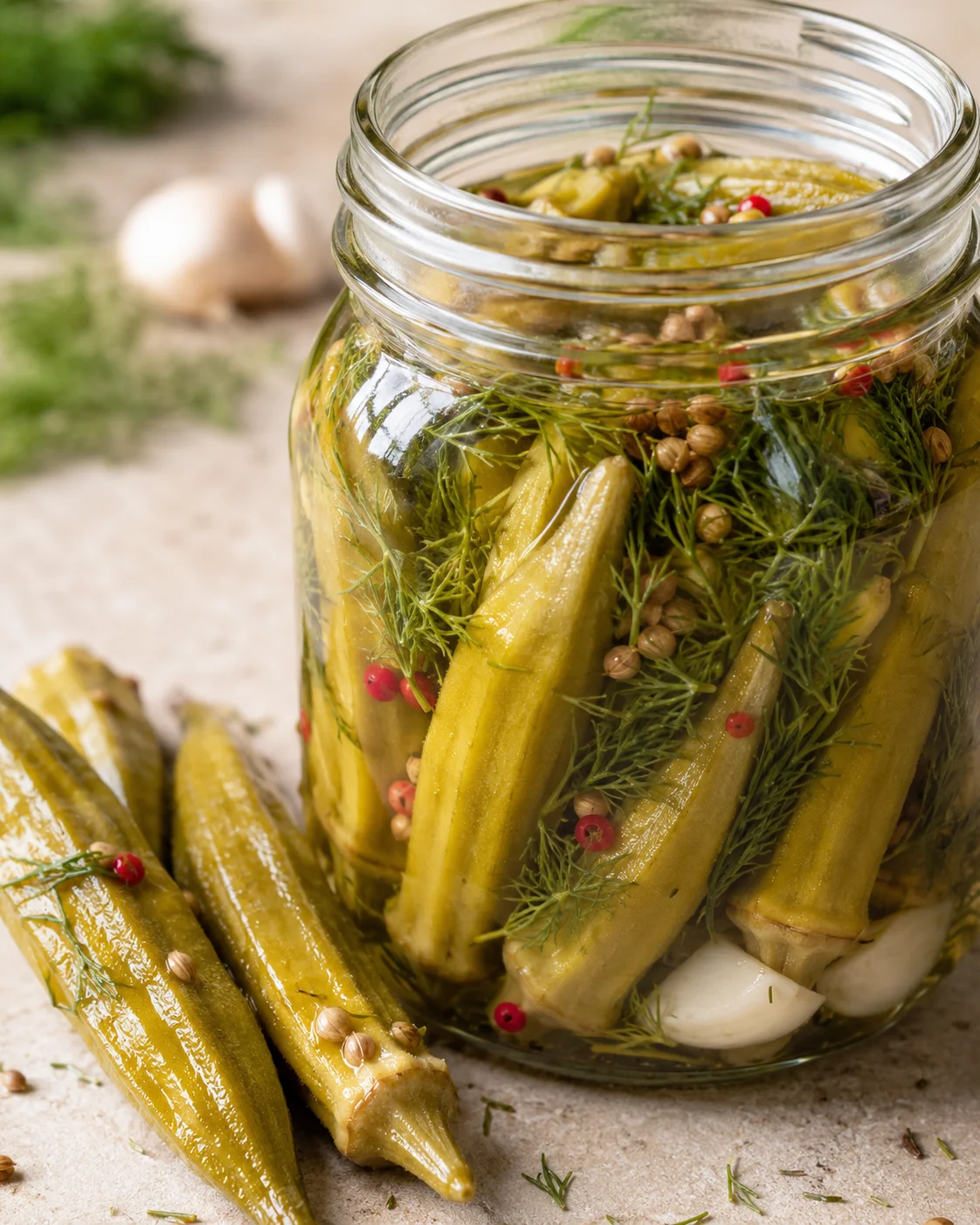
Crunchy pickled okra captures the fresh tang and crispness of summer so you can enjoy it anytime. Unlike some okra preparations, these pods stay firm and crunchy, never slimy, with a bright flavor from garlic, dill, coriander, and pink peppercorns. This recipe comes together with just vinegar, water, salt, and a handful of easy spices from your pantry.
You’ll love having both an immediate fridge pickle and a long-lasting water-bath canned version. Use your pickled okra as a fun cocktail garnish, a tasty bite on your charcuterie board, a vibrant side with BBQ, or chopped into salads and slaws. They’re simple to make, incredibly versatile, and a fantastic way to preserve fresh okra at its prime.
Ingredients and Pantry Essentials
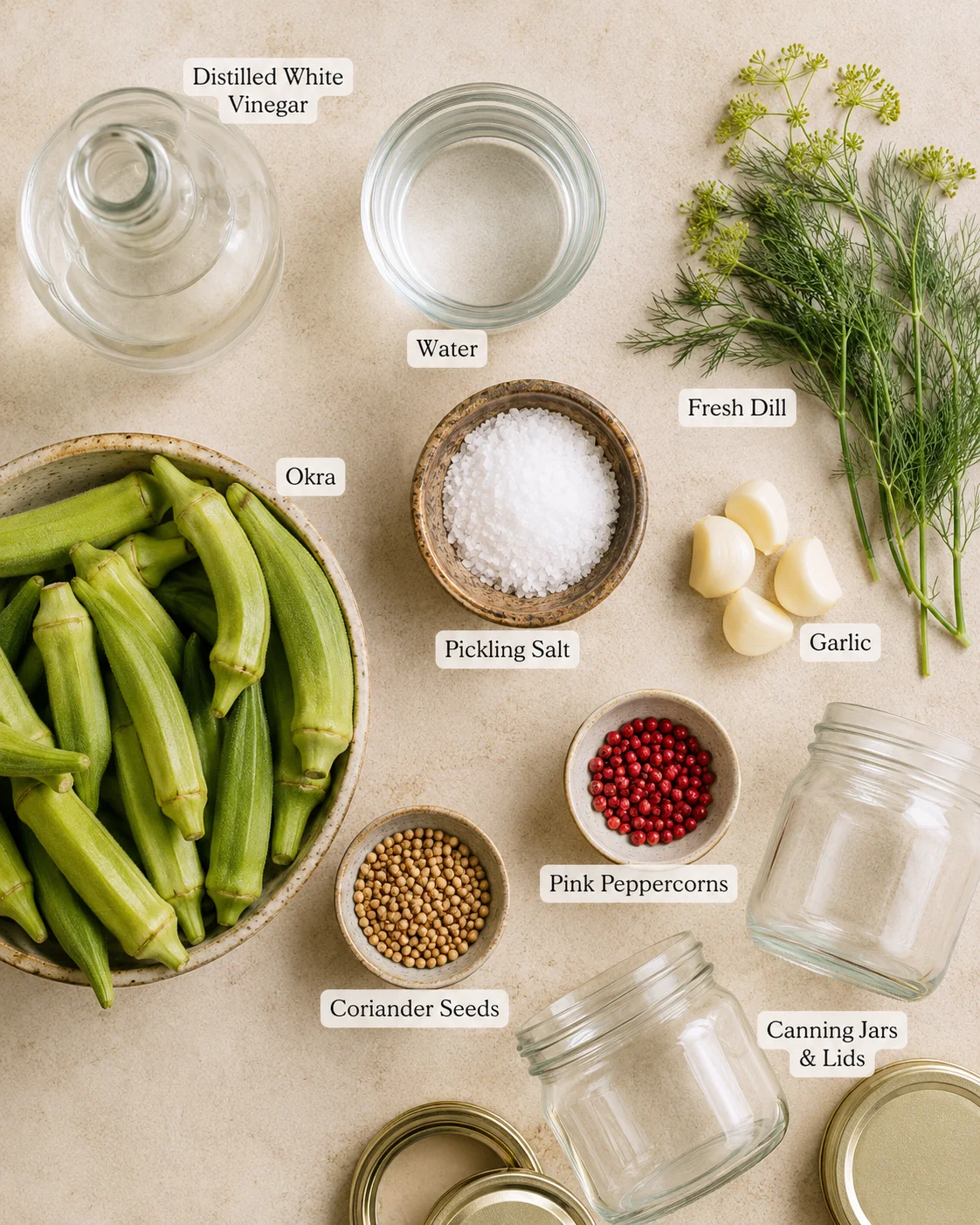
- Fresh okra — young, tender pods about 3–4 inches long; trim stems leaving about ¼ inch attached
- Distilled white vinegar (or apple cider vinegar or white balsamic)
- Water (filtered if possible)
- Pickling salt (or kosher salt)
- Coriander seeds
- Whole pink peppercorns
- Peppercorns (whole; pink peppercorns optional)
- Fresh dill sprigs
- Garlic cloves (about 1 per jar)
- Two 16oz (500ml or pint) canning jars with lids
Canning and Pickling Steps
- Wash jars and lids with hot soapy water and rinse thoroughly.
- Preheat oven to 325ºF (160ºC) and place jars (not lids) on a baking sheet; dry/warm in oven 10–15 minutes.
- Prepare a large heavy pot with a trivet or rack and enough water to cover jars by 1–2 inches if water-bath canning.
- Rinse okra under cool running water and pat dry.
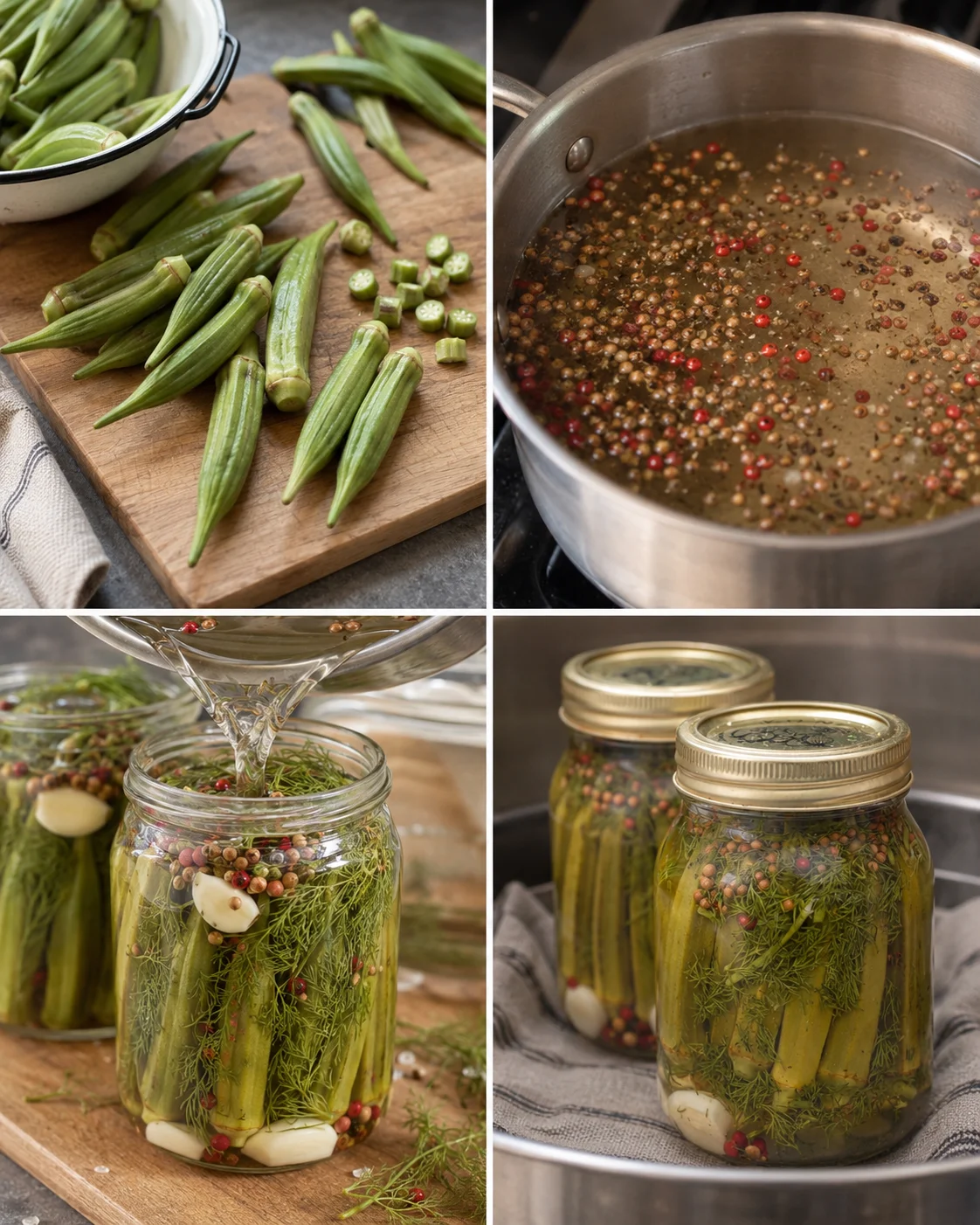
- Trim okra stems with a small paring knife, leaving about ¼ inch attached without cutting through the pod.
- Combine vinegar, water, coriander seeds, pink peppercorns, and pickling salt in a medium saucepan.
- Bring brine to a boil over medium heat, stirring until the salt dissolves (~2 minutes); reduce heat and keep brine hot but not boiling while packing jars.
- Drop a garlic clove and sprigs of fresh dill into each sterilized jar.
- Pack okra tightly into jars, standing some upright and some upside down, leaving about ½ inch headspace.
- Pour the hot brine over the okra, ensuring pods are completely covered and headspace remains.
- Tap jars lightly on the counter and run a sterilized butter knife around the inside edge to release trapped air bubbles; gently wiggle or press okra to coax out stubborn bubbles.
-
If okra floats or the liquid level drops, optionally slice a few vertical slits in long pods to help them submerge.
- Wipe jar rims clean and screw lids on finger-tight.
- For refrigerator pickles: let jars cool to room temperature, then refrigerate and wait at least 24–48 hours before eating.
- For water-bath canning: place sealed jars into the prepared hot water bath so they are covered by 1–2 inches of water.
- Cover the pot, bring to a rolling boil, and boil jars for 15 minutes.
- After boiling, remove the lid, turn off heat, wait 5 minutes, then lift jars out with a jar lifter.
- Set jars on a kitchen towel to cool completely (not on a cold surface) and listen for lids to pop to confirm seals.
Tips for Extra Crispness
- Pick only young, tender okra pods about 3–4 inches long to avoid toughness or sliminess.
- Trim stems carefully—leave about ¼ inch and don’t slice through the pod to keep the okra firm.
- Pack your jars tightly. Okra contains air pockets and will float if there’s too much space. Arrange some pods upright and some upside down to fit more and keep everything submerged.
- Leave about ½ inch headspace in each jar. Tap jars and use a sterilized knife around the edges to release air bubbles before sealing.
- Use pickling or canning salt for a clear brine; regular table salt often contains anti-caking additives that cloud the liquid. Filtered water can also help keep things clear.
- Avoid slicing pods unless absolutely necessary—it speeds up pickling but can cause sliminess. If pods are too long, slits help, but only as a last resort.
- For ultra-crisp okra, soak pods in pickling lime before pickling if you’re comfortable with that method, but rinse thoroughly afterward and follow package directions carefully.
- Always sterilize jars and lids well. If water-bath canning, process for the full 15 minutes and let jars cool on a towel, not a cold surface, to avoid glass cracking.
- Keep the vinegar-to-water ratio exact when canning for food safety. Changing acidity or using low-acid ingredients can risk spoilage.
- Cloudy brine isn’t always bad—it can come from regular salt, hard water, vinegar “mother,” or old okra. Just check for off smells or textures before eating to be safe.
- If a jar doesn’t seal during canning, refrigerate it and enjoy within 1 or 2 months instead of storing on the shelf.
Serving Ideas and Flavor Tweaks
There are so many delicious ways to enjoy your crunchy pickled okra. Here are a few of my go-to ideas:
- Add a jar to your next charcuterie board, especially if you’re going Southern style, with cheeses and crackers.
- Use as a fun garnish in cocktails like a Bloody Mary or a Martini.
- Serve alongside your favorite casseroles to add a tangy crunch.
- Pair with BBQ proteins such as grilled chicken or ribs for a classic Southern vibe.
- Chop into salads and coleslaws to bring brightness and texture.
- Stir pickled okra into stews, soups, and sauces for added flavor layers.
- Top off sandwiches, burgers, and wraps with these zingy pods instead of regular pickles.
- Use as a garnish for dips, like creamy hummus, to add a punch of flavor.
Storing, Shelf Life, and Safety
Short-term (fridge) storage: Pickled okra stored in the refrigerator stays crisp and delicious for 1–2 months. Always scoop out pickles with clean utensils to avoid contamination, and give fresh jars 24–48 hours to rest so the full flavor develops.
Long-term (canned) storage: Properly processed water-bath canned jars can keep in a cool, dark pantry for up to one year. Store between 50–70°F (10–21°C), away from direct sunlight. Once opened, refrigerate and use within 1–2 months.
Make-ahead tips: You can prepare the brine and sterilize jars ahead of time to save a step, but for the best crispness, pickle and pack your okra the same day. Let your finished jars rest in the fridge for a day or two before enjoying.
Reheating & using: Pickled okra is best eaten cold or at room temperature. If you like, warm them briefly in a skillet or microwave to soften, but avoid reheating sealed jars or re-canning previously processed jars.
Do not freeze: Freezing changes okra’s texture badly, making it mushy and slimy after thawing, so I don’t recommend it.
Watch for spoilage: Toss any jars that bulge, smell off or yeasty, show mold, or fizz. And if a jar doesn’t seal, refrigerate and use it within a couple of months rather than shelf-storing it.
Common Questions Answered
Can you use tough okra?
Tough okra will give you tough, chewy pickles. For the best crunchy pickled okra, stick to young, tender pods every time.
Can I pickle frozen okra?
It’s best not to. Frozen okra gets mushy when thawed, which can turn your pickled okra slimy, and nobody wants that.
Do I need to cook the okra if I’m storing them in the fridge?
The hot pickling brine cooks the okra enough on its own, so no extra cooking is needed before refrigerating.
Why is my pickling brine cloudy?
A cloudy brine doesn’t always mean something’s wrong. Using regular salt instead of pickling salt, the “mother” in apple cider vinegar, hard water, or slightly older okra can all cause cloudiness. Just make sure your pickles don’t smell or taste off before enjoying.
Notes
- Always use FRESH okra to prevent sliminess and get the best crunchy results.
- For crisper pickles, try soaking your okra in pickling lime following package instructions, then rinse thoroughly before pickling.
- If any jars don’t seal properly, simply store them in the fridge and enjoy within 1–2 months.
- Pack jars tightly to keep your okra submerged and avoid floating pods.
- Play around with your pickling spices! You can customize this pickled okra recipe by trying different spice blends or adding heat and citrus.
Optional add-ins and variations: Use a pre-made pickling spice mix or mix in any of these for tasty twists:
- Mustard seeds
- Celery seeds
- Fennel seeds
- Dill seed
- Red pepper flakes
- Jalapeño or chili slices (fresh or dried)
- Lemon slices
- Pink peppercorns
- Bay leaves
- Oregano
- Ginger slices
- Cilantro
If you like a touch of sweetness to your pickled okra, add a bit of sugar along with the salt and taste as you go until it’s just right.
Don’t forget to check out my serving ideas and FAQ section for more inspiration!
Course: Pantry Staple, Side, Snack
Cuisine: American
Shelf life: 1 year (Canned), 1-2 months (fridge)
Nutrition
Calories: 15kcal, Carbohydrates: 3g, Protein: 1g, Fat: 0.1g, Saturated Fat: 0.01g, Polyunsaturated Fat: 0.01g, Monounsaturated Fat: 0.02g, Sodium: 888mg, Potassium: 104mg, Fiber: 1g, Sugar: 1g, Vitamin A: 238IU, Vitamin C: 8mg, Calcium: 31mg, Iron: 0.3mg
Nutrition information is auto-calculated and should be used as a general guide.
Like this? Leave a comment below!
More in Recipes

Healthy Pumpkin Truffles

10-Minute Vegan Pumpkin Pasta

Gluten Free Pumpkin Muffins