Perfect French Macarons with Fresh Lemon Buttercream
Honestly, every time I grab a bag of fresh lemons, I get super excited. I start dreaming of all the yummy lemon desserts, refreshing lemonade, and maybe even some pretty lemon recipes for gatherings. But then, life kicks in—someone drops juice, the toddler throws a fit, and those bright lemons just sit there on the counter, waiting for someone to use them.
If you’ve ever caught yourself wondering what to make with lemons, you’re in the right place. Today, we’re making a favorite easy lemon dessert—lemon macarons. They’re light, tangy, and just fancy enough to wow whoever you’re baking for (even if that’s just you after bedtime quiet).
I get that macarons can seem intimidating, but believe me, they’re not as complicated as their reputation. With a bit of patience—and maybe a few deep breaths—you can absolutely nail these. Plus, it’s a smart way to use those lemons before they lose their sparkle. So if you want lemon sweets, lemon treats, or just fun things to do with lemons, let’s turn those sunny little fruits into something seriously tasty.
If you’ve been wondering what to do with lemons or how to use up fresh lemons in creative recipes, these lemon macarons are a perfect choice. They’re a little special but totally doable—and a great excuse to indulge in something sweet with your afternoon coffee (or while sneaking a break in the pantry). Whether you want elegant party treats, a fresh lemon dessert, or just a sweet pick-me-up, these lemon macarons will brighten your day every time. And if you’re still hungry for more lemon dessert recipes using fresh lemons, don’t stop now—there’s a whole world from lemon lush desserts to savory lemon dishes waiting for you.
So go ahead and grab more lemons (you’ll want to make these again, trust me), keep baking, and if your first batch isn’t perfect, don’t sweat it—I’ve totally been there, and it’s all part of the journey!
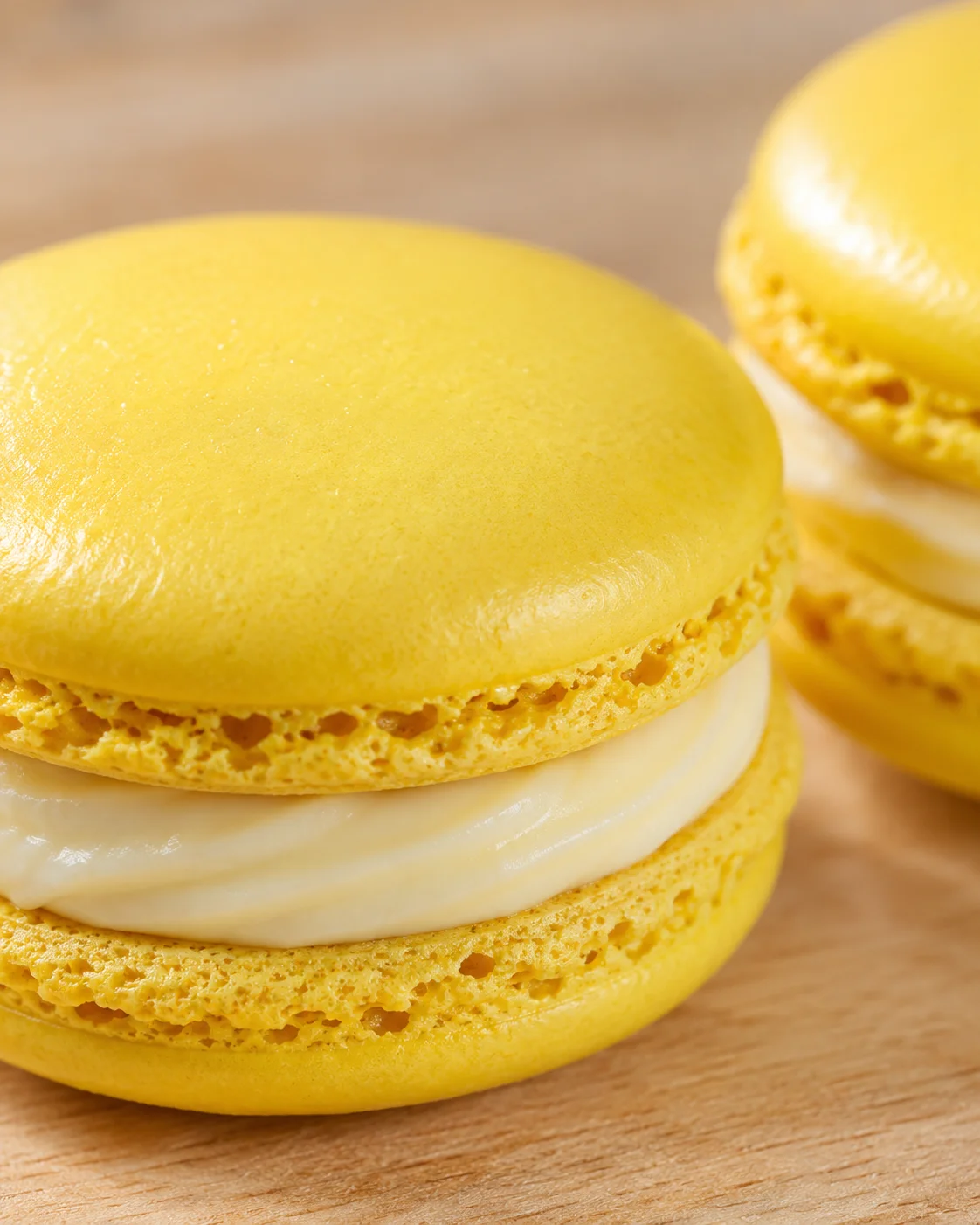
If you’re like me and often buy lemons with grand plans only to let them hang out on the counter, this recipe is here to rescue those lemons—and you. These lemon macarons shine with brightness and a light tang that feels refreshing but still indulgent. They have a crisp shell, a chewy center, and that silky lemon buttercream filling that makes every bite a little celebration. While they look fancy, the instructions walk you through every step so you can tackle them without any drama.
Here’s the quick scoop: prepping takes about 30 minutes, baking is 12 to 15 minutes, and the whole process can be wrapped up in roughly an hour. This recipe makes about 20 macarons using simple pantry staples plus fresh lemon juice and zest for that really fresh citrus pop. Important to note—you need to rest the piped shells for 30-60 minutes to let the outer layer set, and letting your finished macarons chill for 24 hours will give you the best texture and flavor.
Below, you’ll find the full ingredient list, a step-by-step method—from whipping meringue to filling the macarons—and some solid tips for common hiccups. I’ve also shared a bunch of variations, storage tips, make-ahead pointers, and answers to your most common questions. If you want a lemony treat that’s impressive but totally doable, you’re in the perfect spot—let’s transform those lemons into a dessert worth smiling about.
Bright Citrus, Simple Technique
These lemon macarons deliver bright, fresh citrus flavor wrapped in the iconic macaron contrast of crispy shells and chewy middles. They call for just basic pantry ingredients plus fresh lemon juice and zest, keeping the taste vibrant and homemade. This recipe looks fancy enough for guests but is written to guide you through each step so you can truly succeed. Make them to use up those extra lemons, whip up elegant party treats, or just enjoy a light, tangy dessert that pairs beautifully with your afternoon coffee or tea.
Shell and Filling Ingredients
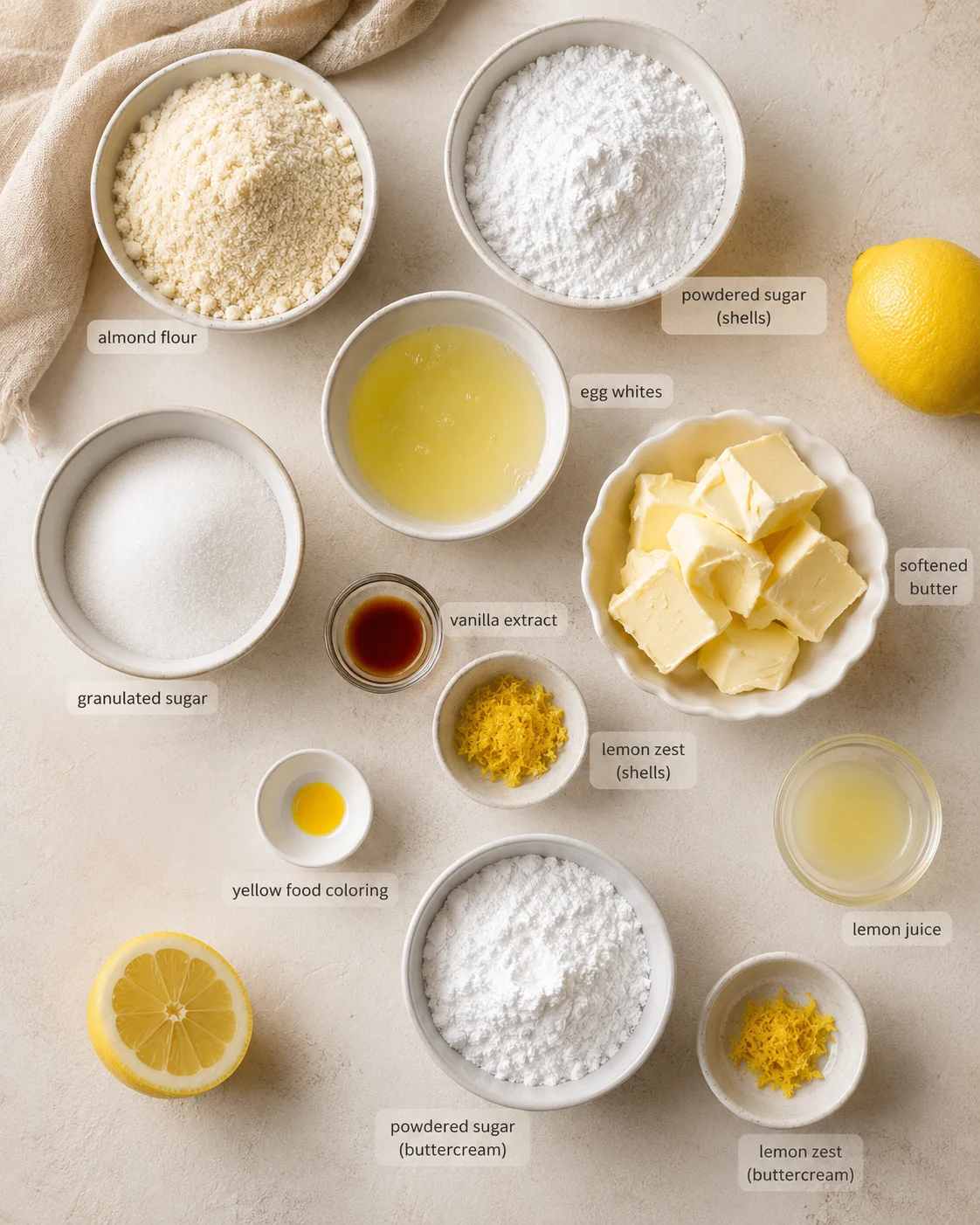
- 1 cup 100g almond flour (sifted very finely)
- 3/4 cup 100g powdered sugar
- 2 large egg whites at room temperature
- 1/2 cup 100g granulated sugar
- 1/2 tsp vanilla extract
- 1/2 tsp lemon zest (optional but lovely!)
- Yellow food coloring (optional for that lemony pop)
- 1/2 cup 1 stick unsalted butter, softened
- 1 cup powdered sugar
- 1 tbsp fresh lemon juice
- 1 tsp lemon zest
Mixing, Piping, and Baking
- Line two baking sheets with parchment paper or silicone mats.
- Sift almond flour and powdered sugar together twice.
- Wipe the mixing bowl with vinegar or lemon juice to remove any grease.
- Let egg whites sit at room temperature for 20–30 minutes.
- Beat egg whites until foamy.
- Slowly add granulated sugar while beating until stiff peaks form.
- Add vanilla extract and yellow food coloring if using; mix briefly.
-
Gently fold the sifted almond flour mixture into the whipped egg whites until the batter flows like lava and the ribbon disappears in about 10 seconds.
- Transfer batter to a piping bag fitted with a round tip.
- Pipe small, uniform circles onto the prepared baking sheets.
- Firmly tap the trays on the countertop to release air bubbles.
- Pop any remaining surface bubbles with a toothpick.
- Let piped rounds rest 30–60 minutes until a dry skin forms and they are not sticky to the touch.
- Preheat oven to 300°F (150°C).
- Bake macarons on the middle rack for 12–15 minutes, until they rise and form feet.
- Cool shells completely on the baking sheet before peeling off.
- Beat softened butter until smooth and creamy.
- Add powdered sugar, fresh lemon juice, and lemon zest; whip until light and fluffy, adjusting consistency with milk or more powdered sugar if needed.
- Match cooled macaron shells into pairs of similar size.
- Pipe lemon buttercream onto one shell and gently sandwich with the other.
- Refrigerate assembled macarons for 24 hours to let flavors meld (optional for best texture).
Pro Tips for Flawless Shells
- Let egg whites sit at room temp for 20–30 minutes; this helps them whip up fluffier with more volume.
- Sift your almond flour and powdered sugar at least twice for smooth, lump-free shells—any grit will show in the finished macarons.
- When folding, aim for a lava-like flow: the batter should fall slowly and disappear into itself within around 10 seconds. For a visual, see the macaronage technique in this beginner’s guide. Stop folding as soon as you hit this to avoid overmixing.
- After piping, tap trays firmly to pop air bubbles. Use a toothpick to pop any stubborn ones sticking out before resting.
- The resting step is not optional—30 to 60 minutes is what helps feet form and prevents cracks.
- Use an oven thermometer and bake on the middle rack. If your oven has hot spots, rotate trays gently halfway through baking to keep feet even.
- Keep lemon juice in the buttercream just right—too much liquid makes it runny. Add milk only if the buttercream is too stiff, and add more powdered sugar if it’s too thin.
- Humidity affects macarons—if it’s a damp day, resting might take longer and shells can crack more easily. Try to avoid very humid days if you can.
- Unsure about your oven? Bake a small test batch first to fine-tune time and temperature before making the full recipe.
Flavor Swaps and Substitutions
- Lemon curd filling: Swap out the buttercream for thick lemon curd (or mix some curd into the buttercream) for a zingier, tangier punch.
- White chocolate lemon ganache: Fold lemon zest into melted white chocolate and cream for a rich and silky filling that’s a little indulgent—follow the ganache technique from our Chocolate Macarons recipe for perfect texture.
- Lavender-lemon: Infuse 1/4 to 1/2 tsp culinary lavender into the butter before mixing—strain it out for a fragrant, floral twist that pairs beautifully with lemon.
- Poppy seed shells: Mix in 1–2 tsp poppy seeds into your dry ingredients to give your shells a classic lemon-poppy flavor and a pretty speckled look.
- Limoncello boost: Stir 1–2 tsp limoncello into your buttercream for a grown-up twist. Just reduce other liquids a bit to keep the right consistency.
- Natural coloring: Instead of food dye, try a tiny pinch of turmeric or some finely crushed freeze-dried lemon powder to get that lemon yellow without artificial colors.
Storing and Make-Ahead Tips
How to store and make ahead:
- Refrigerator (best flavor): Keep your assembled macarons in an airtight container in the fridge. The flavor and texture get best after 24 hours of resting, and they’ll stay good for 3–5 days.
- Freezing (long-term): You can freeze fully assembled macarons in a single layer, tightly wrapped or in an airtight container, for up to a month. Thaw in the fridge overnight, then bring to room temp for about 20–30 minutes before serving. This method works especially well for buttercream-based flavors like Salted Caramel Macarons.
- Unfilled shells: Store cooled, unfilled shells in an airtight container at room temperature for 2–3 days, or freeze them for up to a month. Fill them once thawed.
- Make-ahead workflow: Bake your shells a day or two in advance and store unfilled, or fill them and refrigerate to let flavors meld before serving. You’ll notice the effect with bright, fruit-forward batches like Delicious Raspberry Macarons.
- Serving: Don’t microwave macarons. Let chilled ones come to room temp before eating so the filling is soft and the texture just right.
Troubleshooting and FAQs
How long should I let the shells rest before baking?
Rest the shells for 30–60 minutes until they develop a dry skin. You should be able to touch the surface lightly without batter sticking. This step is crucial for getting smooth tops and those trademark “feet.”
My macarons didn’t get feet—what happened?
No feet usually means the batter wasn’t the right consistency (maybe under- or over-folded), the shells didn’t rest long enough, or the oven temp was off. Check for that lava-like ribbon when folding, use an oven thermometer, and don’t skip resting!
Why did my shells crack in the oven?
Cracks happen when the oven is too hot or the shells didn’t form a proper skin before baking. Try lowering the oven temp (aim for 300°F/150°C) and ensure you rest the shells fully before baking.
Some shells are hollow or overly chewy—how can I fix this?
Hollows and weird texture can come from inconsistent whipping or folding, or oven temperature issues. Make sure you get stiff peaks on your egg whites, sift dry ingredients well, and stop folding once batter flows like lava. If unsure, bake a small test batch to find the perfect baking time and temp.
Can these be made nut-free?
Traditional macarons rely heavily on almond flour for texture and flavor, so there’s no straightforward nut-free substitute. If you have blanched almonds, you can grind them finely, but regular flour won’t work the same. If you’re looking for a nut-free treat instead, try our soft, chewy Date Cookies.
Are raw egg whites safe?
This recipe uses raw egg whites. If you’re worried (pregnant, young kids, or immunocompromised), use pasteurized liquid egg whites, just bring them to room temp before whipping.
How do I color the shells?
Gel or powdered food coloring works best—they give strong color without adding extra liquid that could mess up the batter. Add the color once you have stiff peaks so you don’t lose volume.
Can I make a bigger or smaller batch?
Absolutely! Scale the ingredients proportionally and weigh them in grams for accuracy. For egg whites, it’s best to measure by weight since egg sizes vary.
How should I transport assembled macarons?
Keep them chilled in a single layer in an airtight container. If you stack them, place parchment paper between layers. Transport in a cool place and let them come to room temp for about 20–30 minutes before serving.
Is there a vegan version?
This recipe uses egg whites, but vegan macarons made with aquafaba (chickpea water) exist. They behave a bit differently and require different techniques, so that’s another journey altogether.
Are macarons really that hard to make?
I won’t sugarcoat it—macarons can be a tiny bit fussy. But if you follow the steps carefully and don’t rush, they’re totally doable in a home kitchen. The key is properly whipped egg whites, the right batter consistency, and patience to rest before baking. And remember, flops happen to all of us!
Why do my macarons crack during baking?
Cracks usually mean your oven is too hot or your shells didn’t rest enough. Lower the temperature slightly and make sure to let the shells dry and form that important skin before baking.
Can I make these ahead of time?
Definitely! Macarons actually taste better after resting overnight in the fridge. You can freeze finished macarons for about a month, too—just thaw in the fridge and bring to room temp before serving.
Can I swap bottled lemon juice for fresh?
You can, but fresh lemon juice and zest offer the brightest, most vibrant flavor. If you’re going to take the time to make lemon macarons, fresh lemons are the way to go.
What if I don’t have almond flour?
Almond flour is essential for macarons. If you have whole almonds, you can grind them super fine, but don’t substitute with regular flour—it just won’t give that signature texture or flavor.
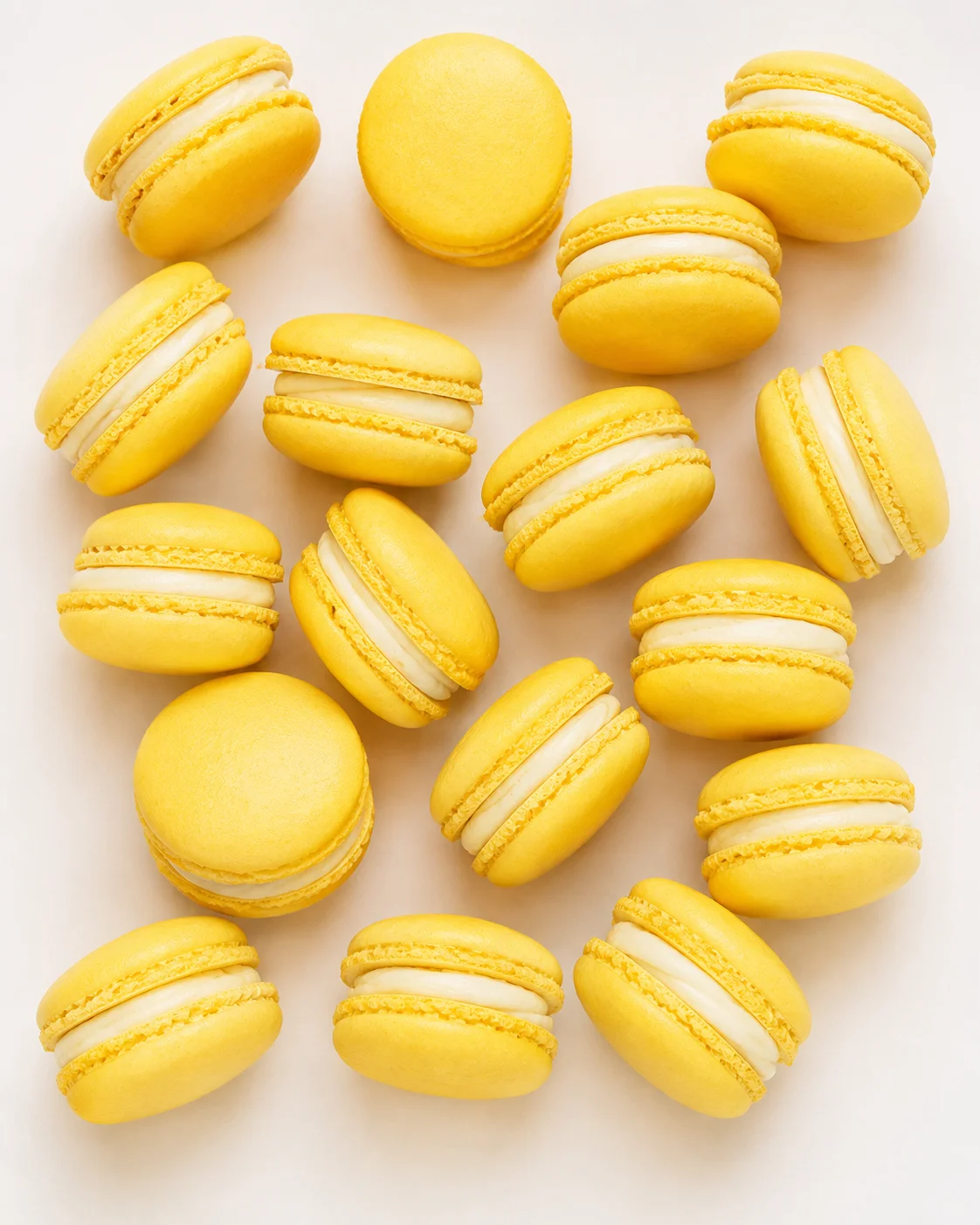
Delicate French macarons with a crisp shell, chewy inside, and bright lemon buttercream filling. This recipe uses fresh lemon juice and zest to create a light, tangy dessert perfect for parties or casual treats.
- Prep Time: 30 minutes
- Cook Time: 15 minutes
- Total Time: 1 hour
- Yield: 20 macarons 1x
- Category: Dessert
- Cuisine: French
Ingredients
- 1 cup (100g) almond flour, sifted very finely
- 3/4 cup (100g) powdered sugar
- 2 large egg whites, at room temperature
- 1/2 cup (100g) granulated sugar
- 1/2 tsp vanilla extract
- 1/2 tsp lemon zest (optional)
- Yellow food coloring (optional)
- 1/2 cup (1 stick) unsalted butter, softened
- 1 cup powdered sugar
- 1 tbsp fresh lemon juice
- 1 tsp lemon zest
Instructions
- Line two baking sheets with parchment paper or silicone mats.
- Sift almond flour and powdered sugar together twice to remove lumps.
- Wipe mixing bowl with vinegar or lemon juice to remove grease.
- Let egg whites sit at room temperature for 20–30 minutes.
- Beat egg whites until foamy.
- Slowly add granulated sugar while beating until stiff peaks form.
- Add vanilla extract and yellow food coloring if using; mix briefly.
- Gently fold sifted almond flour mixture into whipped egg whites until batter flows like lava and the ribbon disappears in about 10 seconds.
- Transfer batter to a piping bag fitted with a round tip.
- Pipe small, uniform circles onto prepared baking sheets.
- Tap trays firmly on countertop to release air bubbles.
- Pop any remaining surface bubbles with a toothpick.
- Let piped rounds rest for 30–60 minutes until a dry skin forms and they are not sticky to touch.
- Preheat oven to 300°F (150°C).
- Bake macarons on middle rack for 12–15 minutes until they rise and form feet.
- Cool shells completely on baking sheet before peeling off.
- Beat softened butter until smooth and creamy.
- Add powdered sugar, fresh lemon juice, and lemon zest; whip until light and fluffy, adjusting consistency with milk or more powdered sugar if needed.
- Match cooled macaron shells into pairs of similar size.
- Pipe lemon buttercream onto one shell and gently sandwich with the other.
- Refrigerate assembled macarons for 24 hours to let flavors meld (optional for best texture).
Notes
Do not skip the resting step (30-60 minutes) before baking; it helps form a smooth top and feet., Use an oven thermometer and bake at 300°F (150°C) on middle rack., Be gentle when folding batter; aim for a lava-like flow to avoid overmixing., Humidity impacts macarons; avoid damp days if possible for best results., These macarons should be refrigerated after assembly and taste best after 24 hours resting., You can freeze assembled macarons for up to a month, thaw in fridge overnight before serving., Traditional macarons require almond flour; no straightforward nut-free substitute., Raw egg whites are used; for safety use pasteurized egg whites if needed., Gel or powdered food coloring is recommended to avoid extra liquid.
Nutrition
- Serving Size: 1 macaron
- Calories: Approximately 90-100 calories per macaron (estimate)
- Fat: Approximately 5g per macaron (estimate)
- Carbohydrates: Approximately 10g per macaron (estimate)
- Protein: Approximately 2g per macaron (estimate)
More in Recipes
Carrot and Lentil Soup
Spiced Carrot and Apple Soup