Mini German Pancakes Recipe: The Ultimate Puffy Breakfast
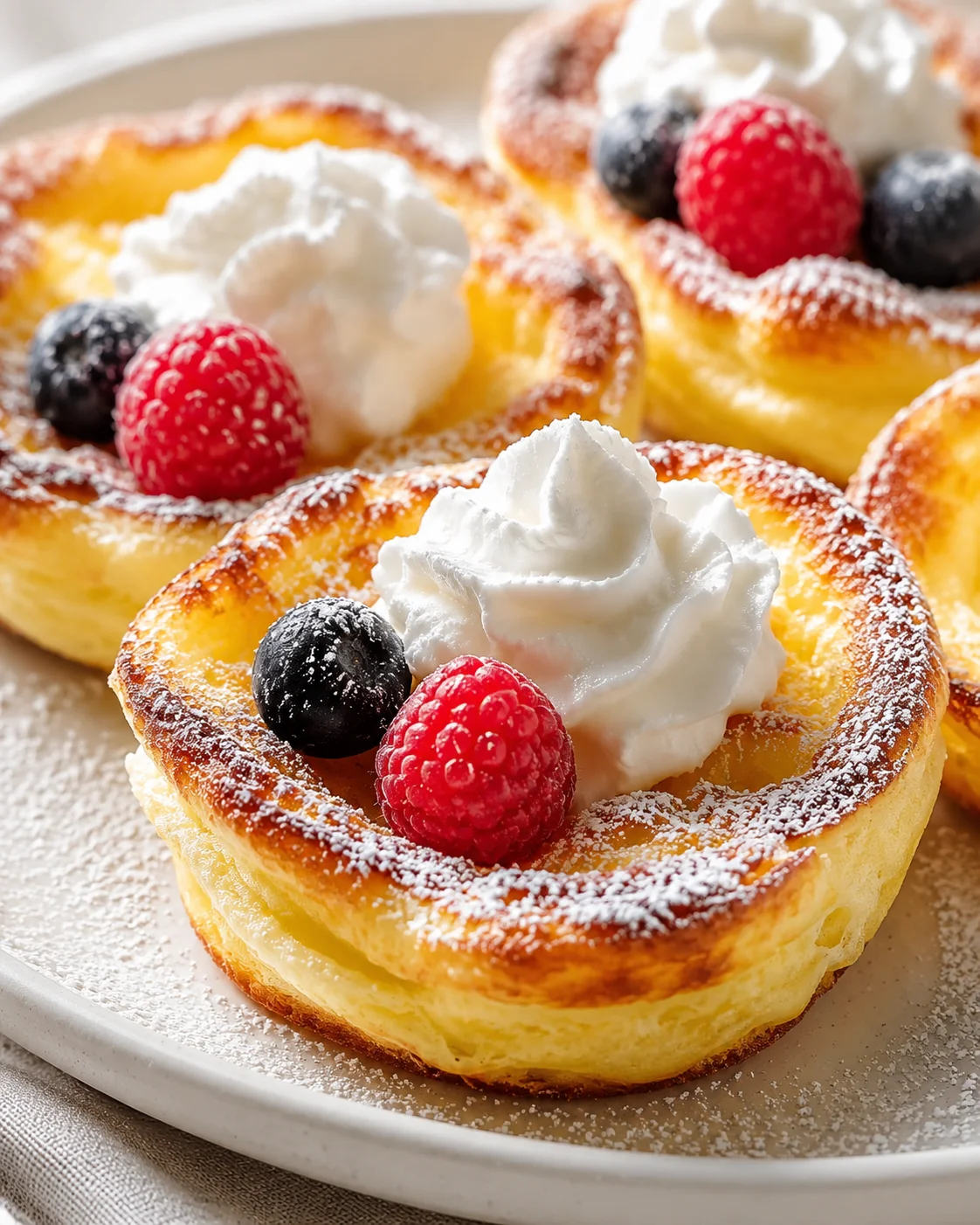
Watching batter puff up in the oven is one of the simple pleasures of morning baking. While a big Dutch baby pancake makes a grand statement, shrinking that idea into individual little portions adds extra fun. This Mini German Pancakes recipe packs all the same fluffy drama and custardy goodness, but in a size that’s easier to serve and eat. The edges rise up wildly, creating little natural cups that are just perfect for drizzling syrup, dolloping jam, or piling on fresh fruit.
These mini German pancakes — sometimes called German pancake muffins — solve breakfast hassles all at once. They bake together in the oven, so everyone gets hot, fresh pancakes at the same time, unlike the slow stovetop flipping routine. They’re incredibly light, almost all air and custard, making them a fantastic choice for a weekday or a special weekend brunch. Whether you’re feeding a small family or a bigger crowd, this recipe scales effortlessly, making breakfast a breeze.
Think of these mini German pancakes as little Dutch babies baked in a muffin tin — they puff up big around the edges and have soft, custardy centers that naturally form little wells ready for your favorite toppings. They’re made with simple pantry staples: eggs, milk, flour, butter, a splash of vanilla, and a pinch of salt — plus optional sugar if you want a touch of sweetness. These ingredients come together quickly, but the final result feels special enough for company or lazy weekend mornings.
In just about 20 minutes from start to finish — 5 minutes to prep and 15 minutes in a 400°F oven — you’ll end up with a dozen mini pancakes that serve roughly four hungry people. Everything bakes at once, so there’s no flipping or standing at the stove fussing. Just whisk or blend a silky batter, melt butter in a muffin tin, pour the batter in, and bake. Using room-temperature eggs and milk really helps the pancakes puff up to their fullest, thanks to steam.
Below, I’ll walk you through an easy step-by-step method, share troubleshooting tips, and give ideas for topping these mini German pancakes — from the classic powdered sugar and lemon juice to sweet and savory options. Plus, I’ll cover storage and reheating, so you can enjoy these tasty bites anytime, be it busy weekday mornings or festive brunches.
Big Flavor, Little Effort
Mini German pancakes are a total kitchen win — they pack big flavor and impressive height with minimum effort. Using basic ingredients you mostly already have, they transform into these gorgeous custard-like puffs that come out perfect every time, thanks to the muffin tin baking method.
- Big wow, little work: The oven does the heavy lifting — no flipping, no guesswork, just a stunning rise that looks like it came from a fancy bakery.
- Fast—about 20 minutes: Quick prep and a short bake make these great for busy mornings, but they feel special enough for holidays too.
- Simple pantry ingredients: Eggs, milk, flour, butter, vanilla, and a pinch of salt (and a touch of sugar if you like) keep it straightforward and easy.
- Easy to scale: Bake a dozen at once to feed a family or halve the batch for just two; leftovers also work well.
- Customizable toppings: The little cups are perfect for syrup, powdered sugar and lemon, fruit compotes, or even savory toppings like mushrooms and cheese.
- Light yet satisfying: Crunchy golden edges and soft, creamy centers make every bite feel indulgent but never heavy.
- Low mess, consistent success: A metal muffin tin plus room-temp ingredients are your magic combo for maximum puff without extra leaveners or stress.
- Perfect for make-ahead: Mix the batter ahead and refrigerate, then bake fresh when you’re ready. Leftovers reheat beautifully in the oven to revive that crisp edge.
In short, mini German pancakes are fast, flexible, and fantastic—a simple way to turn a classic Dutch baby into an everyday brunch hero.
Baking these in a muffin tin changes everything. With a big Dutch baby or German pancake in a skillet, the edges puff up tall while the center often stays flat. But in a muffin tin, heat surrounds the small batter amounts from all sides, giving a stronger lift and a higher edge-to-center ratio.
Metal muffin tins are real heat conductors, which is key because the steam that inflates these pancakes needs quick, even heat. Baking as individual portions also means each mini pancake gets a beautifully crisp, golden crust all around. This makes them sturdy and fun to eat, almost like a handheld pastry. It’s a perfect way to serve fancy-feeling, fork-free breakfast at parties, brunches, or casual get-togethers.
Ingredients — Bring to Room Temperature
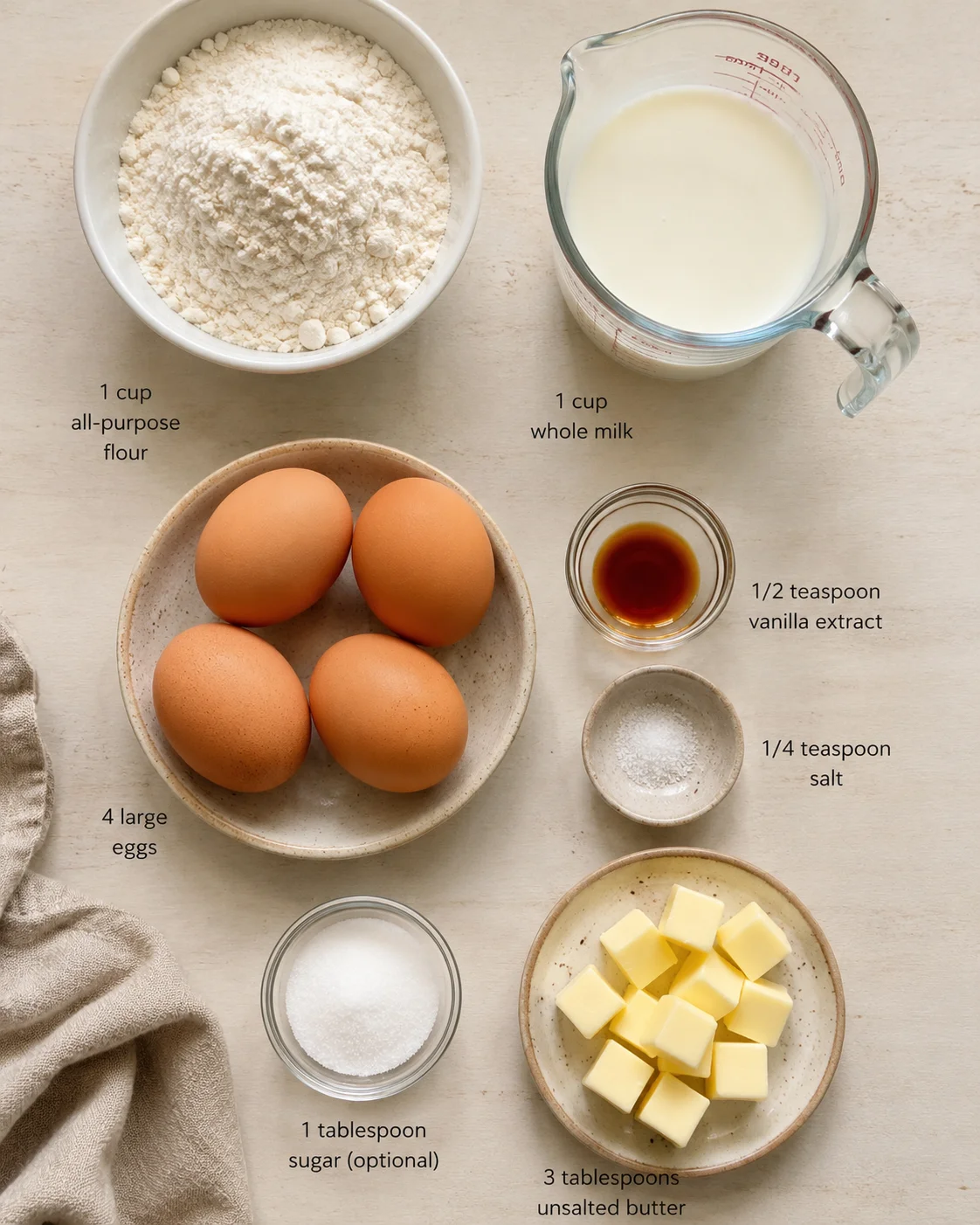
- 1 cup all-purpose flour
- 1 cup whole milk room temperature
- 4 large eggs room temperature
- 1/2 tsp vanilla extract
- 1/4 tsp salt
- 1 tbsp sugar optional
- 3 tbsp unsalted butter cut into 12 small cubes
Mixing and Aerating the Batter
- Bring eggs and milk to room temperature; if short on time, place eggs in warm water for 5 minutes and microwave milk about 15 seconds.
- Preheat oven to 400°F (200°C) and place the rack in the middle position.
- In a blender, combine eggs, milk, flour, vanilla, salt, and optional sugar and blend on high about 30 seconds until smooth and frothy (or whisk eggs and milk vigorously, then add flour, whisk until lump-free, and let batter rest 10 minutes).
- Cut unsalted butter into 12 small cubes and place one cube in each cup of a 12-cup muffin tin.
- Put the muffin tin in the preheated oven for 2–3 minutes, until the butter melts and sizzles but does not brown.
- Pour the batter evenly into the muffin cups, filling each about halfway.
-
Bake at 400°F for 12–15 minutes until the pancakes puff dramatically and turn golden, keeping the oven door closed.
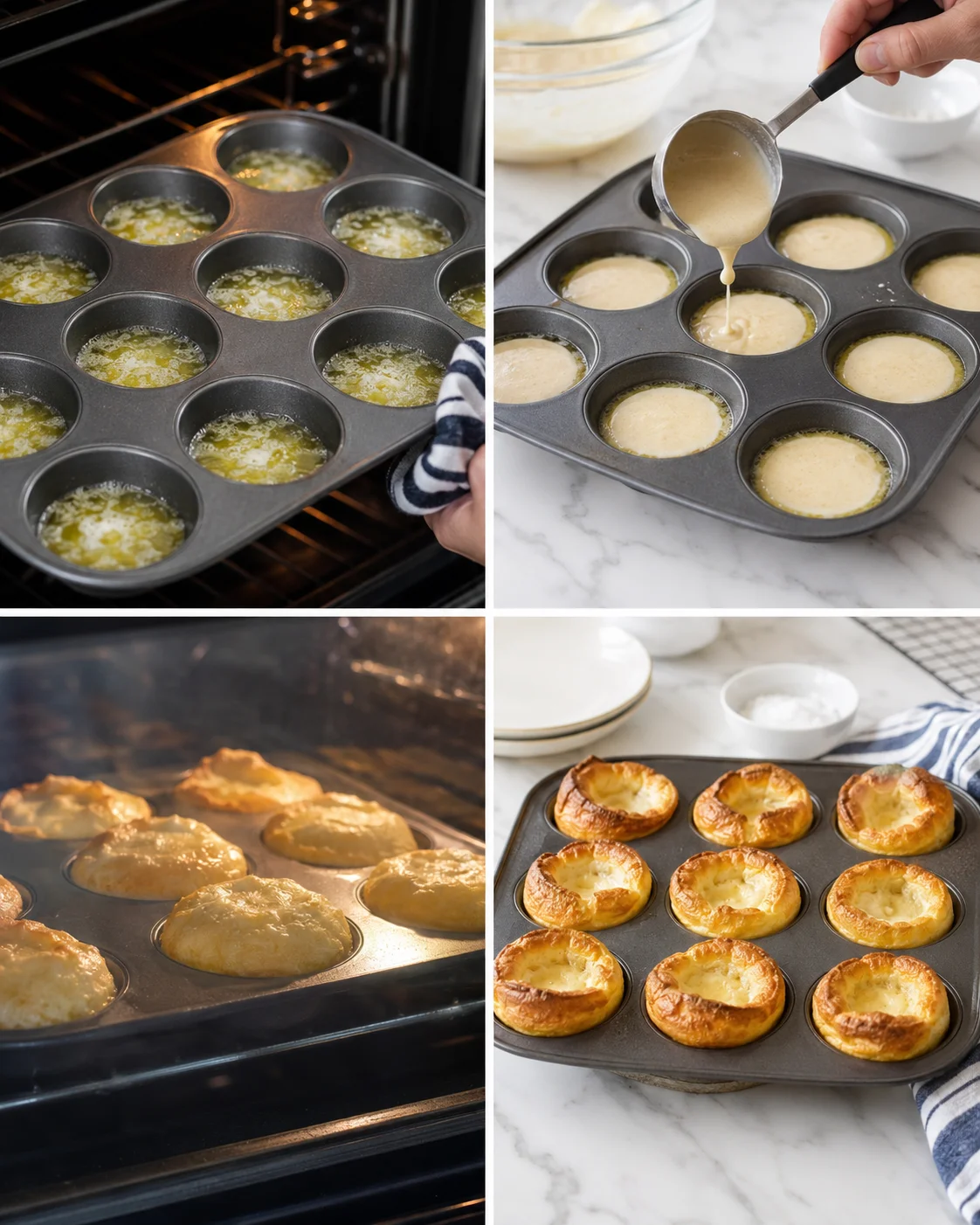
- Remove the mini German pancakes from the oven and dust with powdered sugar and squeeze fresh lemon juice over top.
Baking Tips for a Perfect Puff
The most exciting part is watching the batter puff in the oven. At first, it seems flat—then, suddenly, it rises tall and golden. The biggest tip is to keep that oven door firmly closed while baking. Opening it releases heat and lets the temperature drop, which can cause the whole batch to deflate in an instant. So resist the urge to peek!
Butter management is another crucial step. Place a small cube of butter in each muffin cup and stick the tin in the preheated oven to melt it. You want the butter to be hot and sizzling but not browned or burnt. If it’s too hot, the pancakes’ bottoms will burn before they fully puff up. Too cool, and the batter will stick miserably. Finding the right balance here is the secret to those perfect mini German pancakes that look amazing and taste even better.
Toppings, Mix-Ins, and Substitutions
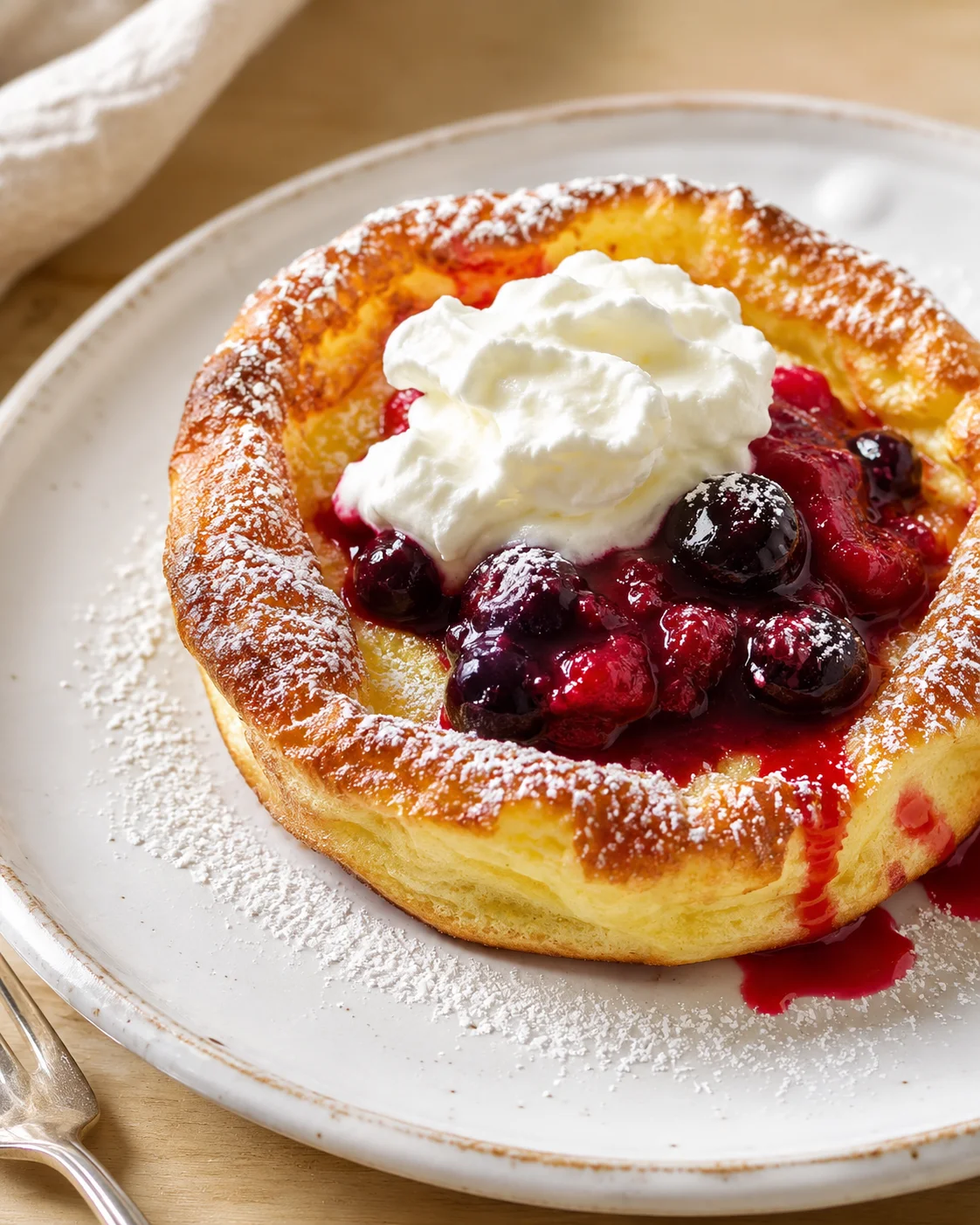
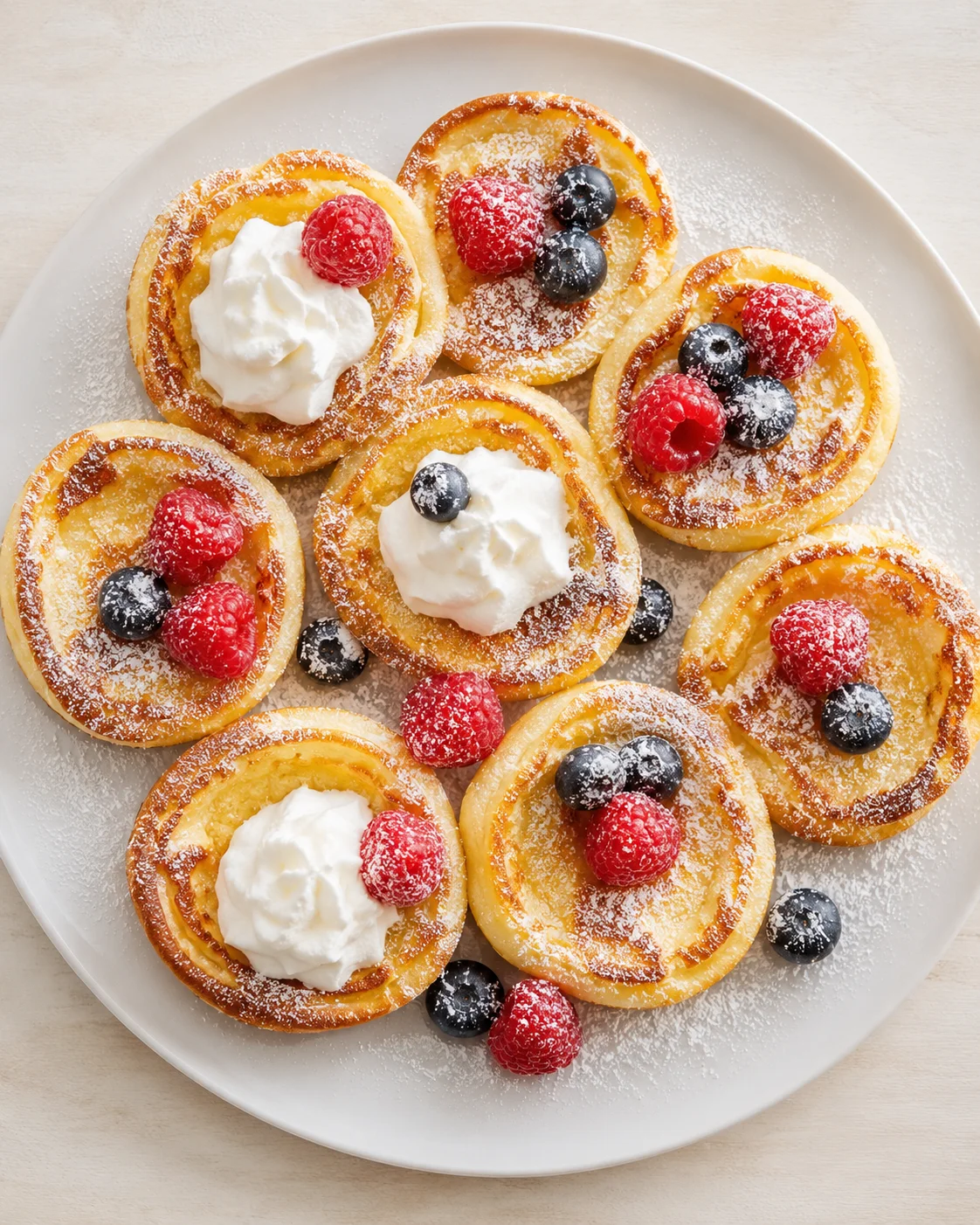
When you pull these mini German pancakes from the oven, their centers will naturally sink, creating perfect little wells just waiting for toppings. Keep it classic with a dusting of powdered sugar and a squeeze of fresh lemon juice — the tang cuts through the richness wonderfully.
For something seasonal or festive, top them with warm spiced apple slices or a vibrant cranberry compote to brighten up your breakfast table. If savory is more your speed, try sautéed mushrooms and herbs with melted swiss cheese. The beauty is that these pancakes work for any taste and occasion, making them great for a cozy breakfast for two or a bigger family gathering where everyone can customize their own. Prefer to tweak the batter? For extra protein and tenderness, see Greek Yogurt Pancakes for yogurt-based ratios, or go gluten-free with these fluffy almond flour pancakes.
Storing and Reheating Leftovers
These mini German pancakes shine brightest fresh out of the oven, warm and crisp. But if you somehow have leftovers, you can save them for up to two days stored in an airtight container in the fridge. Keep in mind, they’ll lose their puff and get a bit denser, but the flavor still holds up beautifully.
When it’s time to reheat, avoid the microwave—it tends to make these pancakes rubbery, which nobody wants. Instead, pop them on a baking sheet and warm them in a 350°F oven for 3 to 5 minutes. This brings back some crispness on the edges. They won’t rise again, but they make for a quick, comforting snack or second breakfast. For a simple upgrade, top warm leftovers with a spoonful of quick rhubarb applesauce.
Common Questions Answered
Why did my mini pancakes fall flat?
If your pancakes didn’t puff, it’s usually because your ingredients were too cold or the oven wasn’t hot enough. Always make sure eggs and milk are at room temperature and preheat your oven fully to 400°F before baking.
Can I use a silicone muffin pan?
Silicone pans don’t conduct heat as quickly or evenly as metal tins, so your mini German pancakes might not rise as much or develop that crispy edge. For best results, stick to a metal pan.
Can I make the batter ahead of time?
Absolutely! This makes an excellent overnight prep—blend the batter, cover, and refrigerate. When you’re ready in the morning, give it a quick whisk to mix the flour back in, then bake as usual.
Do I need baking powder?
Nope! These pancakes rise through steam, not baking powder. Using baking powder changes the texture, making them cakier instead of light and custardy. Prefer that classic, cakier style? Try our Best Coffee Pancakes.
Can I substitute the milk?
Whole milk provides the best flavor and helps with browning. You can try almond or oat milk, but your pancakes might not brown as nicely or puff quite as much due to less protein.
How do I stop them from sticking?
Make sure to add a good-sized cube of butter to each muffin cup and let it melt fully. If you’re still worried, a quick spray of non-stick cooking spray before adding the butter can help prevent sticking.
Mini German Pancakes
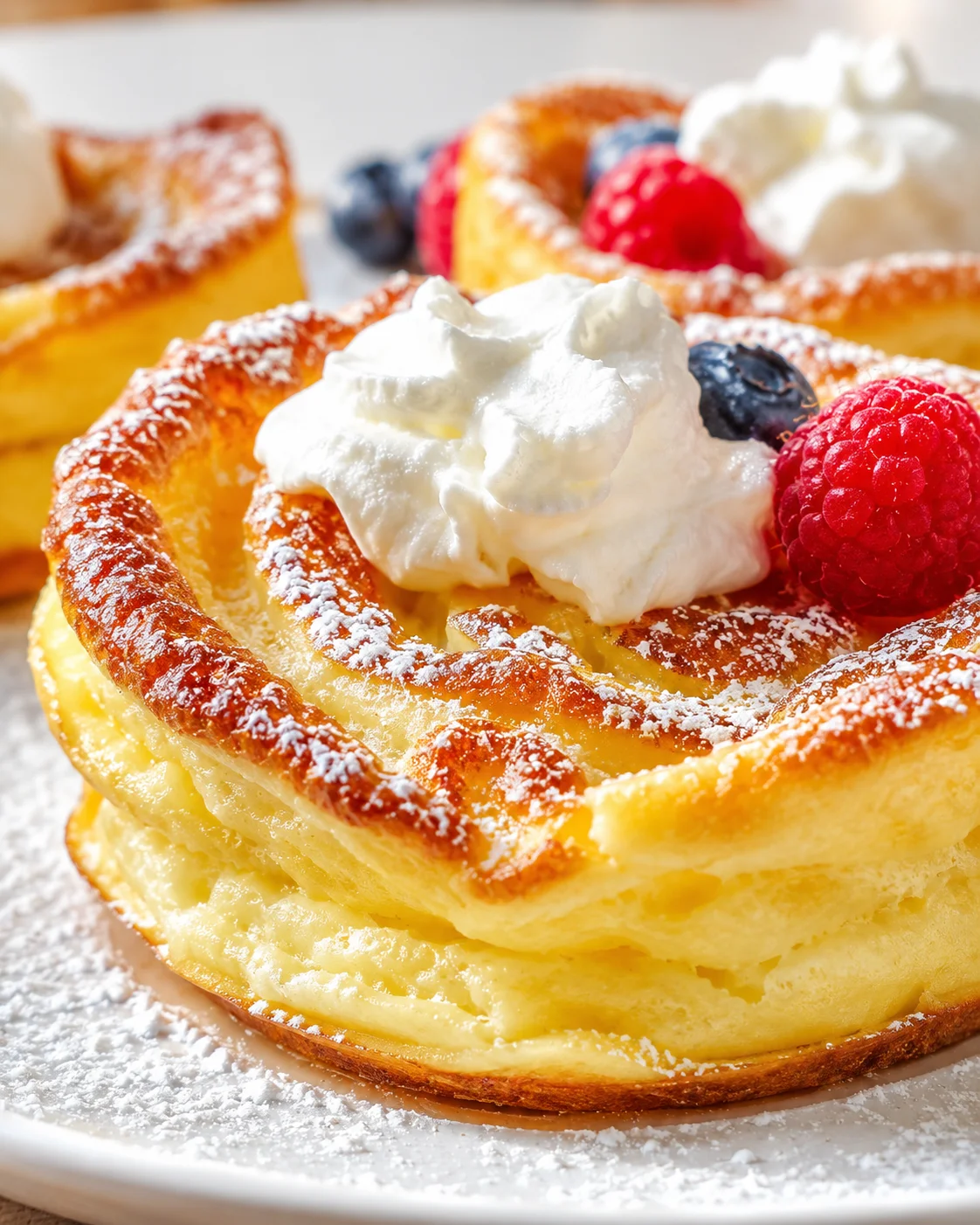
These puffy, golden mini pancakes bake right in a muffin tin for a fun, custard-like breakfast that requires no flipping.
- Prep Time: 5 minutes
- Cook Time: 15 minutes
- Total Time: 20 minutes
- Yield: 12 mini pancakes (serves approximately 4) 1x
- Category: Breakfast
- Cuisine: American, German
Ingredients
- 1 cup all-purpose flour
- 1 cup whole milk (room temperature)
- 4 large eggs (room temperature)
- 1/2 tsp vanilla extract
- 1/4 tsp salt
- 1 tbsp sugar (optional)
- 3 tbsp unsalted butter (cut into 12 small cubes)
Instructions
- Preheat your oven to 400°F (200°C). Place the oven rack in the middle position for even cooking.
- Blend the eggs, milk, flour, vanilla extract, salt, and optional sugar in a blender on high speed for about 30 seconds until the batter is completely smooth and frothy.
- Place one small cube of butter into each cup of a 12-cup metal muffin tin.
- Put the muffin tin into the preheated oven for 2 to 3 minutes, until the butter melts fully and starts sizzling but does not brown.
- Pour the batter evenly into the muffin cups, filling each about halfway.
- Bake at 400°F for 12 to 15 minutes until the pancakes puff dramatically and turn golden brown. Do not open the oven door during baking.
- Remove the mini German pancakes from the oven and serve immediately, dusting them with powdered sugar and squeezing fresh lemon juice over the top.
Notes
Make sure all your ingredients are at room temperature for the best rise and puff., Serve immediately after baking, as the mini pancakes will deflate fast once they cool., Butter management is crucial: the butter should be hot and sizzling but not browned before pouring batter to prevent burning or sticking., Avoid opening the oven door during baking to prevent deflation., Metal muffin tins conduct heat better than silicone pans, resulting in better puff and crispy edges., Leftover pancakes can be stored in an airtight container in the fridge for up to two days but will lose puffiness., Reheat leftovers in a 350°F oven for 3-5 minutes to revive crispness; avoid microwaving.
Nutrition
- Serving Size: 1-3 mini pancakes depending on appetite
- Calories: 210
- Fat: 11 grams per serving (approximate)
- Carbohydrates: 22 grams per serving (approximate)
- Protein: 8 grams per serving (approximate)
More in Recipes


Carrot and Lentil Soup

Spiced Carrot and Apple Soup