Gordon Ramsay Tuna Steak Recipe

The First Time I Screwed This Up…
Tuna steak seemed super easy the very first time I gave it a shot.
Just sear it on one side, flip it over, and done — right?
Well, no.
I ended up cooking it all the way through, turning what should have been a gorgeous tuna steak into a dry, gray mess.
It was like trying to chew on a rubber eraser.
What really clicked for me was Gordon’s approach:
Tuna is nothing like a regular steak. It’s delicate, fast, and all about precision.
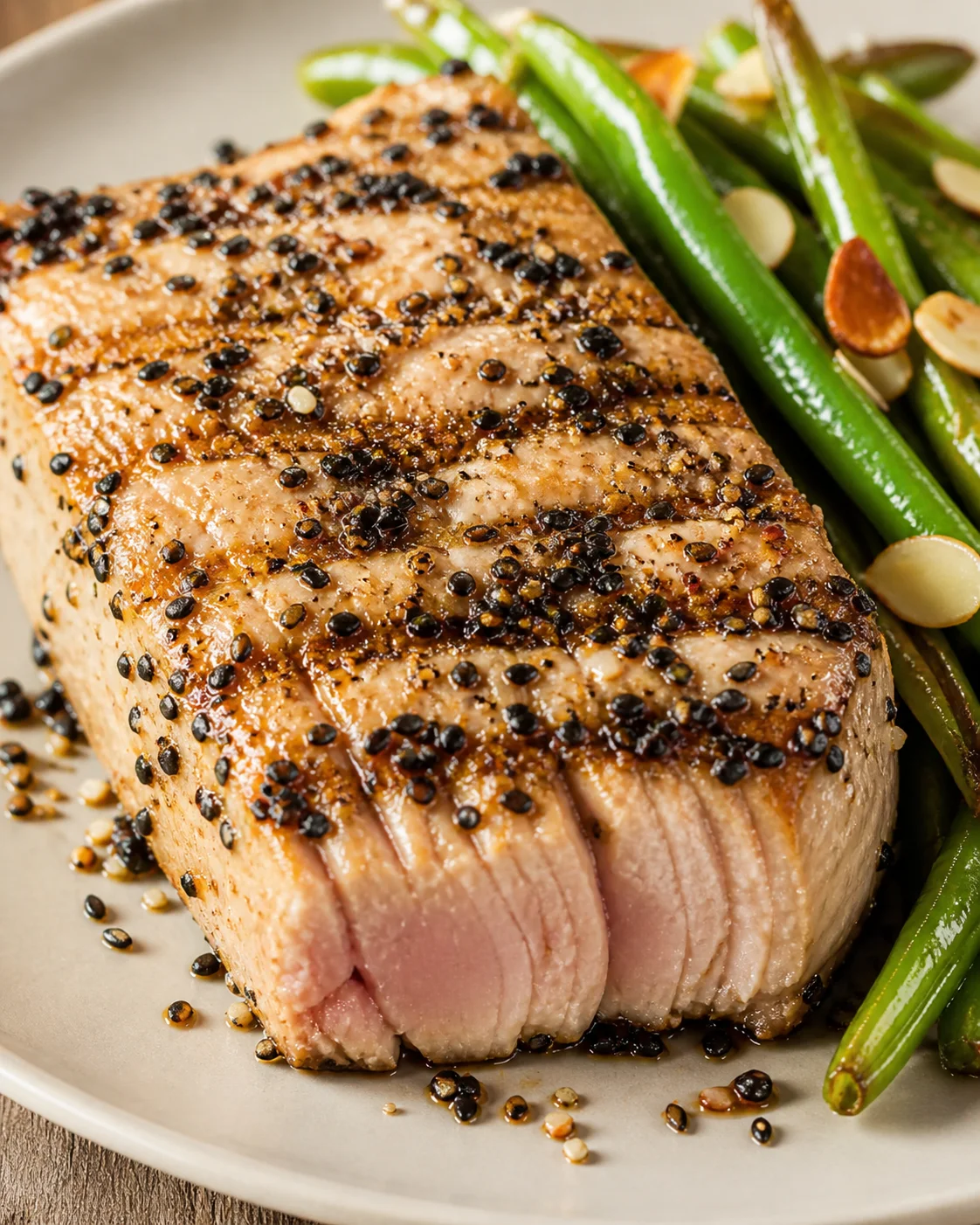
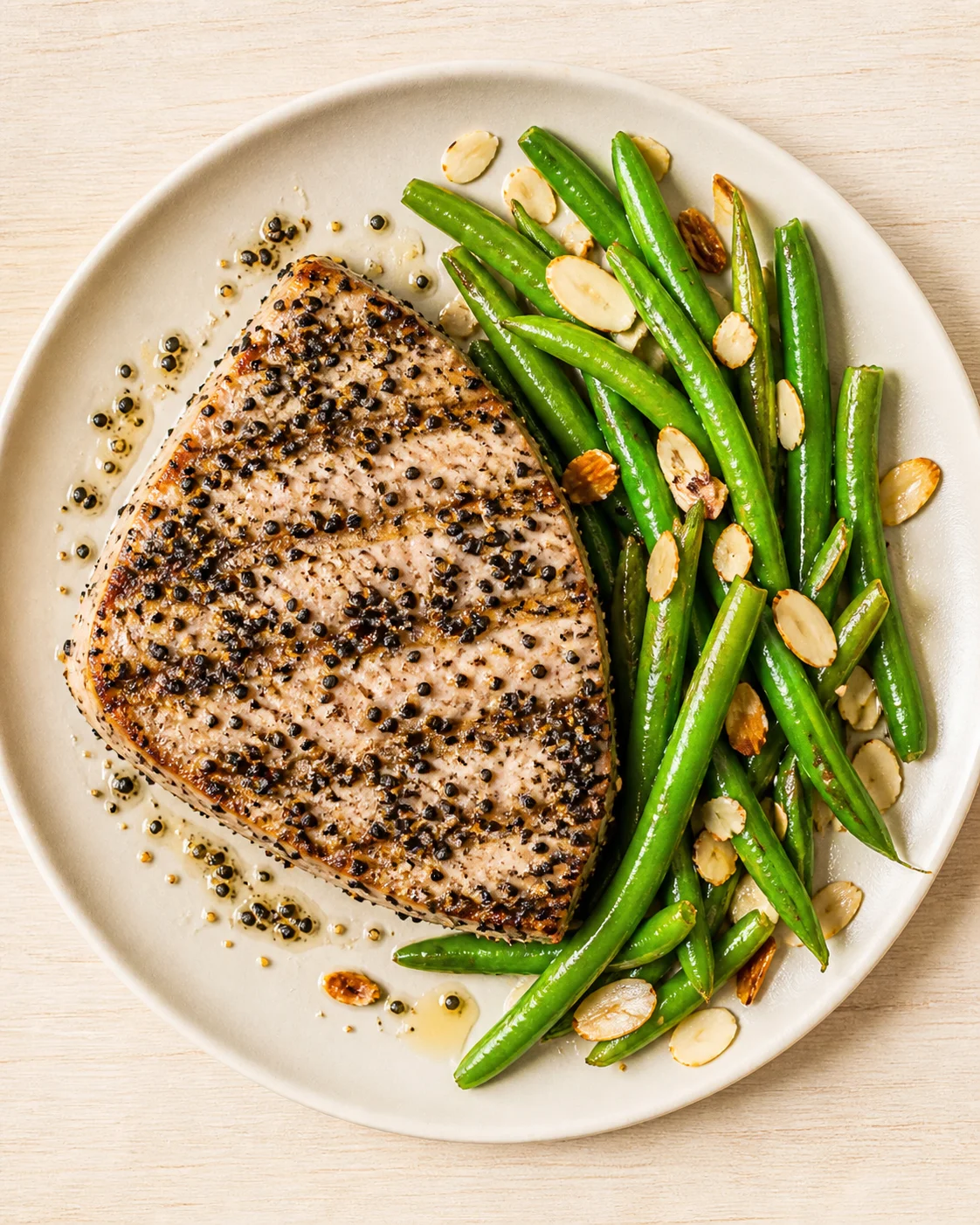
You want a crispy seared crust on the outside and a ruby-red, almost raw center — that’s when tuna truly shines and tastes amazing.
If you’re reading this because you want a tuna steak that really tastes like tuna — bright, buttery, and full of life — then you’ve come to the right place. This recipe isn’t long or complicated. It’s all about getting the few critical steps just right: a quick, punchy marinade, a super hot sear, and a short rest so all those juicy flavors stay where they belong.
You’ll find out exactly how long to marinate (20 to 30 minutes), how long to sear (about 2 minutes on each side), and the ideal internal temperature to pull your tuna off the pan (around 52°C / 125°F) so you get that deep, flavorful crust with a rosy, almost raw inside. I’ll walk you through the marinade, pan technique, handy variations, and common mistakes that steal the flavor.
This recipe is quick — prepping takes just five minutes, searing only a few, and your hands-on time is minimal — plus it’s rated easy. But it does require your focus. Stick to these tips, and you’ll go from a dry, boring tuna steak to one that tastes like you just stepped out of a restaurant — fast, bold, and always delicious.
- Who it’s for: Anyone craving restaurant-quality tuna at home.
- What you’ll get: A sesame-soy glazed crust and a buttery rare center.
- What to watch for: Marinating time, pan temperature, and that golden two-minute sear rule.
Why You’ll Love This Technique
This way of cooking works because it respects exactly how tuna reacts to heat:
- A bold, flavorful marinade (see pan-seared tuna steaks with soy glaze) = a tasty crust and a clean, fresh fish interior.
- A quick, super hot sear = a crust that locks in flavor without cooking through.
- Resting after cooking = juices stay locked inside your tuna.
Common mistakes people make:
- Cooking tuna all the way through — you lose that buttery texture and bright flavor.
- Marinating too long — the acid breaks down the fish and overwhelms the natural taste.
- Using too hot a pan and burning the outside before the inside cooks properly.
Ingredients and Why They Matter
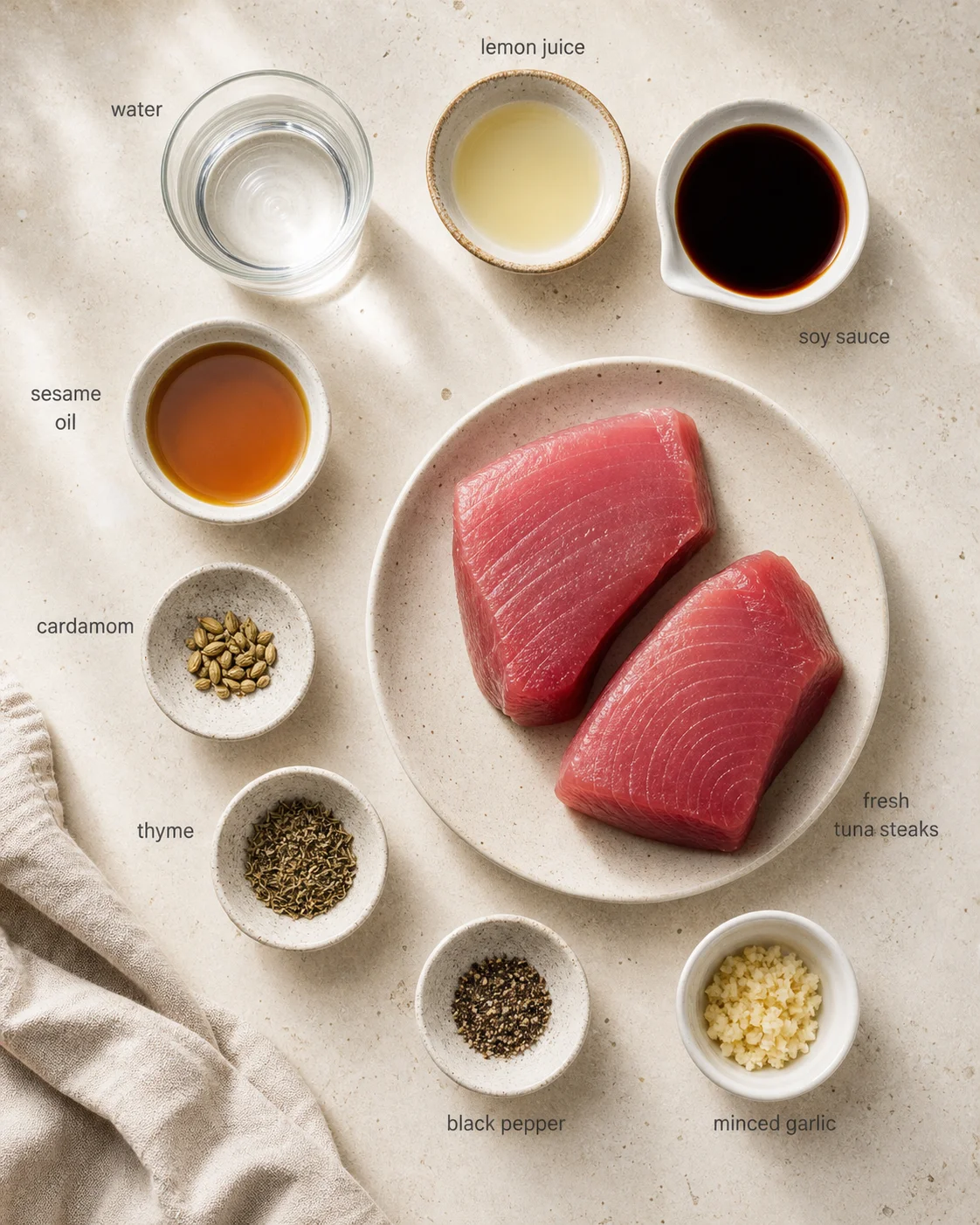
- 60ml water
- 30ml lemon juice
- 60ml soy sauce
- 45ml sesame oil
- 1 tsp cardamom
- 1 tsp thyme
- ½ tsp black pepper
- 1 clove garlic, minced
- 113g fresh tuna steaks
Sear, Marinate, and Rest Steps
- Whisk water, lemon juice, soy sauce, sesame oil, cardamom, thyme, black pepper, and minced garlic in a small bowl to make the marinade.
- Taste the marinade and adjust seasoning until bright and balanced.
- Place tuna steaks in a large zip‑lock bag or shallow dish and pour the marinade over to coat.
- Seal the bag or cover the dish and turn the tuna to coat; marinate for 20–30 minutes (no longer than 30 minutes).
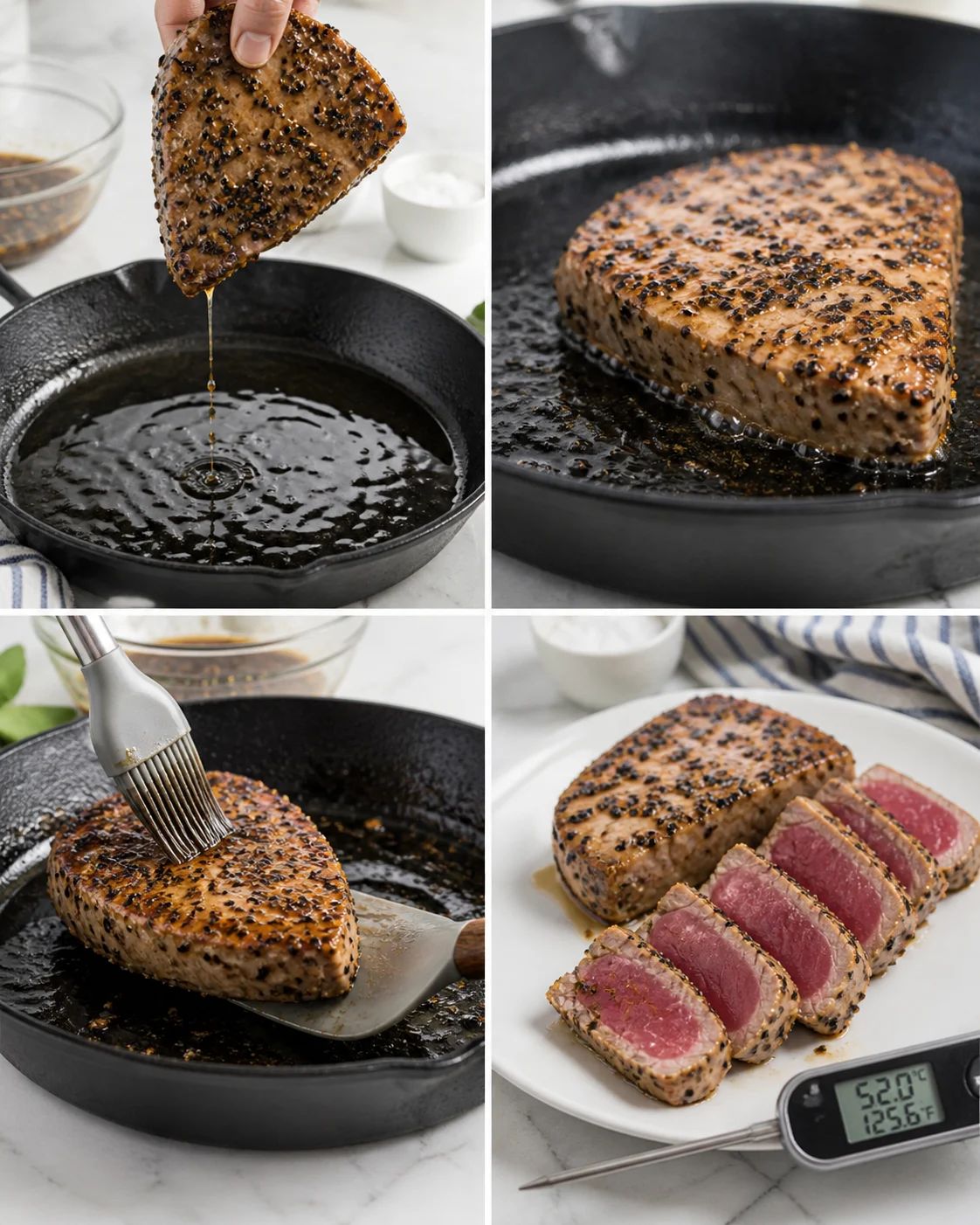
- Heat a heavy skillet (cast iron preferred) over medium‑high until hot.
- Add a small drizzle of oil to the heated pan to prevent sticking.
- Remove tuna from the marinade and let excess drip off, but do not blot dry.
- Place the tuna in the pan and sear for about 2 minutes on the first side.
- Flip the tuna, brush a little leftover marinade on top, and sear the second side for about 2 minutes.
- Pull the tuna off the heat when the internal temperature reaches about 52°C (125°F).
-
Let the tuna rest for 2 minutes before slicing or serving.
Pro Tips for Silky, Rare Tuna
“Think of tuna like beef tartare with a sun-kissed outside.”
You want it almost raw inside, gently kissed by heat on the outside.
“Embrace the rare.”
Good tuna should be eaten rare — it’s silky, buttery, and not fishy at all.
“Sear it fast, don’t bake it.”
Sear quickly on a hot pan, then take it off the heat — no slow cooking.
“Let it rest like a steak.”
Tuna keeps cooking a little after you pull it — a short rest helps keep all those juices inside.
- Cooked it all the way through before:
Ended up with dry, gray tuna. Now I trust the timing and never skip resting. - Forgot to let marinade drip off:
Ended up with burnt spots. Now I let excess drip but keep a little for flavor. - Marinated too long once:
The texture got mushy. Now I stick strictly to 20–30 minutes max. It’s the perfect window to toss together a quick Ditalini Pasta Salad.
- Go for sushi-grade tuna whenever possible: It’s meant to be eaten rare and tastes so much better.
- Heat the pan first, then add oil: This helps prevent sticking and burning.
- Don’t walk away from the pan: Two minutes fly by and you don’t want to overcook. Plan a hands-off side like crispy air fryer broccoli bites so you can focus on the sear.
- Rest the tuna: Even just two minutes makes a huge difference to juiciness and texture.
Flavor Twists and Simple Swaps
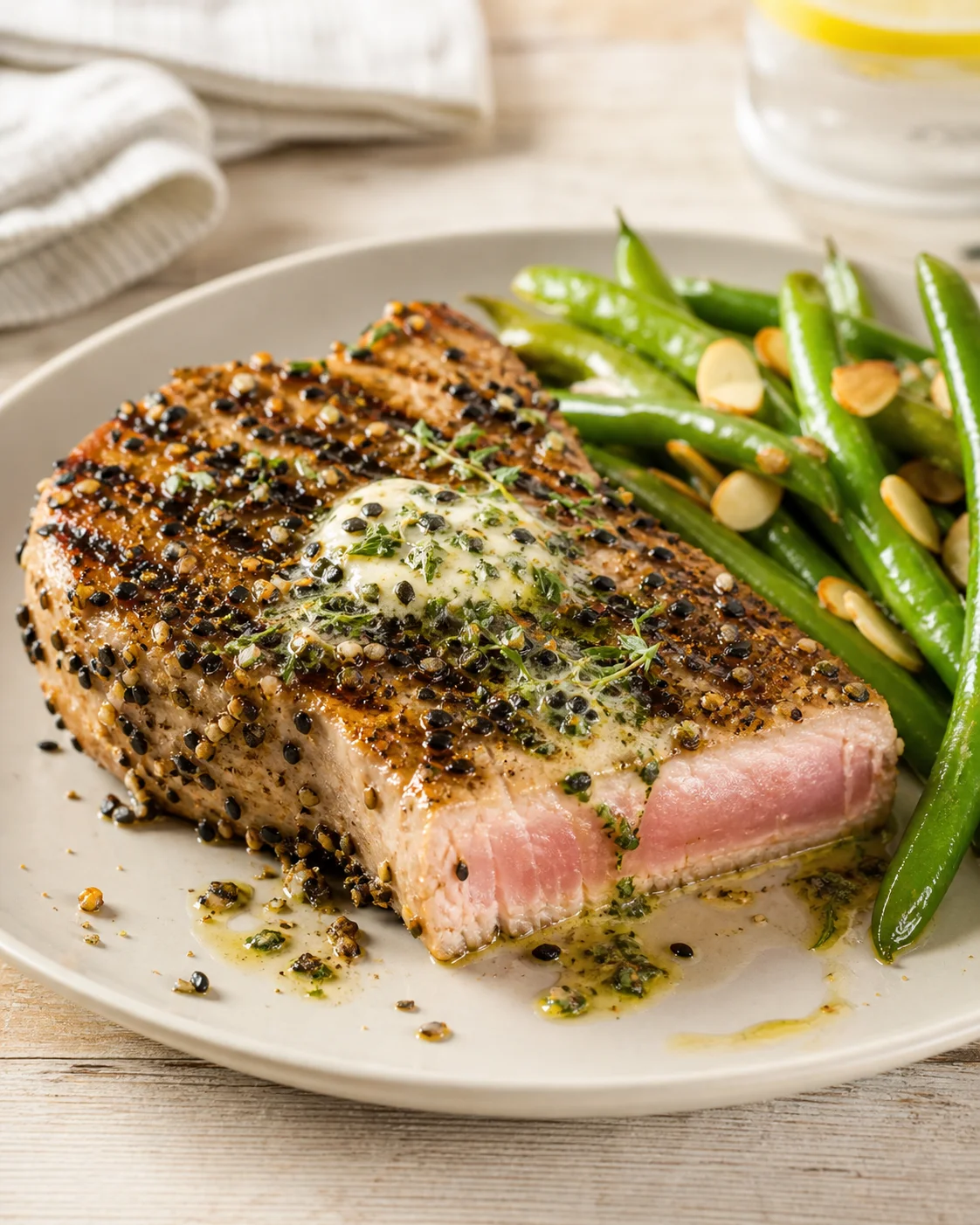
- Spicy Asian twist: Stir in a spoonful of gochujang (Korean chili paste) for some fire.
- Mediterranean style: Swap soy sauce for olive oil and add some lemon zest for brightness; pair it with a Mediterranean pasta salad to keep the flavors cohesive.
- Sesame crusted: Press sesame seeds onto the tuna right before searing for extra crunch and nuttiness.
Storage, Reheating, and Leftovers
- Fridge: Let the tuna cool completely, then pop it in an airtight container. It keeps well for up to 2 days.
- Reheat: Warm gently in a skillet over medium-low heat just until heated through — no high heat!
Leftover ideas:
- Slice thin and use in poke bowls for a tasty lunch.
- Flake into wraps with creamy avocado and fresh greens for a quick dinner.
- Chunk it for a cold noodle salad tossed with sesame dressing.
Common Tuna Steak Questions
Q: Can I grill the tuna instead of pan-searing?
A: Definitely! Just oil your grill grates well and sear the tuna 2 minutes per side over high heat.
Q: How rare should tuna be?
A: You want it still pink and slightly translucent in the middle, just warmed through.
Q: Can I use frozen tuna?
A: Yes! Just thaw it fully and pat really dry before marinating to avoid sogginess.
Q: What sides pair well with tuna steak?
A: Keep it simple with lemony greens, roasted vegetables, or even just steamed rice—and if you want something a bit heartier, try a quick orzo with mushrooms.
Gordon Ramsay Tuna Steak Recipe
Notes
- Hot Pan, Fast Sear: Tuna cooks super quickly — keep your eyes on it.
- Watch your marinate time: No more than 30 minutes to keep the perfect texture.
- Don’t skip the rest: Let tuna rest so all those delicious juices stay inside.
- Play with flavors: Add chili flakes if you like heat or swap lemon for lime for a brighter zing.
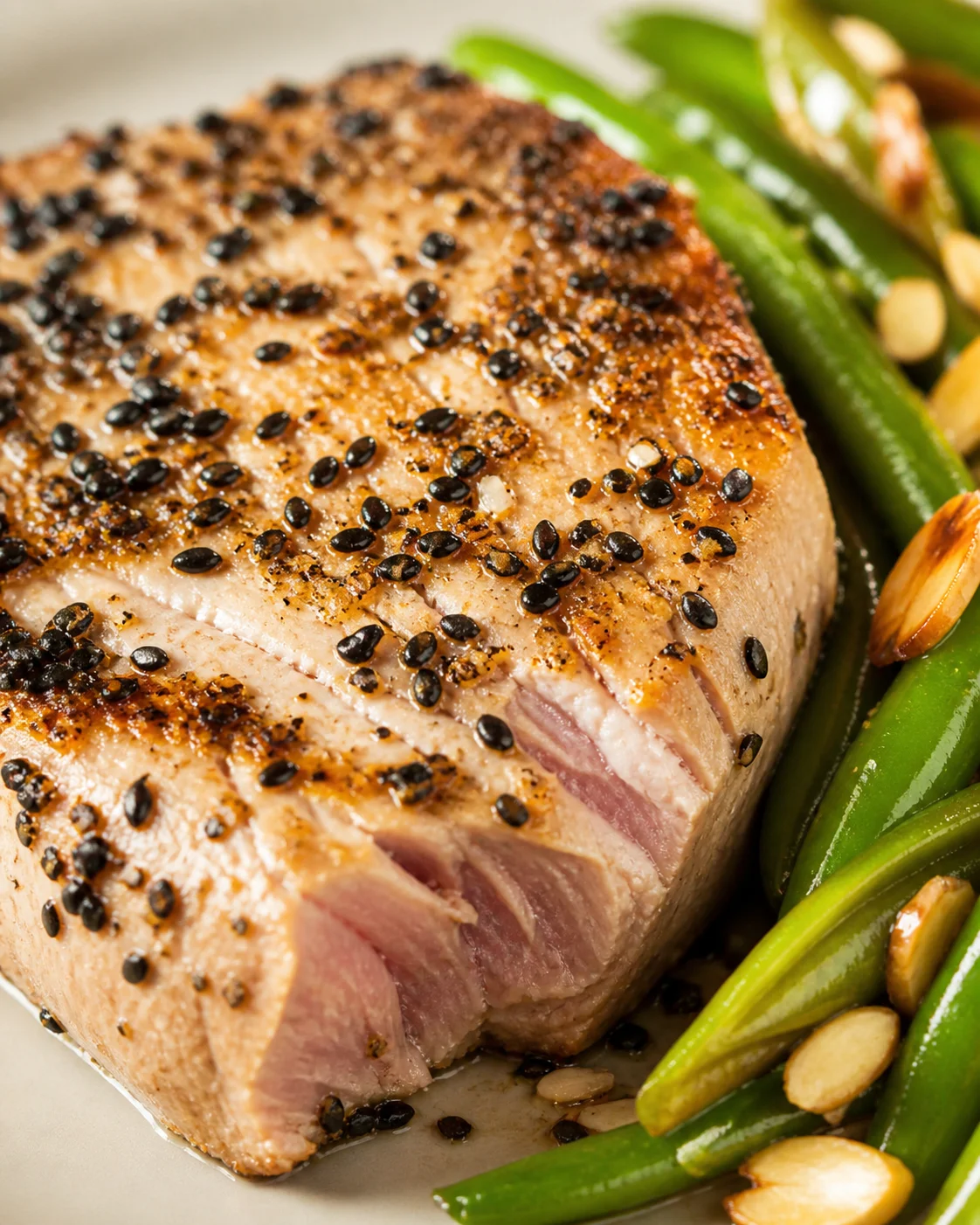
Quick and easy pan-seared tuna steak with a sesame-soy marinade and a rare center.
- Prep Time: 5 minutes
- Cook Time: 4 minutes
- Total Time: 9 minutes
- Yield: 1 serving 1x
- Category: Dinner
- Cuisine: Asian
Ingredients
- 60 ml water
- 30 ml lemon juice
- 60 ml soy sauce
- 45 ml sesame oil
- 1 tsp cardamom
- 1 tsp thyme
- ½ tsp black pepper
- 1 clove garlic, minced
- 113 g fresh tuna steaks
Instructions
- Whisk water, lemon juice, soy sauce, sesame oil, cardamom, thyme, black pepper, and minced garlic in a small bowl to make the marinade.
- Taste the marinade and adjust seasoning until bright and balanced.
- Place tuna steaks in a large zip-lock bag or shallow dish and pour the marinade over to coat.
- Seal the bag or cover the dish and turn the tuna to coat; marinate for 20–30 minutes (no longer than 30 minutes).
- Heat a heavy skillet (cast iron preferred) over medium-high until hot.
- Add a small drizzle of oil to the heated pan to prevent sticking.
- Remove tuna from the marinade and let excess drip off, but do not blot dry.
- Place the tuna in the pan and sear for about 2 minutes on the first side.
- Flip the tuna, brush a little leftover marinade on top, and sear the second side for about 2 minutes.
- Pull the tuna off the heat when the internal temperature reaches about 52°C (125°F).
- Let the tuna rest for 2 minutes before slicing or serving.
Notes
Use sushi-grade tuna for best results; it is meant to be eaten rare and tastes better., Heat the pan before adding oil to help prevent sticking and burning., Do not walk away during searing; two minutes per side is critical to keep the tuna rare inside., Resting tuna after cooking keeps the juices inside, improving juiciness and texture., Avoid marinating tuna for more than 30 minutes to prevent mushiness and overly acidic flavor., Allow excess marinade to drip off before searing to avoid burnt spots.
Nutrition
- Serving Size: 113 g tuna steak
- Calories: Approximately 250 calories per serving
- Fat: Approximately 14 g per serving
- Carbohydrates: Approximately 5 g per serving
- Protein: Approximately 23 g per serving